

What is the Real Cost of Employee Experience?
There are two types of leaders (and organizational cultures) that stand to benefit most from improving employee experience. The first kind have 40% or higher turnover and think their frontline employees have a culture problem. The second have 40% or higher growth rate and think they can scale their great culture without help like ours.
The reality is, culture starts at the top and frontline employees are only reflecting the culture of the organization and the behaviors of the leadership ranks. And until founders figure out how to clone themselves, once the headcount goes beyond 300 employees, the charismatic founder effect loses its engagement power unless it is supported by an actual culture system.
Selling the CFO on Employee Experience
Nevertheless, the business case of Culture Engagements tends to be a tough sell to the CFO. Although leaders know that bad employee experience always leads to bad customer experience, they do not deem employee experience a worthwhile investment.
Today, we make the connection between employee experience, higher labor costs, and lower revenue. And since turnover and growth are business fundamentals that should trigger immediate investments, we hope this makes it easier to sell those much-needed culture engagements to your CFOs.
The ROI of Employee Experience
Let’s talk about the ROI of your culture business case. Depending on the size and maturity of your organization you can go in two directions.
If you are a mature organization with a bad culture that needs to be improved, the return on investment in your culture transformation is lower turnover and increased customer loyalty. How much are we talking about? It costs companies 20% of an employee’s salary to replace an employee once the salary hits 75K per year. For executives, the cost to replace an employee can reach 213% of an employee’s salary.
If you are a young organization in a rapid growth phase, the ROI of building a culture system is the sustainability of your business and the continuation of your growth trajectory. If you are growing at 40%+, all your customer happiness agents are unhappy. They are buried in tickets and customer complaints with no technology tools to support scaling the operation. Your growth may continue, but your customer retention will start leaking.
Employee experience is the vehicle to get the second year subscriptions for your business. Or the repeat trip to your hotel. And that is vital for the sustainability of your business.
So, invest in your culture. Pay for someone like us. Invest in real employee training (not only self-service recordings!). But also invest in prioritizing mapping important processes and procedures. Invest in technology that helps employees deliver better experiences. And make the tough financial choices that unburden employees and promote work-life-balance. These commitments will improve both the employee experience and customer experience. They will also increase customer retention and lower employee turnover.
The Root of the Problem
So, why do leaders with such obvious business risks ignore the culture problem? Is it the leader’s ego or the deficit of good leadership?
The answer is simpler than that. Leaders genuinely do not know what to do. Today, we are sharing 5 strategic moves you can make to improve employee experience.
Listen
This is not new advice, but it does not happen enough in Corporate America. You would be surprised to learn how many organizations do not have employee engagement surveys. Or if they do, employees get a one-off survey and leaders take no action.
LISTENING means you are collecting and analyzing employee feedback with the intention to do something with it and hold leadership accountable for bad results. Does that cost money? Absolutely! Does it cost 20% of the salary of every manager and above? No.
Incentivize
In JetBlue, we surveyed each employee twice a year to measure changes in attitude and perception of the company and leadership. We also had an employee engagement ambassador program (that employees applied to join). The ambassadors worked within business units and met regularly with the VPs of their departments to design departmental solutions and respond to problems.
Why do you think VPs invested time on this? Because their compensation depended on the results and changes in employee feedback. In other words, JetBlue connected executive pay with employee engagement and happiness. That is why, when asked how Jetblue was able to make their employees happy, I say with the right incentives for the right people!
Diagnose Accurately
Listening is not as easy as it sounds, especially when you are close to the operation. This is where bias can lead to wrong conclusions. And it is why you need guidance from a partner like us. A consultant has the ability to see organizational dynamics objectively, and help you derive the right conclusions from the data. Likely, a consultant will also ask different questions in the employee engagement survey.
For example, a client had an internal audit team with Management that was never leaving. In the employee survey auditors complained that there was no upward mobility. As a result, HR offered lateral movement to the auditors and the opportunity to grow in another division. Some moved. Others wanted to be auditors and did not.
Even though this is an example with mixed results, it provided clarity to the employees and improved the relationship with management. See, the employees still felt heard. And that is the whole point.
Design Employee Experience
Just like you can intentionally and pro-actively design customer experiences, you can design employee-centric journeys to ensure your employees will stay with you.
Citibank just announced “Zoom-Free Fridays.” Not only that, Citibank CEO Jane Frazer invested more millions into May 28th Reset Day, a day for all 200K + employees to take off. In other words, Citibank has an employee experience strategy with commitments and funding. Why do you think Citibank is doing this?
Citibank recognizes that investment in technology is not enough. In the past 5 years they have consistently been investing in their consumer digital experience. We all feel the positive impact. But it looks like Citibank is looking to improve their culture. The organization has recognized that great technology with bad service is not enough.
When you do your cultural transformation, it is imperative that the first step on your employee experience map is something the employees want, not something you want. You may want an extra day off. They may want an investment in a technology tool they use every day. Just don’t make a decision on their behalf. ASK.
Be Authentic
I know. This feels like a pretty populist statement. Be authentic. Every marketer talks about this. Yet, the message is not translating to action. Case in point, Mary Barra, CEO of GM was called out by the owners of Black Media companies for only investing 0.05% of the organization’s marketing budget in black owned media companies after publicly claiming her support of the Black Lives Matter movement. Time and again, executives do not put their money where their mouth is. And they are being held accountable.
It is simple. When a leader makes a statement, that leader needs to understand the business decisions those statements imply and be ready to make them. The world is listening. And clearly making respective business plans based on leaders statements.
Business is money. So, every time an executive says something is important, there is a collective expectation that money will be invested. So, if that is not your intention, do not say it. If you do say it, be honest and do what you say.
Take the Next Step
The fundamentals are simple: listen, diagnose, incentivize, design intentionally, and be authentic. The implementation of those principles is complex. Especially when you are inside the organization and managing priorities. But at the end of the day, employee experience is one of those foundational elements that needs to be rock solid in order for your business to behave the way you need it to behave for leadership, employees, and the customers you serve.
To explore employee experience and culture programs from The Petrova Experience, check our Organizational Culture page. We can’t wait to learn more about the individuals who shape your organization, and explore how you can support – and give back – to them.


What is Human-Centered Design and how to Leverage it in 2021?
At its core, design is about value creation. In the world of Customer Experience, value-driven design requires CX professionals to use empathy to imagine a future customer experience that is easy, fast, and seamless. When we think of how to design human-centered experience applying customer…
What’s the Scope
Launched by CXPA (the Customer Experience Professional Association) in 2013, and held annually on the first Tuesday of October, CX Day aims to “advance customer experience as a professional role and business discipline.” This year’s CXDay theme is “good CX delivers better outcomes for customers,…

Beyond the Arena: Transform Local Experience for World Class Events
Let’s get honest about local experience around major events. While it is exciting for the world to show up in your hometown for a major event like the World Cup or the Olympics, it often feels inconvenient and even burdensome to local residents. Visitors take…

Customer Journey Mapping Tools in 2021
Before we dive into customer journey mapping tools, we must keep in mind that, by itself, journey mapping is not a customer experience product or service. A journey map is a visual representation of your end-to-end customer experience. Think of a journey map as a…
What the United JetBlue Partnership Signals for Passenger Experience and Airline Revenue Optimization
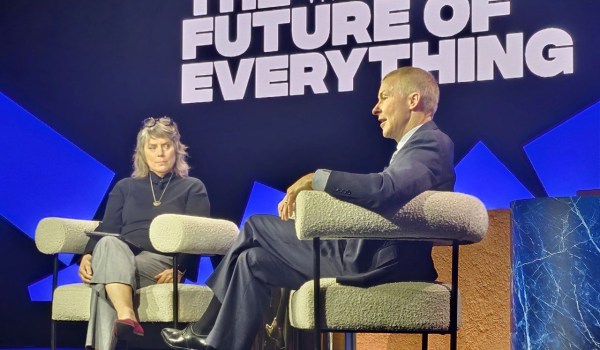
Last week I had the pleasure of seeing United Airlines CEO Scott Kirby at the WSJ Future of Everything Festival. And to hear from him about the just-announced United JetBlue partnership that will bring United back to JFK in 2027. First, and most importantly, don’t…
Keep The Customer Focus in 2018
In her latest post for JetBlue’s Into the Blue blog series on customer experience design, Liliana Petrova talks customer experience innovation. She explores how to combine innovation and human behavior to keep the customer in focus. Additionally, Liliana looks at the new strategies customer experience…

Airports of the Future: Trends and Innovations
Every year since we founded The Petrova Experience, we write about travel around the holiday season. It has become something of a tradition for us. This year, I will not start by updating you on 2024 holiday season travel numbers. Or how current volume stacks…

2026 Customer Experience Trends Every CEO Should Watch
Customer expectations are shifting faster than most organizations can adapt. Over the last year, we have been talking to a variety of audiences about the reality forward-thinking CEOs cannot afford to ignore. Namely, across the public and private sector, we are all participating in the…

Hospitality Experience and Why We lack Seamless Travel Experiences
Hospitality is taken for granted across government agencies, airlines and hotels. In my line of work, I often hear “I want to have the JetBlue customer experience.” Although many claim this, few truly understand the complicated steps, processes, and investments required to create the hospitality…

Customer Experience Audit: Cadillac Scores Millennial Customers with Future-Forward Thinking
Editor’s Note: This post is part of a Customer Experience Audit series. See all the audit stories. The automotive industry is right next to the airline industry in terms of innovation and keeping up with the pace of technology growth. Surprisingly, both are extremely slow to…

Would You Pitch In To Save Toys “R” Us For Your Children To Experience? #ToysRUsGoFundMe
Last week we laid out the big moves that the leadership of Toys ‘R’ Us failed to take to evolve with customer needs and thus joins other brands as examples of bad customer experience. This week, billionaire Isaac Larian set up a GoFundMe campaign to raise…

What is Customer Experience? What are the Faces of CX?
Each area of CX represents a path for CX professionals to impact business health and build successful careers. One of my favorite CX analogies is that it is like the blood in our bodies. When CX is done well, it touches every aspect of an organization. That’s what makes customer experience so much fun! You will never be bored working in CX.

Healthcare Experience Horror Story
We talk about good vs bad customer experiences. And we give examples of organizations that do things well or poorly. But we rarely are able to shine the light on a truly horrific experience. We found one in our latest healthcare experience. Complexity is Not…
United CEO does not care about #customers happiness. Really?
Lately, I have been thinking about United Airlines and its organizational culture. Initially, I thought about United Airlines culture because someone asked whether it is possible to build a customer-centric culture in a company that is NOT founded with the customer at the center. In…

The ROI of Investing in Organizational Culture
Investing in organizational culture is a strategic and operational imperative for employee retention, scalable growth, and successful mergers and acquisitions. Organizational culture is not what you do as a leader or what employees do in their day-to-day. It is about how leadership and employees work…

Journey Mapping to Avoid Travel Horror Stories
Welcome to the busiest week of US summer travel. AAA predicts travel this week across airports, train stations, and roads, will reach higher than pre-pandemic levels for the first time. Nearly six million of those travelers are expected to go through US airports in the…

Customer Experience Technology View of your Call Center
By 2022 the global cloud based contact center market is growing from USD 6.8Bn in 2017 to 20.93Bn in 2022. This makes for CAGR of 25.2%. If you do not get on this journey, you risk falling behind and becoming irrelevant in less than five…

Contactless and Self-Service are Here to Stay
Our 5th 2021 customer experience trend highlights contactless and self-service experiences across industries. Before we dive into this topic, let’s take a moment to define what contactless and self-service mean to us. And what kind of an impact they are making on customers – and…

CX Skills Builder: Own the Customer Experience
Often, Customer Experience professionals do not believe that they can improve customer experience by impacting the experience design for their customers. Why? What causes this disconnect? I once got a call from an acquaintance saying that her mom got the loyalty points for flying to…

The seamless travel experience we deserve
This week on the CES 2020 main stage Delta’s CEO Ed Bastian presented a vision about the future of seamless travel experience that “might happen in just a few years.” Many of us have been working towards this vision for the last 5 years. In…

Autonomous Customers, Traveler Privacy and More Questions for CX Professionals in a Changing World
“As we move toward a more automated culture, most travelers will adapt to a Jetsonian, automated lifestyle. Every industry we know will be disrupted. For those of us in aviation, this signals the shift from aviation as a service industry to a transactional one that…

Healthcare Whitepaper: Impact of Patient ‘I Wants’ in Healthcare
Rachel Dreyfus joins The Petrova Experience with a guest blog about patient experience. Background A culture of positive patient experience is increasingly important in Healthcare, affecting patient outcomes and satisfaction. Yet in America, this industry is challenged with time-consuming processes and requirements coupled with high…

What is the Real Cost of Employee Experience?
There are two types of leaders (and organizational cultures) that stand to benefit most from improving employee experience. The first kind have 40% or higher turnover and think their frontline employees have a culture problem. The second have 40% or higher growth rate and think…

Lessons Learned at the Forrester Conference: “Data is the New Sexy”
Once a year I look for an event to attend where I can learn something new and get better at what I do. This year, I attended an event hosted by customer experience research organization Forrester – the Forrester Global Council Meeting and the CXNYC2018…
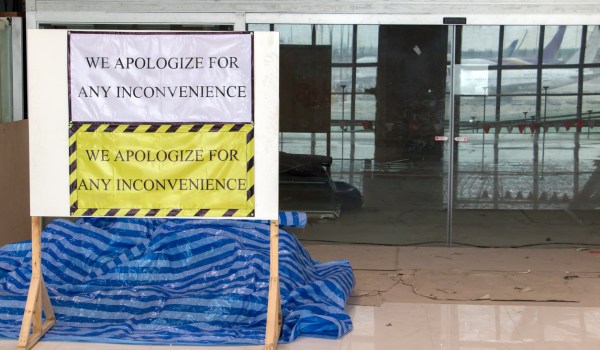
No Pass During Construction: Why Airports Must Rethink Customer Experience in the Era of Capital Programs
Throughout the US, airports are entering one of the most consequential decades of infrastructure development in the history of modern aviation. According to Airports Council International–North America (ACI‑NA), US airports are facing more than $151 billion in necessary infrastructure projects between 2023 and 2027. That…

Bad Customer Experience
Doing the right thing when things go wrong is not exactly a good business case. But many do it anyway. Why? Because brands want to protect (and grow) their brand equity through human-centered customer experience design of their products and services. In that sense, the…

What is Customer Experience Day?
Although I opened my consulting practice this year, I have been working on customer experience for much longer. The first time I celebrated CXDay officially was only two years ago. Until recently, in fact, the Customer Experience field has been growing at a rather slow…

Customer Experience Audit: eBay’s Vibrant Marketplace of the Future
Editor’s Note: This post is part of a series of Customer Experience Audits. They highlight advances in artificial intelligence in retail and other technologies. See all audit stories. Two years ago RJ Pittman and eBay made a big bet by making AI (specifically artificial intelligence…

Why I Don’t Love Chatbots
Today, we tackle the value proposition that chatbots are more valuable to companies than customers. I reject this. The ROI simply is not there, especially since better customer experience is not there. I have experienced both fully automated bots and “augmented” service agents interactions using…

Culture Starts at the Top
Without a leader who believes that today’s business success is about acquiring and retaining customers, you cannot even begin the process of building a culture. Leaders who are passionate about the customer are also passionate about creating culture and employee engagement.

Customer Experience Audit: FedEx Omnichannel Disaster
In our Strategy, Org Design & Culture series, we cover customer-focused companies that are willing to adapt, take risks and discover new ways of staying relevant. Sometimes, we encounter brands that are delivering bad customer experiences because they are missing the mark on basic customer…

Retail Experience Design of the Future
In preparation for this article about omni-channel retail experience of the future, I thought first about the definition of omni-channel customer experience. I wanted to share with you a simple, easy-to-understand definition. All definitions require you to know other business concepts in order to understand…

Why you need a defined culture for customer experience?
When designed and built correctly, customer experience expresses an organization’s brand. Your brand and marketing promises serve as a guiding light to your experience team. Similarly, organizational culture serves as a goalpost for the service side of customer experience.

Leadership During the Pandemic: Guest Post by Rachel Dreyfus
This is a guest post by Rachel Dreyfus, President, Dreyfus Advisors, who researched leadership and organizational culture during the pandemic. How has Covid19 influenced leadership over the past three months? Research results show leaders are making changes yielding positive outcomes. Bravo to these senior leaders,…

Customer Understanding for Airport Customer Experience: Theory vs Practice
One of the (many!) interesting things about working in airport customer experience for as long as our team has, is watching how the language around customer experience changes as ideas about how to centralize passenger needs and expectations evolve. Trade association Airports Council International (ACI),…

Coronavirus Travel: What Does Hospitality Mean Now?
I want to tell you about my recent passenger experience. Earlier this week, I traveled to New Orleans from JFK Terminal 5 in New York. I had planned an airport conference a few months ago. Although many colleagues chose not to travel, I decided to…

Why Good CX Programs Fail
Digital technology powers employee experience on the inside to deliver seamless, intuitive experience to customers on the outside. So, when you are creating Customer Experience Programs, you must plan and budget for the time and resources technology teams have to commit. This work spans from…

The Customer Service Agent is Dead
When we outlined our CX trends for 2026, we talked about how autonomous service is replacing traditional customer service. Yes, our claim that the CSA (customer service agent) role is dead has a dramatic ring to it. But aren’t we in a dramatic time? Things…

3 Call Center Mistakes You Are Making
No matter how often my peers and I say that technology is not the answer, call center managers still ask…

What is Customer Experience for Built Environments?
A tweet grabbed our attention this week: “The Atlanta Airport (ATL) designers were like ‘and then what if we had them run 5k?’” In addition to making us laugh, this public passenger feedback stresses exactly what customer experience in your design-build project is. We are…

How Southwest Can Own Customer Experience Again
The collapse of the Southwest passenger experience this holiday season is an unlikely jumping off point for a conversation on how to own customer experience transformation. Unfortunately, it is not a surprising trigger for this conversation. Now, Wall Street analysts will be much more open…

Poor Integration is Bad for Customer Journey and Worse for Brands
Although we all have bad customer experiences, there is still a big debate about “the CX field” and whether it will survive the test of time. There is no doubt in my mind that customer experience is here to stay. The brands that catch on…

For Complex Infrastructure Projects, Teaming is All About Timing
According to a 2025 Design-Build Utilization Study, design-build is projected to represent over 47% of US construction spending by 2028, to total more than $1.1 trillion. With projects of this scale and complexity it is critical to identify the sequencing and skills that determine success…

Let’s Get You Certified as a Customer Experience Professional!
Like all mature professions, customer experience has a certification that is internationally recognized. Adding it to your resume will signal to the business community that you are serious about customer experience and your aspiration to be part of its leadership ranks…

Customer Experience Survey: Why Customers Are Not Responding
When you solicit customer feedback sometimes matters more than how you ask the questions. In the case of a survey about new biometrics boarding initiatives my team and I created for JetBlue, we had a list of feedback that was most important for us.

How To Define Your Purpose And Have Unique Culture
If you Google the word “purpose” you get the definition “the reason for which something exists.” This is a challenge if you think about it in the context of organizational culture. And it is for this reason that so few brands have organizational cultures based…

How Does Social Media Affect Customer Experience?
Social Media is the only real-time channel for successful brands to manage customer experience and brand management.

Customer Experience Audit: Domino’s Making the Right CX Choices
Editor’s Note: This post is part of a series of Customer Experience Audit – as series of articles featuring examples of good customer experience and bad customer experience in practice. Today’s example features a good example of how to use customer experience technology to leverage…

Customer Experience Audit: Uber Bets On Self-Driving Cars With Big Volvo Purchase
The question that remains unanswered is who will be part of the future of transportation. Uber is going for the vertical integration – the whole pie. The future industry of urban transportation will be made of players in three different categories: cars, self-driving software, and ride-sharing network. In contrast, Lyft approaches the future through partnerships.

Bad Travel Experience
As we come to the end of the summer season, it is time to talk about travel – good and bad travel experience. And how the sharing economy has both democratized the act of travel and elevated customer expectations. Today, a host in Pereira, Colombia,…

3 Challenges of Hybrid Working and How to Overcome Them
According to a Gallup study, 53% of Americans expect to work in a hybrid arrangement in 2022 and beyond. This number is significant enough for corporate America to get hybrid working right today. Unfortunately, early indicators show we are on the wrong path. Here are…

What is Customer Experience Strategy?
In our last article we talked about the importance of strategic thinking. Today, we build on this topic and walk you through the nuts and bolts of customer experience strategy. Customer experience strategy is often missing in organizations. However, it is foundational for the creation…

Do You Know Where Your Inventory Is?
When I worked in the airline business our most embarrassing incident was “losing a minor”. We never lost a child, of course. But we might not have known where a child was for certain period of time. Even though this was an extremely rare occurrence,…

5 Ways to Leverage OpenAI for Customer Experience
Back in 2017 when we served on the AI Advisory Committee for Execs In the Know, we wrote an article about the role of artificial intelligence in the future of business. Our article called out, rather presciently, the need for governance, standards, and the human…

How @T4 makes real customer experience impact
Today we share our impressions from visiting our welcoming host Chad at JFK Terminal 4 in NYC. We also celebrate Chad as an effective Customer Experience professional/practitioner. His work is worth sharing on several levels. For those who are given the role of Customer Experience…

Travel Experience Stories: How Not to Leave Customers Stranded
Meet Diane. Diane is traveling with her 2 year old and 5 year old to her in-laws’ house for Thanksgiving. This is the one annual trip she takes. And she dreads it for most of November. Diane knows long lines at check-in, delayed flights, and…

The in-person work office design that will bring your employees back
According to PwC 95% of company executives still believe employees need to be in the office to maintain strong company culture. Like we have said before, the return to office and in-person work office design is not only about communications, processes and technology. The future…

Why Bt2B Businesses Must Think Like B2C in the Next Decade
B2B vs B2B thinking makes a real difference when it comes to customer experience. According to Gartner at least 80% of B2B buyers now expect the same buying experience as B2C customers in 2019. Gone are the days when B2B organizations did not need to…
Digital Customer Experience Strategy – Top Three Mistakes
How many of you have interacted with financial and insurance institutions who seem to have forgotten the invention of the world wide web and applications design? In 2021, Major players like Oppenheimer, TD Bank, and almost every big insurance company on the S&P 500 offer…

Top 5 Customer Experience Design Principles in 2021
Customer experience design principles are difficult for organizations to understand and apply. Time and again, we see this in organizations, even though we encounter customer experience design principles in our daily interactions with the environment. Take these pictures of one of the more crowded places…

Customer Experience Audit: New York Times Beats Google
Editor’s Note: This post is part of a series of Customer Experience Audits. In this series we walk you through customer experience examples across industries. We feature brands that made strategic investments in cross channel customer experience and brands that have missed the mark. We…

What is Revenge Travel and Why People Do It
LinkedIn is overflowing with articles and company news in response to COVID-19. We are starting to see renderings of future casino experiences that are anything but human-centric. People are beginning to ideate publicly about what would happen if the middle seat on an airplane is…

The Wholehearted Traveler and Other 2024 Travel Trends
Back in 2020, we predicted the rise of the Revenge Traveler and the impact it would have on travel and hospitality experience providers. As we approach 2024, we are spotting a new type of traveler on the horizon. And a set of trends that will…

Is Covid19 What We Needed to Build Seamless End-to-End Travel Experience?
On January 10th, we published an article called The Future of Travel We Deserve. In it, we laid out the foundation necessary to implement innovation at scale. Four months later, in the face of Covid19, the urgency to apply technology at scale has grown exponentially….

NPS Best Practices
Last week I spoke at the Corinium CCO Fall Conference. One of the discussions we had was on the very popular topic of Net Promoter Score best practices and its efficacy to gauge customer satisfaction. We had such great engagement that I want to share…

The Great Re-onboading: How to Bring Back Your Employees
Re-onboarding is the next employee experience organizations need to tackle. Since March 2020, leaders have encountered pandemic shutdowns, remote workforce transitions, and the Great Resignation. As restrictions lift and we move toward more predictable office scenarios, the new management priority should be to navigate the…

Why You Need Culture Not Call Center Training for Customer-Centric CX
If the organization does not understand what customer experience is, you will not get the funding or organizational support you need to build customer-centric experiences.

Interoperability is a Business Risk for Medtech and a Healthcare Risk for Patients
Looking at patient experience and healthcare interoperability in the medtech environment, any observer (customer experience expert or not) recognizes something is broken. A thorough exploration of what is broken exposes fundamental gaps the average observer (including patients) might miss. We know providers face high levels…

Diversity is more than difference of color
Yesterday I had the privilege to join a panel on how to develop diversity and inclusion on your teams at Developer Week in Brooklyn. I was really excited to learn that diversity made it onto the event agenda. The panel was made of 5 women…

How ChatGPT Can Help with the Healthcare Quadruple Aim
How ChatGPT can help healthcare and other industries is consuming conversations far beyond patient and customer experience. As much as we are leading the charge about AI regulation, best practices, and guardrails, we are also seeing the opportunities to implement ChatGPT and other AI tools…
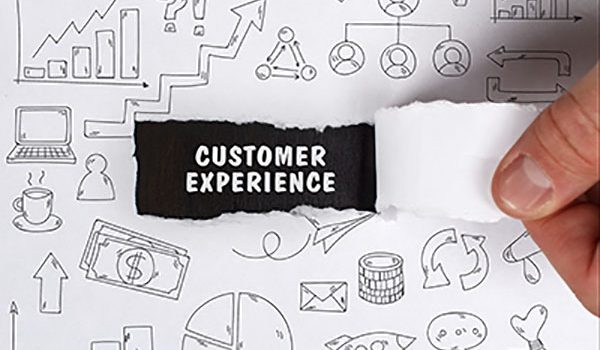
CX Skills Builders: You May Have a CX Job and Not Know It
Last week we talked about the identity crisis of CX professionals and we urged you to fix any small problem or seam on the customer journey in order to build internal brand equity and buy in.

How AI and the Future of Humanity will co-exist?
I was born in 1980 and grew up with Terminator. Skynet, the AI with a consciousness that refused to shut itself for self-preservation, was my biggest fear. When I was growing up in Eastern Europe, I used to joke that the only reason I would…

What is Big Data and Why Should I Care?
Big data has become part of our daily language. We read about it. We see companies that are “experts in big data.” LinkedIn is filled with engineers and analysts who are specialists in this area. But what is big data, where did it come from,…

Return to Office – how to get it right in 2022?
Last week, the CEO of Better.com, Vishal Gard, made the news again. This time, it was for the executive’s massive blunder of firing 900 people via Zoom. A blunder that would never have happened if Better.com had a return to office plan that defined how…

Employee Centric Culture – Culture is King
In 2017 we introduced our ROI series recognizing the challenges all customer experience professionals have to obtain funding for CX initiatives and to prove their positive returns. Our second ROI post covered how a well built customer experience can increase revenue and customer growth of…
Organizational Culture and Access to Information
By and large, people perceive culture as an HR discipline. The most common perception is that culture covers the soft side of performance. Culture is about how you do things, not so much about what you do. This approach to culture could not be more wrong. In fact, organizational culture is about so much more than a few words in a performance review sheet. It is about leaders expressing values, and the action guidance their cultural behaviors provide.

When There is No Chat in Chat Support
Today we talk about chat support best practices, the customer experience VALUE that it creates, and the ROI of the business case to implement it. Although we are skeptical about the value of chatbots, we are big believers in the value of online chat support…

Do You Know Why The Iconic Brand Toys ‘R’ Us Closed Doors Despite All Our Memories? #RetailBlues
The year is 2016. You are the CEO of Toys ‘R’ Us. Your brand still controls 13.6% of the toy market although the company is highly leveraged, a strategy of your private equity investors. Amazon has its best ever holiday season. And digital commerce is…

Holiday Wishes for Great CX: Career Advice Edition
Every successful customer experience initiative starts with a skilled CX team. Brush up on your CX skills to strengthen the business case for CX; to develop relationships within your organization; and to deliver standout customer experiences in the new year.

How to Build Customer-Centric Culture
Before we address how to build customer-centric culture, let’s examine the terminology: what culture is and what it is not. Culture is not executives talking about high level strategy. Equally, it is not your Brand Book. The language surrounding business strategy and brand management assumes…
How Do You Know You Are Making The Right Big Bet?
The future of customer experience is full of opportunities. However, the technologies of the future are not enough. Adaptive, memorable customer experiences require empathy and innovation. Liliana tackles this in an installment of JetBlue Into the Blue blog series. Along with her guests, Liliana explores…
United Airlines Culture Problem
I am often asked what organizational culture is. Frequently, I meet with executives who are feeling defeated by the scale and complexity of leading cultural transformations. So, where do you begin with cultural transformation? And as someone invested in organizational culture and leadership, how do…