

2026 Customer Experience Trends Every CEO Should Watch
Customer expectations are shifting faster than most organizations can adapt. Over the last year, we have been talking to a variety of audiences about the reality forward-thinking CEOs cannot afford to ignore. Namely, across the public and private sector, we are all participating in the experience economy. Customers benchmark every interaction against the last best experience they had. Regardless of who delivered that experience. In 2026, this dynamic is accelerating, and reshaping how organizations deliver value.
Regardless of sector, with our clients from manufacturing to government, we see the organizations that win in the new year will be those who understand customer experience is no longer a function (what we often reference as a “nice to have”). It is core way of doing business to drive ROI. Within this context, as is our annual tradition here at The Petrova Experience, we are sharing the top three customer experience trends of 2026. To stay competitive in the new experience economy, evaluate how to incorporate these trends into your planning and how to leverage them for market differentiation and growth. This means thinking strategically about staffing, budget allocation, and technology integration.
Trend 1: The Role of the Customer Service Agent Is Dead in 2026
This does not mean customer service itself disappears. Afterall, we are in the business of pursing customer happiness. That happiness is built upon many layers, including hospitality, service, and customer support. In 2026 – and this is important to consider from a CX strategy and programming point of view – the traditional role of the Customer Service Agent no longer exists. That outmoded role is reactive, transactional, and dependent on human intervention. It is bound by time lags and weakened by information gaps. As such, the role is no longer viable for employees, organizations, or customers.
So, what is viable? Customers expect and deserve frictionless, self‑directed, fully supported digital experiences. Data from a recent Zendesk CX Trends Report confirms this observation, noting “69% of customers want to resolve as many issues as possible on their own,” as opposed to via direct agent-to-customer interaction. This came to life for me, recently, when I renewed my software subscription with Adobe. RIn the past, renewing an account required a phone call, an often extensive wait-time. And a frequently complicated dialogue with a human agent who lacked sufficient information at the top of our call to provide personalized, seamless service.
This year, my experience was pointedly different across all modes of user expectation. First, the entire process was seamless. It was intuitive and clear. And it was fully automated. In the absence of a human agent, I felt actively supported, well informed, and confident I was receiving personalized, actionable support. Without ever speaking to a person.
As much as I appreciate how well Adobe executed on its customer service design (disclosure: I am an Adobe user; my firm has not provided consulting services to the company), they are not the only company doing this well. The shift to customer-first, supportive service through automation is happening everywhere, with increasing levels of quality and satisfaction.
Ultimately, the trend we will continue to see is that, more than a general sense of “service,” customers seek resolution. And the better your business is at driving resolution using efficient technology and self-service tools, the better your business serves customers.
What CEOs Need to Do Now
- Redesign service journeys around zero‑touch resolution
- Reallocate human agents to complex, high‑value interactions, where unique human connection delivers the greatest, most memorable impact
Trend 2: The Bar for Chatbots Just Got Higher
In the Seventh Edition State of Service Report, published in 2025, Salesforce reveals “82% of customer service representatives say customer expectations are higher than they used to be.” These expectation shifts connect to AI technology implementation, especially the use of chatbots for customer questions and issues resolution.
We know chatbots are not new. Chatbots themselves are not the trend (let’s be clear, if you do not yet have a chatbot, you are far behind your competitors). What is trend-setting, and necessary to watch, is that chatbots have morphed from a cost-cutting tool to a precision CX delivery tool, particularly for industries with high operational complexity.
Let’s consider manufacturing. Historically, floor managers checked inventory manually, identified missing parts, and placed orders. But, as the Wall Street Journal reports, this generation’s supply chains are too fast, too global, and too volatile for humans to manage alone. OEM customers expect real‑time accuracy. Outmoded explanations like “a part was delayed” no longer satisfy. Enter the new generation AI systems and chatbots. AI‑powered systems manage operational complexity at a level impossible with human oversight alone. They identify inventory gaps before they occur, ensuring disruptions are prevented rather than reacted to. When the system spots a shortage, it can trigger automated re-orders in real time, eliminating the delays, errors, and subsequent frustrations associated with manual intervention.
Further, and this is essential to customer-centric organizations with commitments to deliver on customer experience promises, they communicate precise, data‑driven timelines to customers. This connects the AI behind the inventory and the chatbot communications delivery. As a result, you replace vague estimates with accurate, actionable information. Because these systems monitor the entire workflow continuously, they deliver proactive updates that dramatically reduce inbound inquiries and strengthen customer confidence.
But here is the critical point that goes beyond a trend and lives at the heart of every valuable customer experience: AI alone is not enough. To leverage chatbots to achieve customer experience goals, you must train chatbots on human‑centered customer experience principles. Those experience principles include empathy, clarity, transparency, and contextual awareness. Every tool in the customer experience toolkit, chatbots included, must align with your customer experience strategy which, in turn, must be align with your business strategy. This is the single most important driver of customer experience ROI and sustainability.
Here, we return to the foundation of the customer experience economy: customers evaluate every interaction based on their last best experience, regardless of industry. If your customer can track their pizza order in real time, they expect to track their $2M equipment order the same way. Wouldn’t you?
What CEOs Need to Do Now
- Audit existing chatbot experiences for accuracy, tone, and usefulness
- Train AI models using customer‑experience‑informed data
- Integrate chatbots with real operational systems (the days of FAQs are over!)
In 2026, your chatbot is no longer a digital receptionist. It is a mission‑critical operational interface built on human-centered customer experience principles for experience economy consumers.
Trend 3: In 2026, The Public Sector is a Technology Agency
The public sector is undergoing a transformation that mirrors what we saw in the private sector about a decade ago. Digital expectations and digital-first consumers are becoming the norm. One result of this is that taxpayers no longer compare government services to other government services. They compare them to their experiences with companies like Amazon or Airbnb.
Following the pandemic, digital government services grew at increasingly fast rates, as noted by Government Technology. Fast forward to 2025, and the Federal News Network reports on the benchmarks for solving public sector inefficiencies. Chief among them is the call for “data governance and IT system modernization.” As FNN reports, the US lacks a consistent IT infrastructure across all federal agencies. This creates redundancies and inefficiencies.
Legacy IT systems demand modernization in a country of individuals who know what a smart, seamless experience looks and feels like. And what it doesn’t. When public agencies digitize, including the many transportation agencies we help design experiences for, they truly enter the experience economy. As full participants in that experience economy, they must embrace a new mandate: no inefficiencies, no excuses.
In this context, we now hold public agencies to a higher customer experience standard. As we enter 2026, we can and should expect public agencies to deliver digital services that are intuitive and accessible. We can and should expect them to provide real-time updates. To build efficient, technology-enabled experiences. And to operate with the same transparency and speed that define the most successful private sector experiences.
Beyond improving experiences (and Customer Satisfaction scores), this elevates the role of public service. It is no longer about processing forms or managing queues. It is about designing and delivering intelligent, customer-first digital experiences that serve millions.
What Public Sector Leaders Need to Do Now
- Treat technology as a core public service rather than a support function
- Invest in digital experience design over one-off digital tools
- Build cross‑functional teams that combine policy, operations, and customer experience
- Measure success using customer‑centric metrics
The public sector is now a technology agency, and the agencies who embrace this identity will set the standard for the next decade.
The CEO Imperative for 2026 Customer Experience
Across all three trends, the message is clear: customer experience is the driving force of the successful modern organization. The companies and agencies that thrive in 2026 will leverage their aligned customer experience and business strategy to eliminate friction through self-service and automate intelligently to improve efficiency. At the core, we must continue to design with empathy, deliver with precision, and operate with transparency to empower our customers to do more, expect more, and achieve more because of their interactions with us.
The organizations that fail to adapt will not lose customers because of price or product. They will lose them because someone else empowered them through their experience.
To plan for your success in 2026 and beyond, schedule a time to talk with us.


What is Taxing Your Customer Experience?
In our customer experience consulting engagements with organizations from travel and transportation to corporate environments, we see the same six challenges to delivering seamless customer experiences. The struggle to deliver…

Employee Centric Culture – Culture is King
In 2017 we introduced our ROI series recognizing the challenges all customer experience professionals have to obtain funding for CX initiatives and to prove their positive returns. Our second ROI…

When There is No Chat in Chat Support
Today we talk about chat support best practices, the customer experience VALUE that it creates, and the ROI of the business case to implement it. Although we are skeptical about…

Retail Experience Design of the Future
In preparation for this article about omni-channel retail experience of the future, I thought first about the definition of omni-channel customer experience. I wanted to share with you a simple,…

Top CX Design Challenges in 2021
Customer experience design challenges in 2021 remind us of the overall challenges that face organizations in a year marked by changing expectations and demands. Top customer experience design challenges include…

Liliana Petrova Talks Patient Experience in Healthcare Podcast
Recently, we recorded a podcast on patient experience in healthcare with Stacey Richter. Today, we are excited to share it with you. On the episode, we discuss travel and healthcare…

How Hospitality Can Save Tourism
Travel experience experts need to remember why people travel. For most tourists, it is all about the destination. The destination is why you leave home. Before you make the decision…

The in-person work office design that will bring your employees back
According to PwC 95% of company executives still believe employees need to be in the office to maintain strong company culture. Like we have said before, the return to office…
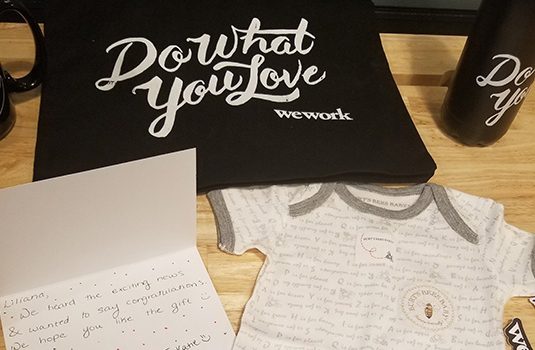
WeWork Does Customer Experience Right with a Wow Moment
Used at the right time and place along the customer’s journey, the Wow Moment is an excellent retention technique. When a brand creates personal, relevant experience at exactly the right time, it can build a lifelong, loyal customer relationship.

Customer Experience Audit: Cadillac Scores Millennial Customers with Future-Forward Thinking
Editor’s Note: This post is part of a Customer Experience Audit series. See all the audit stories. The automotive industry is right next to the airline industry in terms of…

How Well Do You Understand AI Applications?
In the last week I spoke about AI at the Argyle Forum webinar and at the ConnectID Conference in Washington, DC. Technology is emerging

How Does Social Media Affect Customer Experience?
Social Media is the only real-time channel for successful brands to manage customer experience and brand management.

No Pass During Construction: Why Airports Must Rethink Customer Experience in the Era of Capital Programs
Throughout the US, airports are entering one of the most consequential decades of infrastructure development in the history of modern aviation. According to Airports Council International–North America (ACI‑NA), US airports…

How to Solve the 2025 Customer Retention Problem
It’s 2025, and businesses across sectors have a customer retention problem. U.S. companies alone lose an estimated $168 billion annually due to customer attrition, as revealed in a CallMiner whitepaper….

Beyond Customer Satisfaction: 3 Unexpected Ways CX Drives Value
It is time to debunk the nice-to-have myth about customer experience. It is true the discipline operates in the space of perception, feelings, and emotion. What is equally true, but…

New Frontiers in Passenger Experience: Where is the Passenger in the Urban Air Mobility Ecosystem?
Two years ago, I stood on stage at the Aviation Americas Festival in Miami and asked a provocative question: What if the future of aviation isn’t just about aircraft, but…

Why Your Employee Experience Journey Matters
This week, Andy Newman wrote a great article in The New York Times about the life of a retail sales agent. He used the example of an Old Navy sales…

Why Bt2B Businesses Must Think Like B2C in the Next Decade
B2B vs B2B thinking makes a real difference when it comes to customer experience. According to Gartner at least 80% of B2B buyers now expect the same buying experience as…

Is AI Really The Answer?
Earlier this week we shared some of the pitfalls of implementing self-service and highlighted the importance of strategic and empathetic implementation. AI (artificial intelligence) is one of the self-service tools…
A Lot of Data, Not Enough Insight
A month ago I saw a Forrester presentation on Customer Experience measurement that began with a great quote from the Global Bank: “We are drowning in data and starving for…

How Smart Do Humans Want AI To Get?
Earlier, we covered the basics of AI and what it is in theory. Today, we talk more about existing practical applications of AI and more examples of artificial intelligence. And…

A Customer Experience Strategy will Define Your Success in 2021
While there may not be a magic pill to guarantee the perfect customer experience, there is one thing that every organization needs to transform into a customer-centric business. And that…

The ROI of Customer Experience Programs
What customer experience is, and how well brands think they are executing customer experience, and how well they are actually doing it are often at odds. According to Bain, 80%…

Airports of the Future: Trends and Innovations
Every year since we founded The Petrova Experience, we write about travel around the holiday season. It has become something of a tradition for us. This year, I will not…

Do You Know Where Your Inventory Is?
When I worked in the airline business our most embarrassing incident was “losing a minor”. We never lost a child, of course. But we might not have known where a…

How to Be an Entrepreneur: 5 Things I Learned in 5 Months as an Entrepreneur
The life of an entrepreneur is different every day, but the one thing that remains the same is that we are always learning. These are my lessons in how to…

Can One Email Build Loyalty? #MYWESTELM
This is exemplary management of the post-purchase journey touch-point. For years, this level of management has been non-existent. At best, it tends to come in the form of an email confirmation that purchased items have been delivered.

Let’s Get You Certified as a Customer Experience Professional!
Like all mature professions, customer experience has a certification that is internationally recognized. Adding it to your resume will signal to the business community that you are serious about customer experience and your aspiration to be part of its leadership ranks…

How to Prepare for AI: Dispatches from CR Summit, Charleston
On the eve of the #CRSummit in Charleston, customer experience leaders from various industries held the first AI Committee meeting. AI is a challenging topic to cover because it has…

Beyond the Arena: Transform Local Experience for World Class Events
Let’s get honest about local experience around major events. While it is exciting for the world to show up in your hometown for a major event like the World Cup…

The Wholehearted Traveler and Other 2024 Travel Trends
Back in 2020, we predicted the rise of the Revenge Traveler and the impact it would have on travel and hospitality experience providers. As we approach 2024, we are spotting…
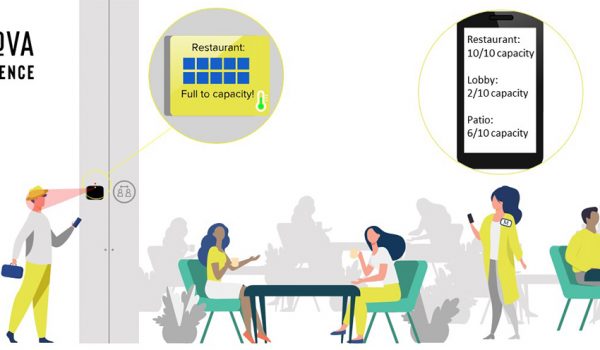
How Facial Recognition Works for Your Customers?
One of the hurdles for Customer Experience Consultants like us is proving the business case for bringing us on board. Leaders often think that if they talk about being customer-centric…

Poor Integration is Bad for Customer Journey and Worse for Brands
Although we all have bad customer experiences, there is still a big debate about “the CX field” and whether it will survive the test of time. There is no doubt…

How ChatGPT Can Help with the Healthcare Quadruple Aim
How ChatGPT can help healthcare and other industries is consuming conversations far beyond patient and customer experience. As much as we are leading the charge about AI regulation, best practices,…

2021 Customer Loyalty Strategy – Relationships over Transactions
According to the Salesforce Connected Customer Report, 90% of consumers expect companies to clearly demonstrate their values and 66% expect brands to demonstrate empathy. In other words, when thinking about…

Freelance Customer Experience Lessons for Freelancers
For small businesses and freelancers alike, it’s important to recognize that your business is as strong as the relationships you build with your customers. That’s just one of the key…

Customer Journey Mapping Tools in 2021
Before we dive into customer journey mapping tools, we must keep in mind that, by itself, journey mapping is not a customer experience product or service. A journey map is…

NYC Subway CX Kills Chivalry in the City
Brands have the power to make customers feel ignored, and even angry. The CX Pyramid crumbles and customer-to-customer behavior, in addition to individual experiences, suffer. Case in point, the New York MTA System.

For Complex Infrastructure Projects, Teaming is All About Timing
According to a 2025 Design-Build Utilization Study, design-build is projected to represent over 47% of US construction spending by 2028, to total more than $1.1 trillion. With projects of this…

The Customer Service Agent is Dead
When we outlined our CX trends for 2026, we talked about how autonomous service is replacing traditional customer service. Yes, our claim that the CSA (customer service agent) role is…

3 Challenges of Hybrid Working and How to Overcome Them
According to a Gallup study, 53% of Americans expect to work in a hybrid arrangement in 2022 and beyond. This number is significant enough for corporate America to get hybrid…

Web Experience is Having a Comeback
In the third quarter of 2020 US e-commerce sales went up 36.7% compared with the same period in 2019. Websites have come back to center stage. However, we are not seeing…

Even the US Government is Jumping on the Customer Experience Train
As we get ready for 2021, we have been diving in to the top customer experience trends we see on the horizon. So far, we have looked at why customer…

Human Experience: Do You Really Know Your Customers?
Steve Jobs said: “Get closer than ever to your customers. So close that you tell them what they need before they realize it themselves.” He did not just say that….

It’s Time to Meet The Petrova Experience!
Today marks one of the big milestones in my life. This is the day I am officially choosing to live my dream. We are launching The Petrova Experience, a customer…

Paperless Customer Journey – JetBlue Deviceless Boarding
JetBlue Biometrics – Innovation and Disruption This year, JetBlue entered the ranks of the innovators who disrupt industries by applying customer experience technology. They not only imagine the future. They…

Why you need a defined culture for customer experience?
When designed and built correctly, customer experience expresses an organization’s brand. Your brand and marketing promises serve as a guiding light to your experience team. Similarly, organizational culture serves as a goalpost for the service side of customer experience.

How Southwest Can Own Customer Experience Again
The collapse of the Southwest passenger experience this holiday season is an unlikely jumping off point for a conversation on how to own customer experience transformation. Unfortunately, it is not…

Hiring Tips: Who Should I Hire First on My CX Team
The pressure to demonstrate business impact and ROI on your Customer Experience initiatives quickly makes your first hire even more important. As usual, there is no answer that fits all scenarios perfectly. We have some helpful strategies to consider based on the structure of your organization and your goals.

NPS Best Practices
Last week I spoke at the Corinium CCO Fall Conference. One of the discussions we had was on the very popular topic of Net Promoter Score best practices and its…

Return to Office – how to get it right in 2022?
Last week, the CEO of Better.com, Vishal Gard, made the news again. This time, it was for the executive’s massive blunder of firing 900 people via Zoom. A blunder that…

Culture Starts at the Top
Without a leader who believes that today’s business success is about acquiring and retaining customers, you cannot even begin the process of building a culture. Leaders who are passionate about the customer are also passionate about creating culture and employee engagement.

What is Wayfinding?
I did not always know what wayfinding means. But ever since I left Bulgaria to come to America I have been looking to find my way. The first time I…

What is the Real Cost of Employee Experience?
There are two types of leaders (and organizational cultures) that stand to benefit most from improving employee experience. The first kind have 40% or higher turnover and think their frontline…

How to talk to your CFO about customer experience and revenue growth
Last month we introduced the topic of Customer Experience ROI and the complexity of building a good business case for it. The Customer Experience business case is strong, but not easy to prove. Today we will focus on two big wins of a successful customer experience investment – revenue and customer growth of your business.

When to Involve Operations in Design-Build Projects: 10 Questions with Theresa Ward
We sat down with Theresa Ward, who brings decades of experience in public and private commercial real estate development, to talk about when and how to leverage operations as a…

Customer Loyalty Begins In-House
Ten years ago, creating customer loyalty meant assigning a membership number customers fed back to brands at the time of purchase. Customers went through the trouble of keeping track of loyalty numbers, hoping to collect enough points along the

Extend the Customer Journey with AI
Superior customer experience hinges on seamless customer journeys. We build strategies around this, design CX programs, and map the journeys of customer personas, all with the aim to meet customer…

CX Skills Builder: Own the Customer Experience
Often, Customer Experience professionals do not believe that they can improve customer experience by impacting the experience design for their customers. Why? What causes this disconnect? I once got a…

Employee Engagement and Wellness In The Workplace: Guest Post
Today, The Petrova Experience brings you a guest article about employee engagement and organizational culture. This piece is by Natalie DeVito, of Commonwealth Joe. Commonwealth Joe is an innovative company,…

Bad Travel Experience
As we come to the end of the summer season, it is time to talk about travel – good and bad travel experience. And how the sharing economy has both…

Customer Understanding for Airport Customer Experience: Theory vs Practice
One of the (many!) interesting things about working in airport customer experience for as long as our team has, is watching how the language around customer experience changes as ideas…

How AI and the Future of Humanity will co-exist?
I was born in 1980 and grew up with Terminator. Skynet, the AI with a consciousness that refused to shut itself for self-preservation, was my biggest fear. When I was…

The Risk No Insurer Prices: Why Customer Experience is Costing Insurance Companies Renewals
Insurers are experts in pricing physical and actuarial risk. What too few have learned to price effectively is the slow, compounding erosion that comes from fragmented customer service. What is…
Customer Experience Best Practices for 2018?
The JetBlue blog features Liliana Petrova in a new four-part series. The series is on Customer Experience and Customer Experience Innovation. 2017 Lessons Liliana gathers insight from 2017 customer experience…

Customer Experience Audit: Starbucks Bets On The Physical Experience
Starbucks is opting in for the physical experience in order to become a lifestyle brand while other brands are investing in omni-channel experience.
When Not To Invest In Self-Service Technology?
What is self-service? It is something every progressive brand aspires to have more of. Few implement it successfully. Self-service is a new tool to optimize a company’s workforce by removing…

Journey Mapping to Avoid Travel Horror Stories
Welcome to the busiest week of US summer travel. AAA predicts travel this week across airports, train stations, and roads, will reach higher than pre-pandemic levels for the first time….

How @T4 makes real customer experience impact
Today we share our impressions from visiting our welcoming host Chad at JFK Terminal 4 in NYC. We also celebrate Chad as an effective Customer Experience professional/practitioner. His work is…

3 Cost Conscious Mistakes in Hospitality Implementation that Lose Money
Hospitality is a cornerstone of customer experience in travel, healthcare, and across industries. There is no question that hospitality is essential for creating world class, seamless experiences and driving customer…

3 Call Center Mistakes You Are Making
No matter how often my peers and I say that technology is not the answer, call center managers still ask…
Digital Customer Experience Strategy – Top Three Mistakes
How many of you have interacted with financial and insurance institutions who seem to have forgotten the invention of the world wide web and applications design? In 2021, Major players…

Service Design vs Customer Experience 2021
Customer experience design as a discipline is relatively new. Service design vs customer experience design adds another layer of confusion. For starters, CX design is not yet popular enough to…

Diversity is more than difference of color
Yesterday I had the privilege to join a panel on how to develop diversity and inclusion on your teams at Developer Week in Brooklyn. I was really excited to learn…
United CEO does not care about #customers happiness. Really?
Lately, I have been thinking about United Airlines and its organizational culture. Initially, I thought about United Airlines culture because someone asked whether it is possible to build a customer-centric…

How To Define Your Purpose And Have Unique Culture
If you Google the word “purpose” you get the definition “the reason for which something exists.” This is a challenge if you think about it in the context of organizational…

What is the best question for your CX Survey?
As customer experience professionals, we need to factor in this disconnect when we design surveys. And when we react to survey results. Customers have an image of who they want to be. However, their behaviors do not always reflect that image.

Travel Experience Stories: How Not to Leave Customers Stranded
Meet Diane. Diane is traveling with her 2 year old and 5 year old to her in-laws’ house for Thanksgiving. This is the one annual trip she takes. And she…

What is Customer Experience? What are the Faces of CX?
Each area of CX represents a path for CX professionals to impact business health and build successful careers. One of my favorite CX analogies is that it is like the blood in our bodies. When CX is done well, it touches every aspect of an organization. That’s what makes customer experience so much fun! You will never be bored working in CX.

Empathy in Customer Experience
As customer experience and hospitality professionals, we use the word empathy all the time. It is the baseline of experience design. Yet, few of us truly understand it, or how…

Why I Don’t Love Chatbots
Today, we tackle the value proposition that chatbots are more valuable to companies than customers. I reject this. The ROI simply is not there, especially since better customer experience is…

The seamless travel experience we deserve
This week on the CES 2020 main stage Delta’s CEO Ed Bastian presented a vision about the future of seamless travel experience that “might happen in just a few years.”…