

New Frontiers in Passenger Experience: Where is the Passenger in the Urban Air Mobility Ecosystem?
Two years ago, I stood on stage at the Aviation Americas Festival in Miami and asked a provocative question: What if the future of aviation isn’t just about aircraft, but about experience? At the time, urban air mobility, including electric vertical takeoff and landing vehicles (eVTOL), was still considered somewhat speculative. If you were in our Aviation Americas audience, you may remember the Jetsons cartoon I included in the presentation! Our audience was intrigued, but the future aviation experience still felt far away.
Fast forward to today, and the landscape has shifted dramatically. In the past year alone, Saudi Arabia announced plans to commercialize eVTOLs as part of its urban mobility revolution. In the US, companies like Joby Aviation and Archer Aviation secured key FAA certifications, and a White House executive order fast-tracked pilot training for advanced air mobility (AAM) platforms. The FAA’s new powered-lift aircraft category marks the first major regulatory shift since the introduction of helicopters in the 1940s. As we address in our upcoming panel at Infraday East later this month with our eVTOL and infrastructure colleagues, vertiport stakeholders and infrastructure experts, the eVTOL moment is now.
While the aircraft, infrastructure, and regulations are accelerating, a critical question remains. Who owns the passenger experience of urban air mobility?

Urban Air Mobility Brings New Layer of Complexity
As a customer experience designer and passionate aviator, along with my team, I have spent years helping airports and airlines design seamless, intuitive, emotionally resonant journeys. Understanding the degree of complexity necessary to support seamless journeys, one thing we see in the current moment is too few stakeholders recognizing the ways in which the introduction of eVTOLs will add a layers of complexity to an already fragmented system.
The air travel of today is often marked by broken journey points. Think disjointed handoffs between booking platforms, airlines, airport security, and ground transportation. According to the 2025 J.D. Power Airline Satisfaction Study, passenger satisfaction has improved slightly, but economic headwinds and rising fees continue to erode trust. So much so that nearly 60% of travelers report frustration with inconsistent service across the journey.
Enter eVTOLS. In this already challenging environment, who coordinates the handoff from your Uber to the vertiport? Who ensures your digital identity transfers seamlessly from your airline to your eVTOL operator? What player in the ecosystem is responsible for your bags? And who owns the delay notification (and issues resolution) when weather grounds your aerial ride?
The Players in the Ecosystem
The emerging Advanced Air Mobility (AAM) ecosystem is comprised of multiple players, each with distinct roles and priorities. These include vehicle manufacturers, vertiport developers, airport authorities, and even digital platform providers.
Vehicle manufacturers like Joby and Archer focus on aircraft design, certification, and performance. Vertiport developers, including Skyports and VertiPorts by Atlantic, are building the physical infrastructure for takeoff and landing. Inevitably, local airport authorities will host eVTOL routes, integrating them into existing terminals and transit systems. And, if done right, leveraging their existing real estate in major cities like New York, to accelerate eVTOL ridership and bring in revenue. Digital platform providers, recognizing the technology-first aspect of future air travel, will likely emerge to coordinate booking, identity, and multimodal connections.
But without a unified experience owner, passengers risk navigating a maze of disconnected touchpoints. The AAM ecosystem, as defined by the FAA, includes aircraft, infrastructure, airspace integration, and community engagement. What the FAA has yet to define, and what remains absent from many future-focused eVTOL conversations, is who is the orchestrator of the end-to-end journey.

Designing for the Passenger of the Future
Passenger expectations are evolving rapidly. The “digital native” is real. And, in our current experience economy, we are all competing against the last best experience our consumer had, regardless of provider or sector. According to SITA’s 2025 Passenger IT Insights Report, 79% of travelers are prepared to use digital identities and mobile travel wallets. Nearly 90% are willing to pay more for sustainable travel options. And more than 6 out of 10 prefer digital checkpoints and biometric scanning.
This is more than a cultural shift toward technology savviness. It is a demonstrable shift in mindset. Informed by their relationship with technology and the quality of their last best experience, the passenger of the future (who is our new passenger), expects travel to be frictionless, personalized, and meaningful. They expect transparency, control, and emotional connection. And, increasingly, they do not tolerate broken experiences.
For urban air mobility, in particular, to succeed, we must design with these expectations in the forefront of our mind. So, what does that look like?
- Persona-driven journey mapping to understand the needs of business travelers, tourists, commuters, and mobility-challenged passengers.
- Integrated communications platforms that unify alerts, updates, and service recovery across operators.
- Experience standards and style guides that ensure consistency in tone, signage, and digital interfaces.
- Training programs for frontline staff and digital agents to deliver empathetic, informed service.
The Risk of Fragmentation
Without a central experience owner, we risk repeating the mistakes of traditional aviation. Each player may build their own interface, set their own rules, and create their own brand voice. Too often, that results in fragmented journeys that leave passengers confused, frustrated, and disengaged.
We have seen this before. In the early days of rideshare, passengers had to juggle multiple apps, payment systems, and service levels. However, when platforms like Uber and Lyft began to lead the market, they standardized the experience and passenger adoption soared. Similarly, eVTOL needs its own experience integrator that puts the passenger first.
Owning the Experience
As transportation experience designers, we have a unique opportunity to shape this future. Not merely by advising on aircraft interiors or vertiport signage, but by asking deeper questions. Questions like: What does trust look like in the sky? How do we design for accessibility, sustainability, and emotional connection? And, importantly, Who advocates for the passenger when things go wrong (when the experience breaks)?
As much as the answers to these questions create simplicity for the customer, the answers themselves are not simple. To achieve them, we need to embrace collaboration, future-first thinking, and a relentless focus on the human journey.
Next Steps for Centering the Passenger in the eVTOL Ecosystem
The first step is to recognize the future is now. Lift offs in the US are projected for 2026. Los Angeles, California, has already named an eVTOL partner for the 2028 Summer Olympics. The aircraft are ready. The infrastructure is positioning to meet the moment. And regulations are catching up.
But that essential question must be answered: is the experience ready? Because in the end, like all aviation experience, it is about more than flying. It is about how we feel when we fly. And like all transportation experience, it is about how we get where we are going and how to feel seen, heard, and cared for at every stage of the journey.
For more on designing your seamless transportation experiences, contact us.


Diversity is more than difference of color
Yesterday I had the privilege to join a panel on how to develop diversity and inclusion on your teams at Developer Week in Brooklyn. I was really excited to learn…

Culture Starts at the Top
Without a leader who believes that today’s business success is about acquiring and retaining customers, you cannot even begin the process of building a culture. Leaders who are passionate about the customer are also passionate about creating culture and employee engagement.

Am I A Good Candidate For A Customer Experience Role?
People often ask me what experience they need to be a good fit for customer experience roles.

Customer Experience Technology View of your Call Center
By 2022 the global cloud based contact center market is growing from USD 6.8Bn in 2017 to 20.93Bn in 2022. This makes for CAGR of 25.2%. If you do not…

NPS Best Practices
Last week I spoke at the Corinium CCO Fall Conference. One of the discussions we had was on the very popular topic of Net Promoter Score best practices and its…

Why No One is Collecting Authentic Customer Feedback
Businesses need customer feedback collection to thrive in a competitive market. Everyone thinks they are collecting and acting on customer feedback, yet 80% of US companies failed to increase customer…

Is Covid19 What We Needed to Build Seamless End-to-End Travel Experience?
On January 10th, we published an article called The Future of Travel We Deserve. In it, we laid out the foundation necessary to implement innovation at scale. Four months later,…
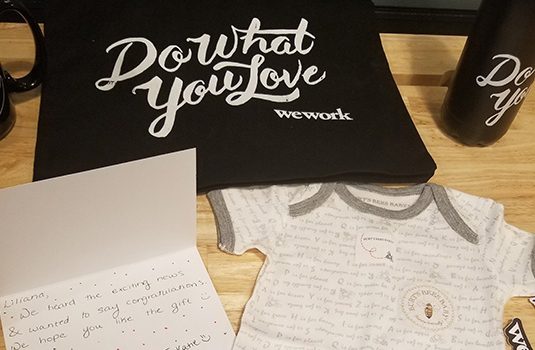
WeWork Does Customer Experience Right with a Wow Moment
Used at the right time and place along the customer’s journey, the Wow Moment is an excellent retention technique. When a brand creates personal, relevant experience at exactly the right time, it can build a lifelong, loyal customer relationship.

Customer Experience for Vertical Takeoff
VTOLs (vertical take-off and landing vehicles) are projected to hit mature industry status in 2035 (Aviation International News). In just over ten years, the entire aviation ecosystem will be radically…

Extend the Customer Journey with AI
Superior customer experience hinges on seamless customer journeys. We build strategies around this, design CX programs, and map the journeys of customer personas, all with the aim to meet customer…

Create Your Tribe: How Great CX Makes a Lifestyle Brand
Newcomers to the market realize that their business is only as strong as the growth of their customer base. With that in mind, senior leaders work hard to shorten the distance between them and the customer.

3 Customer Experience Strategy Lessons for 2023
Customer experience strategy guides exceptional experience and bolsters growth. When executed well, it impacts not only your market share, but the entire industry in which you operate. In fact, a…

What is the best question for your CX Survey?
As customer experience professionals, we need to factor in this disconnect when we design surveys. And when we react to survey results. Customers have an image of who they want to be. However, their behaviors do not always reflect that image.

5 Things You Can Do to Provide Excellent Passenger Experience in 2022
The Wall Street Journal predicts this Thanksgiving will be among the busiest travel days in decades, with 55 million travelers anticipated to be moving through US airports and other transportation…

Can One Email Build Loyalty? #MYWESTELM
This is exemplary management of the post-purchase journey touch-point. For years, this level of management has been non-existent. At best, it tends to come in the form of an email confirmation that purchased items have been delivered.

Are You Ready to Go Exclusive with Jane, Your Digital Concierge?
In 2015 JetBlue introduced bag fees. Seven years after the competition. The media exploded. Many publications were negative. They blamed the airline for “selling out.” One headline read “A New…

Customer Understanding for Airport Customer Experience: Theory vs Practice
One of the (many!) interesting things about working in airport customer experience for as long as our team has, is watching how the language around customer experience changes as ideas…

Autonomous Service Starts at the Top: A CEO To Do List
In a recent article, we explored the controversial news that the customer service agent role as we know it is dead. The AI service agent is taking its place. Granted,…

Let’s Get You Certified as a Customer Experience Professional!
Like all mature professions, customer experience has a certification that is internationally recognized. Adding it to your resume will signal to the business community that you are serious about customer experience and your aspiration to be part of its leadership ranks…

Healthcare Whitepaper: Impact of Patient ‘I Wants’ in Healthcare
Rachel Dreyfus joins The Petrova Experience with a guest blog about patient experience. Background A culture of positive patient experience is increasingly important in Healthcare, affecting patient outcomes and satisfaction….

What Flight Delays Teach about Customer Recovery
One of the things we enjoy most about customer experience design for the aviation industry is tackling its unique complexities. And there are many complexities! With more than 4.17 million…

Customer Experience Audit: Starbucks Bets On The Physical Experience
Starbucks is opting in for the physical experience in order to become a lifestyle brand while other brands are investing in omni-channel experience.

Customer Experience Trends – 8 Actionable Tactics in 2021
As we begin Q4 of an eventful 2020, it’s time to look out for the 2021 customer experience trends and tactics for creating exceptional experiences in increasingly complex environments. We…

Holiday Wishes for Great CX: Career Advice Edition
Every successful customer experience initiative starts with a skilled CX team. Brush up on your CX skills to strengthen the business case for CX; to develop relationships within your organization; and to deliver standout customer experiences in the new year.

Contactless and Self-Service are Here to Stay
Our 5th 2021 customer experience trend highlights contactless and self-service experiences across industries. Before we dive into this topic, let’s take a moment to define what contactless and self-service mean…

What is Customer Experience? What are the Faces of CX?
Each area of CX represents a path for CX professionals to impact business health and build successful careers. One of my favorite CX analogies is that it is like the blood in our bodies. When CX is done well, it touches every aspect of an organization. That’s what makes customer experience so much fun! You will never be bored working in CX.

Poor Integration is Bad for Customer Journey and Worse for Brands
Although we all have bad customer experiences, there is still a big debate about “the CX field” and whether it will survive the test of time. There is no doubt…

Lessons Learned at the Forrester Conference: “Data is the New Sexy”
Once a year I look for an event to attend where I can learn something new and get better at what I do. This year, I attended an event hosted…

How ChatGPT Can Help with the Healthcare Quadruple Aim
How ChatGPT can help healthcare and other industries is consuming conversations far beyond patient and customer experience. As much as we are leading the charge about AI regulation, best practices,…

Why you need a defined culture for customer experience?
When designed and built correctly, customer experience expresses an organization’s brand. Your brand and marketing promises serve as a guiding light to your experience team. Similarly, organizational culture serves as a goalpost for the service side of customer experience.

Eliminate Customer Stress with Good CX
Good customer experiences design either gives back customer time or alleviates customer anxiety. If a brand’s CX isn’t achieving one of those goals, the customer isn’t getting any real or…

Return to Office – how to get it right in 2022?
Last week, the CEO of Better.com, Vishal Gard, made the news again. This time, it was for the executive’s massive blunder of firing 900 people via Zoom. A blunder that…
How Do You Know You Are Making The Right Big Bet?
The future of customer experience is full of opportunities. However, the technologies of the future are not enough. Adaptive, memorable customer experiences require empathy and innovation. Liliana tackles this in…

#CXTHUS Exchange Insights – winners and losers?
Attending a customer experience conference is a significant investment of time and money. Even if you are speaker at the conference, like I was last week, the time away from…

Employee Centric Culture – Culture is King
In 2017 we introduced our ROI series recognizing the challenges all customer experience professionals have to obtain funding for CX initiatives and to prove their positive returns. Our second ROI…

Human Experience: Do You Really Know Your Customers?
Steve Jobs said: “Get closer than ever to your customers. So close that you tell them what they need before they realize it themselves.” He did not just say that….

How to Solve the 2025 Customer Retention Problem
It’s 2025, and businesses across sectors have a customer retention problem. U.S. companies alone lose an estimated $168 billion annually due to customer attrition, as revealed in a CallMiner whitepaper….

FIFA World Cup, LA Olympics 28, and the Business of Customer Experience
Because we are experience designers (of fan experience transportation hubs and systems), who also happen to be mega-soccer fans, three years before the first ball was kicked at MetLife Stadium,…

Beyond Customer Satisfaction: 3 Unexpected Ways CX Drives Value
It is time to debunk the nice-to-have myth about customer experience. It is true the discipline operates in the space of perception, feelings, and emotion. What is equally true, but…

Customer Experience Plan is More Important than Ever
Last week we published eight Customer Experience Trends to look out for in 2021. Today we are diving deeper into the first one: Customer Experience is more important than ever…
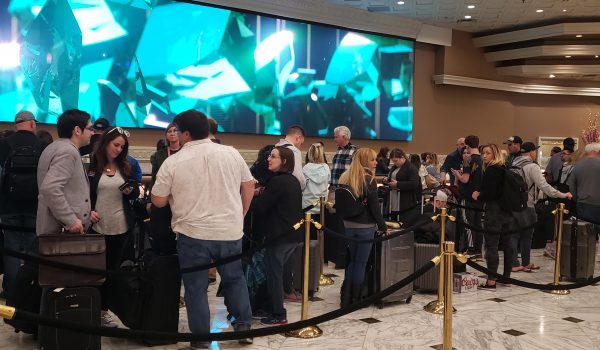
What Can Casino Consulting Firms Learn from Airlines?
Today we’re talking about casino experience. Casinos and airlines are similar in their operational complexity and sense of wonder. They also are similar in the way they can implement technology…

Customer Experience Design – How Do You Want Customers To Feel?
Last week, we talked about CX Design in terms of space and function. Today, we continue our customer experience design journey to talk about the design of emotions and feelings. All…

How Smart Do Humans Want AI To Get?
Earlier, we covered the basics of AI and what it is in theory. Today, we talk more about existing practical applications of AI and more examples of artificial intelligence. And…

2026 Customer Experience Trends Every CEO Should Watch
Customer expectations are shifting faster than most organizations can adapt. Over the last year, we have been talking to a variety of audiences about the reality forward-thinking CEOs cannot afford…
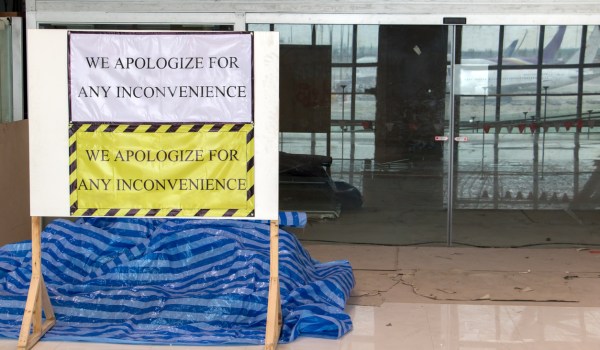
No Pass During Construction: Why Airports Must Rethink Customer Experience in the Era of Capital Programs
Throughout the US, airports are entering one of the most consequential decades of infrastructure development in the history of modern aviation. According to Airports Council International–North America (ACI‑NA), US airports…

Coronavirus Travel: What Does Hospitality Mean Now?
I want to tell you about my recent passenger experience. Earlier this week, I traveled to New Orleans from JFK Terminal 5 in New York. I had planned an airport…

How to Prepare for AI: Dispatches from CR Summit, Charleston
On the eve of the #CRSummit in Charleston, customer experience leaders from various industries held the first AI Committee meeting. AI is a challenging topic to cover because it has…

Hiring Tips: Who Should I Hire First on My CX Team
The pressure to demonstrate business impact and ROI on your Customer Experience initiatives quickly makes your first hire even more important. As usual, there is no answer that fits all scenarios perfectly. We have some helpful strategies to consider based on the structure of your organization and your goals.

Customer Experience Audit: Uber Bets On Self-Driving Cars With Big Volvo Purchase
The question that remains unanswered is who will be part of the future of transportation. Uber is going for the vertical integration – the whole pie. The future industry of urban transportation will be made of players in three different categories: cars, self-driving software, and ride-sharing network. In contrast, Lyft approaches the future through partnerships.

The ROI of Customer Experience
Knowing the ROI of customer experience helps to fund CX projects and make intelligent investments in customer experience. But a deeper examination into the question about CX return on investment…

5 Ways Customer Experience Consultants Keep Customer Promises
Customer experience is the follow-through on brand promises across every interaction. Some organizations assume the importance of customer experience is limited to commercial brands. This is far from true. In…

Travel Experience Stories: How Not to Leave Customers Stranded
Meet Diane. Diane is traveling with her 2 year old and 5 year old to her in-laws’ house for Thanksgiving. This is the one annual trip she takes. And she…

Customer Experience Audit: Cadillac Scores Millennial Customers with Future-Forward Thinking
Editor’s Note: This post is part of a Customer Experience Audit series. See all the audit stories. The automotive industry is right next to the airline industry in terms of…

New Frontiers in Passenger Experience: Where is the Passenger in the Urban Air Mobility Ecosystem?
Two years ago, I stood on stage at the Aviation Americas Festival in Miami and asked a provocative question: What if the future of aviation isn’t just about aircraft, but…

5 Tips to Create Great Customer Experience Design Strategy
A customer experience design strategy that is sustainable and successful starts by having a vision and knowing who your customer is. This launching point enables you to design customer experiences…

When There is No Chat in Chat Support
Today we talk about chat support best practices, the customer experience VALUE that it creates, and the ROI of the business case to implement it. Although we are skeptical about…

Customer Engagement ROI
We have discussed the power of employee engagement for your brand. And we have explained the true meaning and ROI of a working organizational culture (a culture that starts at…

The Biggest AI Mistake Most companies are Making
Much of AI news focuses on the importance of regulation, data risks, and intellectual property debates. And of course there is the rally cry “AI is coming for our jobs.”…

The Invisible Friction Points Weakening Manufacturer Customer Experience
For years, manufacturers have competed on product quality, operational efficiency, and price. Our current environment of supply chain volatility, talent shortages, and the elevated customer expectations in the “experience economy”…

From Pain Points to Magical Moments: Transform the Customer Experience
Argyle Journal interviewed Liliana Petrova about emerging self service technology and meeting and exceeding customer expectations in airports. One such way, as Liliana explains, is to create magical customer experience…

How to make work at home work?
Post-COVID employee experience is a top priority of every HR executive. Most executives I know are losing sleep over this piece of organizational culture. Their challenge is to design the…

Fan Experience: CX Lessons for Hosting Major Events
With the World Cup coming to New Jersey and the greater New York area in 2026, the time is now to create positive fan experience moments. The 2026 Soccer World…

5 Ways to Leverage OpenAI for Customer Experience
Back in 2017 when we served on the AI Advisory Committee for Execs In the Know, we wrote an article about the role of artificial intelligence in the future of…

Why I Don’t Love Chatbots
Today, we tackle the value proposition that chatbots are more valuable to companies than customers. I reject this. The ROI simply is not there, especially since better customer experience is…

3 Challenges of Hybrid Working and How to Overcome Them
According to a Gallup study, 53% of Americans expect to work in a hybrid arrangement in 2022 and beyond. This number is significant enough for corporate America to get hybrid…
What’s the Scope
Launched by CXPA (the Customer Experience Professional Association) in 2013, and held annually on the first Tuesday of October, CX Day aims to “advance customer experience as a professional role…
Digital Customer Experience Strategy – Top Three Mistakes
How many of you have interacted with financial and insurance institutions who seem to have forgotten the invention of the world wide web and applications design? In 2021, Major players…

Customer Experience ROI. Is It Worth Doing?
The business case for Customer Service is complex. Gone are the days when we bought a piece of hardware that depreciates over 5 or 10 year on the balance sheet. CX does not even show up on our assets list. At least not with that name.

What is Telemedicine? Keeping Medicine at the Heart
Guest Post by Dr. Melynda Barnes for The Petrova Experience. In this post Dr. Barnes answers the question “what is telemedicine,” and reminds us to keep medicine at the heart…

Trust Is the Treatment: How to Achieve ROI on Patient Experience through CX Strategy
Patient experience is not a soft metric. It is an engine for financial performance, improved clinical outcomes, and sustained patient loyalty. For hospital executives and family medical practitioners alike, investing…

Autonomous Customers, Traveler Privacy and More Questions for CX Professionals in a Changing World
“As we move toward a more automated culture, most travelers will adapt to a Jetsonian, automated lifestyle. Every industry we know will be disrupted. For those of us in aviation,…

Grateful for Customer Experience Heroes
When we launched The Petrova Experience, we did so with the words “in pursuit of customer happiness.” Pursuit of happiness is part of every interaction we have with our clients,…

What is Customer Experience Day?
Although I opened my consulting practice this year, I have been working on customer experience for much longer. The first time I celebrated CXDay officially was only two years ago….

How to Overcome Hospitality Industry Challenges by Empowering Employees
If you are a hospitality industry leader, or a leader in another business sector who has been reading about the industry, you have encountered some grim statistics. It is true….

Journey Mapping to Avoid Travel Horror Stories
Welcome to the busiest week of US summer travel. AAA predicts travel this week across airports, train stations, and roads, will reach higher than pre-pandemic levels for the first time….

3 Call Center Mistakes You Are Making
No matter how often my peers and I say that technology is not the answer, call center managers still ask…

Why Good CX Programs Fail
Digital technology powers employee experience on the inside to deliver seamless, intuitive experience to customers on the outside. So, when you are creating Customer Experience Programs, you must plan and…

Service Design vs Customer Experience 2021
Customer experience design as a discipline is relatively new. Service design vs customer experience design adds another layer of confusion. For starters, CX design is not yet popular enough to…

What is Customer Experience for Built Environments?
A tweet grabbed our attention this week: “The Atlanta Airport (ATL) designers were like ‘and then what if we had them run 5k?’” In addition to making us laugh, this…

Customer Experience Audit: Domino’s Making the Right CX Choices
Editor’s Note: This post is part of a series of Customer Experience Audit – as series of articles featuring examples of good customer experience and bad customer experience in practice….
Are You Ready to Go Exclusive with Jane, Your Digital Concierge?
In 2015 JetBlue introduced bag fees. Seven years after the competition. The media exploded. Many publications were negative. They blamed the airline for “selling out.” One headline read “A New…
Can One Email Build Loyalty? #MYWESTELM
This is exemplary management of the post-purchase journey touch-point. For years, this level of management has been non-existent. At best, it tends to come in the form of an email confirmation that purchased items have been delivered.