

Autonomous Service Starts at the Top: A CEO To Do List
In a recent article, we explored the controversial news that the customer service agent role as we know it is dead. The AI service agent is taking its place. Granted, this solves multiple problems relating to cost, efficiency, and consistency of customer experience, as we discussed last time. However, it also raises questions about executive readiness.
So, what do CEOs need to do now to ensure you are implementing and reaping the benefits of an automated frontline workforce? What pitfalls present themselves? And how do we, as leaders, make customer-first decisions about technology that align with our experience and business strategy? Today, we examine what CEOs need to know. And what you must prepare to action, to avoid introducing autonomous customer service solutions that are out of step with (or antagonistic to) the aligned customer experience strategy and business strategy. The strategy that underpins successful service delivery decisions.
Customer Expectations and Automated Service
As established in our previous article, customers want fast, accurate, personalized experiences. Meeting these expectations is more important to a customer than who meets them. Note, this is true of both the B2B customers and B2C customers that we have encountered. The Qualtrics 2026 Global Consumer Experience Trends Report confirms customer preference speaks to the character of the experience – fast, accurate, personalized – rather than the deliverer of the experience (human vs. automated service delivery).
Brands deliver supported personalized experiences faster when we leverage automation tools from a robust customer experience strategy that sufficiently captures who our customers are. What they want. And how we orient our services to serve them. Conversely, adding technology tools too early breaks customer trust. As does inserting those tools into the operation in a way that is siloed from strategy. Or programming AI solutions that are out of step with your brand’s mission, vision, and capacity to deliver on promises.
It is important to remember these words of caution: fractured trust violates a key principle of customer centricity. And it leaves your brand vulnerable to reputational risk, customer churn, and the other outcomes of bad customer experience.
How to Meet Customer Expectations via Autonomous Service
With that in mind, let’s dive deeper into preparation mode. Calibrating autonomous service to meet customer expectations starts with evaluating (and often redesigning) your operating model. Further, it requires investment in unified data infrastructure. When done well, this results in deeper customer trust, earned through personalized service delivery and transparency.
All of this, of course, depends on a strategic framework that guides every decision that affects customers. That framework provides your organization with its North Star of customer experience. Without it, you have a series of disparate solutions that risk generating expensive, fragmented experiences that operate outside of the customer trust relationship that yields positive CX outcomes and customer loyalty.
Redesign the Operating Model, Not Just the Tech Stack
As with all customer experience technology conversations, neither the value nor the work rests solely in the technology itself. Let’s zero in on the people and the processes. Remember, as we so often say, customer experience is made up of people, processes, and technology, working in concert to achieve your strategic objectives.
Autonomous service requires a shift from siloed functions to experience‑oriented operating models. What are the steps involved in developing experience-oriented operating models? First, get all the players in a room. Just like culture starts at the top, so does autonomous service. And the effective change management that drives its success.
Break Down Departmental Barriers
Dismantle departmental silos by having the tough conversations. As a consultant, I am often in the room for these conversations. They are difficult (consultants help with that part). They are political. They require leaders to listen more than we speak, giving departmental stakeholders time to explain how they understand their roles and where their contributions fit into the entirety of the operation.
Honest conversations aimed at breaking silos also present you with the opportunity to articulate how and why every department, at every level, owns a part of the customer experience. With that shared ownership in mind, co-create operating models for autonomous service geared towards unified, recognizable customer-centric experiences.
Centralize Data Governance
For autonomous service to function as a meaningful extension of your brand, aligned with your experience strategy, it is the responsibility of the CEO to establish centralized data governance as a non‑negotiable leadership mandate. Autonomous agents can only deliver the fast, accurate, personalized service customers want when they are operating from a single source of truth.
For many organizations, the problem we uncover is that source of truth is actually fragmented across business units, legacy systems, and inconsistent definitions of essential operating terms like “customer,” “issue,” and, even, “resolution.” Centralizing governance eliminates this fragmentation.
Instead, it creates enterprise‑wide standards for data quality and access. Further, it ensures autonomous decisions are compliant with strategy, consistent for application across scenarios, and auditable to drive continuous improvement. This gives leaders the visibility necessary to manage risk and bias before scaling. In a service‑oriented model, data governance serves as the structural backbone, allowing you to use autonomous service to operate with confidence, context, and customer-centric value.
Align KPIs Across the Customer Journey
For consistent, repeatable, quality customer experience, we need to assure the customer journey is aligned with strategy, yes. Moreover, we need to assure that performance measurement is aligned with key touchpoints along the customer journey.
We cannot promise or deliver customer-first service if we do not know where, when, and how we are serving our customers. Leaders need to be asking questions like, at what point is customer need the highest. And how are we meeting their needs. As we build, test, and maintain customer journeys in both the digital and the physical space, we see that assigning KPIs at key points along the journey helps to capture real information that improves the journey for customers. This is the data that drives the efficiency and personalization customers want.
Aligning KPIs across the customer journey requires CEOs to reset how organizations define success. The first step is to replace things like function‑specific scorecards with a shared set of enterprise outcomes that capture resolution quality, customer effort, trust, and lifetime value. Functions that every team is accountable for. That brings us back to how every department, and every team member, is a customer experience owner.
One effect is eliminating hidden incentives that push functions to optimize locally at the expense of the overall journey. Take this as an example. You reward your Contact Center for speed, digital for deflection, and operations for accuracy. When you shift to autonomous agents, they inherit these competing priorities. What is most important? How do you level set? That goes back to strategy.
KPIs for Unified Customer Experience
For a unified customer experience, the kind autonomous service agents are best leveraged to support, you must mandate a single (read: unified) definition of “good.” And this definition of good, rightly constructed and aligned with your CX strategy, spans the scope of the customer journey. Use this to inform performance review measurement and compensation. Together, this works to deliver customer-first value at every stage of the journey. And the autonomous service delivery component supports your unified experience. It does not exclude your human employees. Within the unified customer experience, they are empowered to deliver more value to customers, and to reap the rewards that value brings.
Now, let’s look at making necessary changes to the measurement system itself. Autonomous service requires real‑time signals to operate at a level that delivers value to your organization and your customers. That requires CEO sponsorship for the integration of operational value, behavioral data, and customer feedback. All culminating in a unified measurement layer that teaches autonomous agents to deliver on customer and organizational expectations. Expectations codified by your CX strategy.
In terms of enablement, we find that cross-functional governance rituals are key. Some governance rituals that work well in the field include weekly journey reviews, shared dashboards, and joint accountability for issues resolution. These are only some of the ways you can operationalize insights and drive CX improvements. The most important recommendation is to prevent insights from getting trapped in silos. Remember, your goal is alignment. When CEOs drive alignment like this, autonomous service is empowered to self‑correct, continuously improve, and consistently reinforce your brand promise at every touchpoint. That makes autonomous service (when guided with strategic CX best practices), a cornerstone of customer-centric delivery.
Invest in Unified Data Infrastructure
There are no clean outcomes from dirty data. Customer-first autonomous service requires the operational backbone of unified data infrastructure. Why is this so important? Because creating a single data fabric that integrates customer, operational, and behavioral data in real time enables autonomous agents to respond using meaningful context rather than generic guesswork.
When data flows cleanly across systems, channels, and functions, you take the burden off your customers. And resolve one of the most common customer complaints: forcing them to repeat themselves multiple times in an effort to access the help they seek. Leveraging unified data, autonomous agents anticipate needs, resolve issues proactively, and maintain continuity across the journey.
We see clean, structured customer profiles as the next layer. As CEO, it is your responsibility to mandate enterprise‑wide standards for data hygiene and taxonomy. This enables every autonomous interaction to be grounded in your unified definitions of “customer,” “issue,” and “resolution.” All within a shared analytics environment. A place where teams can access insights, train models, and monitor performance without duplicating work or building conflicting iterations of the “truth.” Unified analytics improve autonomous service accuracy, consistency, and scalability.
Importantly, this only works with a strong AI governance framework. That means implementing clear guardrails for model training, bias detection, data access, and decision rights. This governance is what keeps autonomous service safe, compliant, and aligned with your brand values as your automation learns and improves over time. Absent unified data and governance, automation suffers fragmentation. And so does your customer experience. So do not skip this step.
Transparency and Humanity
Essential in every AI conversation is the human component. We remind you that the purpose of autonomous technology is to seamlessly deliver customer experiences that are based on the core principles of customer-centricity. Chief among those principles is trust.
As AI becomes a default service channel, trust is even more of a core CEO‑level responsibility. Executives at the helm must ensure clear communication about how your organization is using artificial intelligence to serve customers in a way that directly aligns with your customer experience and business strategy and corresponds to actual customer needs and expectations. Further, make it a goal to develop strong privacy and security practices that remain in step with the technology you introduce to your operation as that technology evolves with your operation.
Autonomous service requires ethical governance and leadership support for maximizing human employee contribution to the shared ownership of the customer experience. As we have shared since our early days talking about the impact of AI in the world of business and CX, the introduction of these tools, that are enhancing how we serve customers daily, liberates our human capital to be uniquely creative. To contribute to solving problems, developing products, services, and ideas. And to engage in person-to-person issues resolution when the stakes are highest and human connection is most important.
To take your next steps to aligning strategy with automated service delivery for customer-trust, schedule time to talk with us.


CX Skills Builder: How to articulate your CX Value and secure your budget
Two weeks ago we urged you to find CX problems and fix them instead of diagnosing and mapping them. That is

Bad Travel Experience
As we come to the end of the summer season, it is time to talk about travel – good and bad travel experience. And how the sharing economy has both…

What is Revenge Travel and Why People Do It
LinkedIn is overflowing with articles and company news in response to COVID-19. We are starting to see renderings of future casino experiences that are anything but human-centric. People are beginning…

3 Call Center Mistakes You Are Making
No matter how often my peers and I say that technology is not the answer, call center managers still ask…

#CXTHUS Exchange Insights – winners and losers?
Attending a customer experience conference is a significant investment of time and money. Even if you are speaker at the conference, like I was last week, the time away from…

Aviation Industry, Coronavirus Isn’t the Only Thing Killing Us
Eighteen years ago, September 11th caused a three-day halt of the US commercial airlines and resulted in a 31.6% reduction in travel in September 2001 compared to the previous year….

What is Big Data and Why Should I Care?
Big data has become part of our daily language. We read about it. We see companies that are “experts in big data.” LinkedIn is filled with engineers and analysts who…

What Can Casino Consulting Firms Learn from Airlines?
Today we’re talking about casino experience. Casinos and airlines are similar in their operational complexity and sense of wonder. They also are similar in the way they can implement technology…

How to Sell the C-Suite on Customer Experience
You finally got your big career break. You are leading a project that requires executive approval. So, now what? Intuitively, you know that this is a chance to make a…

2026 Customer Experience Trends Every CEO Should Watch
Customer expectations are shifting faster than most organizations can adapt. Over the last year, we have been talking to a variety of audiences about the reality forward-thinking CEOs cannot afford…

How to Be an Entrepreneur: 5 Things I Learned in 5 Months as an Entrepreneur
The life of an entrepreneur is different every day, but the one thing that remains the same is that we are always learning. These are my lessons in how to…

Customer Experience Technology View of your Call Center
By 2022 the global cloud based contact center market is growing from USD 6.8Bn in 2017 to 20.93Bn in 2022. This makes for CAGR of 25.2%. If you do not…

3 Ways to Create a Better Employee Experience Strategy
Guest Post by Gabe Smith, CCXP for The Petrova Experience The relationship between employee experience strategy and customer experience has long been discussed. Without engaged employees, we’re told, it’s difficult…

No Pass During Construction: Why Airports Must Rethink Customer Experience in the Era of Capital Programs
Throughout the US, airports are entering one of the most consequential decades of infrastructure development in the history of modern aviation. According to Airports Council International–North America (ACI‑NA), US airports…

Customer Experience Audit: Cadillac Scores Millennial Customers with Future-Forward Thinking
Editor’s Note: This post is part of a Customer Experience Audit series. See all the audit stories. The automotive industry is right next to the airline industry in terms of…

Are You Ready to Go Exclusive with Jane, Your Digital Concierge?
In 2015 JetBlue introduced bag fees. Seven years after the competition. The media exploded. Many publications were negative. They blamed the airline for “selling out.” One headline read “A New…

Human Experience: Do You Really Know Your Customers?
Steve Jobs said: “Get closer than ever to your customers. So close that you tell them what they need before they realize it themselves.” He did not just say that….

Are You Thinking Strategically?
Today, we are elevating our conversation to thinking strategically. The Petrova Experience is in the strategy creation business. So, we frequently encounter the difficulty businesses have anticipating, let alone defining,…

Beyond Customer Satisfaction: 3 Unexpected Ways CX Drives Value
It is time to debunk the nice-to-have myth about customer experience. It is true the discipline operates in the space of perception, feelings, and emotion. What is equally true, but…

Even the US Government is Jumping on the Customer Experience Train
As we get ready for 2021, we have been diving in to the top customer experience trends we see on the horizon. So far, we have looked at why customer…

How to Scale a High Trust Health Service Without Breaking Patient Confidence
When a healthcare technology company begins to scale, the pressure can feel punishing. The patient can get lost in the momentum of growth. And quickly, profit projections can stumble into…

Why No One is Collecting Authentic Customer Feedback
Businesses need customer feedback collection to thrive in a competitive market. Everyone thinks they are collecting and acting on customer feedback, yet 80% of US companies failed to increase customer…

4 Career Tips to obtain a Customer Experience Role
In honor of the 4th of July, we are rounding up 4 career tips for CX professionals. Set aside some time during the break from work to take stock in your CX career and evaluate the steps you need to get to the next level.

Leadership During the Pandemic: Guest Post by Rachel Dreyfus
This is a guest post by Rachel Dreyfus, President, Dreyfus Advisors, who researched leadership and organizational culture during the pandemic. How has Covid19 influenced leadership over the past three months?…

United Airlines Culture Problem
I am often asked what organizational culture is. Frequently, I meet with executives who are feeling defeated by the scale and complexity of leading cultural transformations. So, where do you…

Top CX Design Challenges in 2021
Customer experience design challenges in 2021 remind us of the overall challenges that face organizations in a year marked by changing expectations and demands. Top customer experience design challenges include…

Airports of the Future: Trends and Innovations
Every year since we founded The Petrova Experience, we write about travel around the holiday season. It has become something of a tradition for us. This year, I will not…

5 Ways Customer Experience Consultants Keep Customer Promises
Customer experience is the follow-through on brand promises across every interaction. Some organizations assume the importance of customer experience is limited to commercial brands. This is far from true. In…

How to Get Enough Funding for CX Initiatives
Delivering impactful customer experience programming starts with making the business case for customer experience to executive leadership. This is a straightforward objective. However, it requires strategy, clarity, education, and communication…

2021 Customer Loyalty Strategy – Relationships over Transactions
According to the Salesforce Connected Customer Report, 90% of consumers expect companies to clearly demonstrate their values and 66% expect brands to demonstrate empathy. In other words, when thinking about…
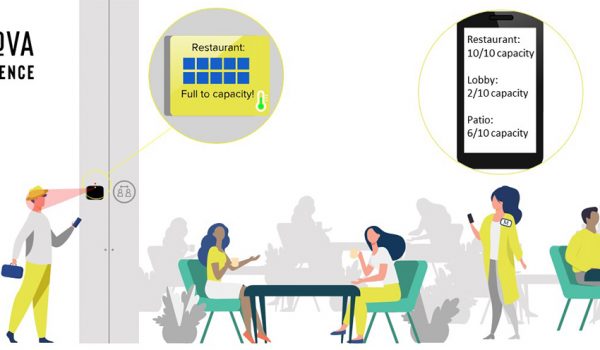
How Facial Recognition Works for Your Customers?
One of the hurdles for Customer Experience Consultants like us is proving the business case for bringing us on board. Leaders often think that if they talk about being customer-centric…

Celebrate National CX Day
Did you know that tomorrow is National CX Day? Some of you may not even know what “CX” means or why there is a day to celebrate CX. CX stands…

Customer Loyalty Begins In-House
Ten years ago, creating customer loyalty meant assigning a membership number customers fed back to brands at the time of purchase. Customers went through the trouble of keeping track of loyalty numbers, hoping to collect enough points along the

Grateful for Customer Experience Heroes
When we launched The Petrova Experience, we did so with the words “in pursuit of customer happiness.” Pursuit of happiness is part of every interaction we have with our clients,…
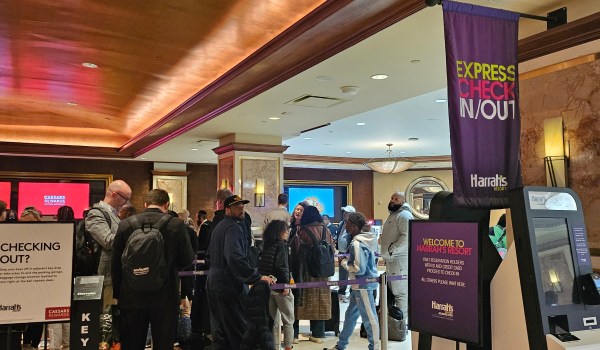
Hotel Service Recovery Strategies in Action: Real-World Example and Lessons Learned
From both a revenue and service delivery point of view, a hotel stay equals more than providing a place to stay. Done well, it creates an experience that makes guests…

Why You Need Culture Not Call Center Training for Customer-Centric CX
If the organization does not understand what customer experience is, you will not get the funding or organizational support you need to build customer-centric experiences.

3 Customer Experience Strategy Lessons for 2023
Customer experience strategy guides exceptional experience and bolsters growth. When executed well, it impacts not only your market share, but the entire industry in which you operate. In fact, a…

What Holiday Parties Teach about Hospitality
Last week The Petrova Experience, like many companies, hosted our holiday party. In good customer experience fashion, we put significant effort into finding the perfect location. We agonized over the…

Life, Liberty, and the Pursuit of [Customer] Happiness
Seven years ago, when we launched The Petrova Experience, the 250th Anniversary of the founding of the United States felt far away. However, its founding principles, particularly the pursuit of…

How Smart Do Humans Want AI To Get?
Earlier, we covered the basics of AI and what it is in theory. Today, we talk more about existing practical applications of AI and more examples of artificial intelligence. And…

Liliana Petrova Talks Patient Experience in Healthcare Podcast
Recently, we recorded a podcast on patient experience in healthcare with Stacey Richter. Today, we are excited to share it with you. On the episode, we discuss travel and healthcare…

How to make work at home work?
Post-COVID employee experience is a top priority of every HR executive. Most executives I know are losing sleep over this piece of organizational culture. Their challenge is to design the…

Interoperability is a Business Risk for Medtech and a Healthcare Risk for Patients
Looking at patient experience and healthcare interoperability in the medtech environment, any observer (customer experience expert or not) recognizes something is broken. A thorough exploration of what is broken exposes…
Customer Experience Tips and Best Practices In 2017?
This is Post 2 of Liliana Petrova’s series on customer experience. She shares customer experience tips, lessons learned, and best practices for the new year. And dives into organizational culture…

Customer Experience Audit: Uber Bets On Self-Driving Cars With Big Volvo Purchase
The question that remains unanswered is who will be part of the future of transportation. Uber is going for the vertical integration – the whole pie. The future industry of urban transportation will be made of players in three different categories: cars, self-driving software, and ride-sharing network. In contrast, Lyft approaches the future through partnerships.

The ROI of Investing in Organizational Culture
Investing in organizational culture is a strategic and operational imperative for employee retention, scalable growth, and successful mergers and acquisitions. Organizational culture is not what you do as a leader…

Coronavirus Travel: What Does Hospitality Mean Now?
I want to tell you about my recent passenger experience. Earlier this week, I traveled to New Orleans from JFK Terminal 5 in New York. I had planned an airport…

When to Involve Operations in Design-Build Projects: 10 Questions with Theresa Ward
We sat down with Theresa Ward, who brings decades of experience in public and private commercial real estate development, to talk about when and how to leverage operations as a…

The ROI of Customer Experience Programs
What customer experience is, and how well brands think they are executing customer experience, and how well they are actually doing it are often at odds. According to Bain, 80%…

What Flight Delays Teach about Customer Recovery
One of the things we enjoy most about customer experience design for the aviation industry is tackling its unique complexities. And there are many complexities! With more than 4.17 million…

How To Define Your Purpose And Have Unique Culture
If you Google the word “purpose” you get the definition “the reason for which something exists.” This is a challenge if you think about it in the context of organizational…

How Seamless Customer Journeys Drive Revenue
Many travel and transportation executives identify revenue sources narrowly. Think ticket sales, ancillary fees like baggage and amenities fees or premium upgrades. Many customer experience practitioners limit their scope to…

What is the Real Cost of Employee Experience?
There are two types of leaders (and organizational cultures) that stand to benefit most from improving employee experience. The first kind have 40% or higher turnover and think their frontline…

Customer Experience Survey: Why Customers Are Not Responding
When you solicit customer feedback sometimes matters more than how you ask the questions. In the case of a survey about new biometrics boarding initiatives my team and I created for JetBlue, we had a list of feedback that was most important for us.

Customer Experience Design – How Do You Want Customers To Feel?
Last week, we talked about CX Design in terms of space and function. Today, we continue our customer experience design journey to talk about the design of emotions and feelings. All…

Customer Experience Audit: FedEx Omnichannel Disaster
In our Strategy, Org Design & Culture series, we cover customer-focused companies that are willing to adapt, take risks and discover new ways of staying relevant. Sometimes, we encounter brands…

How Well Do You Understand AI Applications?
In the last week I spoke about AI at the Argyle Forum webinar and at the ConnectID Conference in Washington, DC. Technology is emerging

Customer Experience Plan is More Important than Ever
Last week we published eight Customer Experience Trends to look out for in 2021. Today we are diving deeper into the first one: Customer Experience is more important than ever…
Digital Customer Experience Strategy – Top Three Mistakes
How many of you have interacted with financial and insurance institutions who seem to have forgotten the invention of the world wide web and applications design? In 2021, Major players…
What’s the Scope
Launched by CXPA (the Customer Experience Professional Association) in 2013, and held annually on the first Tuesday of October, CX Day aims to “advance customer experience as a professional role…

What is Customer Experience for Built Environments?
A tweet grabbed our attention this week: “The Atlanta Airport (ATL) designers were like ‘and then what if we had them run 5k?’” In addition to making us laugh, this…

Is AI Really The Answer?
Earlier this week we shared some of the pitfalls of implementing self-service and highlighted the importance of strategic and empathetic implementation. AI (artificial intelligence) is one of the self-service tools…

How Southwest Can Own Customer Experience Again
The collapse of the Southwest passenger experience this holiday season is an unlikely jumping off point for a conversation on how to own customer experience transformation. Unfortunately, it is not…

NYC Subway CX Kills Chivalry in the City
Brands have the power to make customers feel ignored, and even angry. The CX Pyramid crumbles and customer-to-customer behavior, in addition to individual experiences, suffer. Case in point, the New York MTA System.

Employee Centric Culture – Culture is King
In 2017 we introduced our ROI series recognizing the challenges all customer experience professionals have to obtain funding for CX initiatives and to prove their positive returns. Our second ROI…

Return to Office – how to get it right in 2022?
Last week, the CEO of Better.com, Vishal Gard, made the news again. This time, it was for the executive’s massive blunder of firing 900 people via Zoom. A blunder that…

CX Skills Builder: Own the Customer Experience
Often, Customer Experience professionals do not believe that they can improve customer experience by impacting the experience design for their customers. Why? What causes this disconnect? I once got a…

The Invisible Friction Points Weakening Manufacturer Customer Experience
For years, manufacturers have competed on product quality, operational efficiency, and price. Our current environment of supply chain volatility, talent shortages, and the elevated customer expectations in the “experience economy”…

What is Telemedicine? Keeping Medicine at the Heart
Guest Post by Dr. Melynda Barnes for The Petrova Experience. In this post Dr. Barnes answers the question “what is telemedicine,” and reminds us to keep medicine at the heart…

For Complex Infrastructure Projects, Teaming is All About Timing
According to a 2025 Design-Build Utilization Study, design-build is projected to represent over 47% of US construction spending by 2028, to total more than $1.1 trillion. With projects of this…

Retail Experience Design of the Future
In preparation for this article about omni-channel retail experience of the future, I thought first about the definition of omni-channel customer experience. I wanted to share with you a simple,…

United CEO does not care about #customers happiness. Really?
Lately, I have been thinking about United Airlines and its organizational culture. Initially, I thought about United Airlines culture because someone asked whether it is possible to build a customer-centric…

A Customer Experience Strategy will Define Your Success in 2021
While there may not be a magic pill to guarantee the perfect customer experience, there is one thing that every organization needs to transform into a customer-centric business. And that…

Let’s Get You Certified as a Customer Experience Professional!
Like all mature professions, customer experience has a certification that is internationally recognized. Adding it to your resume will signal to the business community that you are serious about customer experience and your aspiration to be part of its leadership ranks…

What is Customer Experience Strategy?
In our last article we talked about the importance of strategic thinking. Today, we build on this topic and walk you through the nuts and bolts of customer experience strategy….

Fan Experience: CX Lessons for Hosting Major Events
With the World Cup coming to New Jersey and the greater New York area in 2026, the time is now to create positive fan experience moments. The 2026 Soccer World…

How a Failed Bus Experience becomes a Rally Cry for Passengers
A single experience can shed light on major vulnerabilities in transportation experience. A bus trip we took from Atlantic City reveals the danger of breaking promises to customers, the importance…

Autonomous Service Starts at the Top: A CEO To Do List
In a recent article, we explored the controversial news that the customer service agent role as we know it is dead. The AI service agent is taking its place. Granted,…

Trust Is the Treatment: How to Achieve ROI on Patient Experience through CX Strategy
Patient experience is not a soft metric. It is an engine for financial performance, improved clinical outcomes, and sustained patient loyalty. For hospital executives and family medical practitioners alike, investing…

Customer Facing Experience: Communication and Hospitality
Today, we are talking about communication as part of the customer facing experience. This is one of the most misused and misinterpreted notions both in our professional lives and our…

How ChatGPT Can Help with the Healthcare Quadruple Aim
How ChatGPT can help healthcare and other industries is consuming conversations far beyond patient and customer experience. As much as we are leading the charge about AI regulation, best practices,…
What is Big Data and Why Should I Care?
Big data has become part of our daily language. We read about it. We see companies that are “experts in big data.” LinkedIn is filled with engineers and analysts who…