
Hotel Service Recovery Strategies in Action: Real-World Example and Lessons Learned
From both a revenue and service delivery point of view, a hotel stay equals more than providing a place to stay. Done well, it creates an experience that makes guests feel welcomed and cared for. It becomes the experience that connects guests to your brand and transforms them from one-time visitors to brand advocates.
For hotel-casinos, the relationship between the guest and the on-property hotel is even more complex and tied more directly to revenue generation. In this scenario, a hotel stay serves the following purposes: funnels guests to the casino floor; acts as casino loyalty integration through a comp system; awards and incentivizes players through tiered room system based on player value; and adds to cross-selling and package options. These services are key revenue generators for the hotel. In order to realize revenue opportunities, it is essential to infuse a holistic guest experience strategy into operations, service delivery, technology, and, importantly, service recovery.
Guest experience strategy vaults hospitality from its misidentification as “nice to have.” It enables measurable hospitality moments that have real impact on your bottom line. For Atlantic City, in 2024, the number of that impact is 1.65Bn net non-gaming revenue. Keep that revenue number in mind as we relate our recent experience at Harrah’s Atlantic City. As guests for an annual transportation experience conference at the hotel, our stay exposed operational and technology issues and poor planning. The result is what no service recovery plan wants: brand detraction, rather than promotion. Because Harrah’s Atlantic City lacked a strategic guest experience to drive service recovery, what could have been an inconvenience morphed into a disaster.
Today, using the example of this broken experience, we explore strategic improvements that enable service recovery for hotels, with a focus on how to overcome operational challenges and leverage technology solutions.
Anatomy of a Broken Guest Experience
Before we dive into best practices for creating and maintaining seamless guest experiences, let’s examine the recent negative experience at Harrah’s Atlantic City, including where guest experience fractures occurred along the journey, and what customer recovery opportunities on-site teams missed.
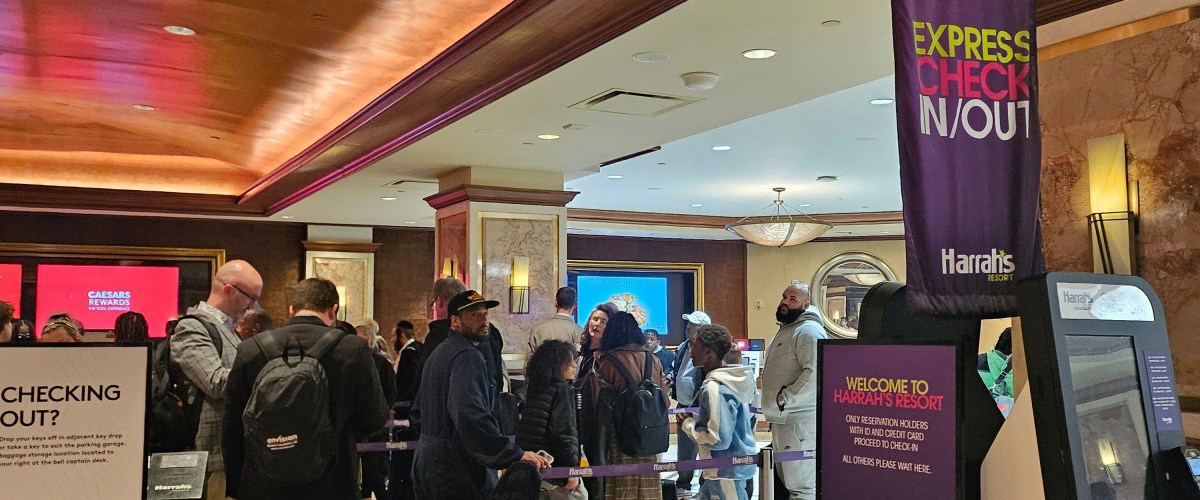
In a nutshell, this is what happened. The hotel made the decision to recode the room entry keys for the entire hotel (whether due to intentional scheduling or an unplanned-for event) without informing guests clearly or providing support. This meant guests whose key cards worked in the morning could not access their hotel room that night. Remember, I shared we were staying at Harrah’s for an annual conference. So we certainly were not alone in finding ourselves unexpectedly locked out of our not-inexpensive hotel rooms at the end of a long day.
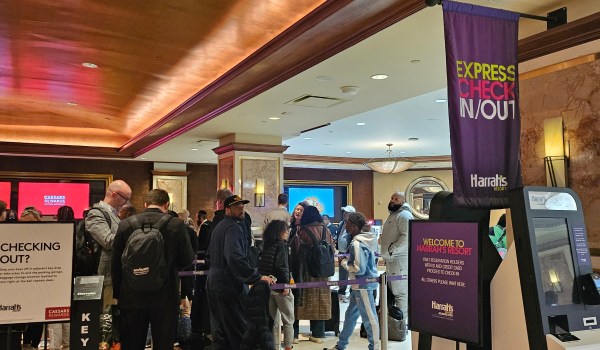
As you would imagine, this technology disruption led to long lines at the front desk. Lines filled with guests seeking service recovery. Signage was poor: 8.5X11 printer paper in plastic frames. Self-service kiosks were down. There was no extra staff – no one walking through the line to help move things along or to provide in-the-moment recovery. In short, it was a fragmented, frustrating experience that was avoidable. Even in light of the many complexities Harrah’s Atlantic City faces.
At the end of the day, this disruption and failed recovery highlighted the following gaps, all of which are necessary to address for successful hotel service recovery strategies.
- Unreliable Technology
- No Disruption Communications Plan
- Insufficient, Unclear Signage
- No Queue Management
- Disempowered Front-of-House Teams
These hard-won lessons provide an excellent use case for Harrah’s and other hotels on how to maximize service recovery and protect revenue.
Guest Experience Lesson 1: Know Your Guest
Now, we do not share this story to complain. Or to disparage the hotel. Rather, we bring this story to your attention (and theirs) to demonstrate all the ways – large and small – to infuse service recovery with hospitality. And to embrace the following lesson. Guest experience strategy that accounts for all the complexities of the casino-hotel experience and drives a guest-first mindset empowers brands to transform guests into brand advocates. Even in the event of a disruption. Especially in the event of a disruption. In fact, per Salesforce, if customer care is seen as “excellent,” 78% of customers are willing to pay your brand again even after a mistake.
Great, lesson, but what do you do first to make it a reality? To root guest experience design in an intelligent, intentional guest experience strategy, start with customer listening. If you truly want to serve your guests, you must know your guests. That means sourcing authentically representative data, building surveys, and initiating the right customer feedback systems to understand who your guests are and what they value.
Business travelers (as I was to Harrah’s Atlantic City for the conference) prioritize efficiency and seamless technology. Leisure guests crave personalization and memorable moments. All guest personas require – and deserve – clear communication and reliable service.
Drive Service Recovery through Proven Guest Experience Approaches
Once you know your guest, you can design and deliver the experiences they need, and empower your employee teams to deliver those experiences. At the core, this means you must anticipate needs and deliver proactive service.
Authentic human connection is a core guest need. In our digital-first world, humanity is the true luxury. Hospitality thrives on human connection. And technology can absolutely support human connection. When technology is done right. Admittedly, when you are staring down the operational complexities of a hotel-casino, the recommendation to focus on human connection can feel overwhelming, but it is both manageable and necessary. Human connection translates into revenue. It supports service recovery. And it compels guests to co-empathize with you, leading to more patience, quicker forgiveness, and reliable loyalty.
Genuine conversations, remembering guests’ names, and making them feel valued all work to create authentic human connection. A guest-first mindset initiates that effort. A guest experience strategy guides that effort. Technology systems support that effort. And hospitality staff training secures the success of that effort. In fact, training staff to anticipate guest needs in the smallest ways, like offering umbrellas on rainy days or recommending local dining options based on preferences, improve guest experience exponentially. Hospitality-trained staff are empowered to deliver exceptional service. They have autonomy to meet guests where they are, to resolve issues, and to create positive connections.
Leverage Technology Proactively
If technology supports service recovery, then seamless digital experiences are critical to a hotel stay. For service recovery, and to maximize the ROI of your guest experience investments, you need to get technology right. That means ensuring guest experience, operations, and front-of-house teams all have access to integrated technology. But access is not enough. Ensure everyone who touches the technology know how to use it effectively. Then, establish a plan for how to respond and communicate proactively when technology fails or when it is down for repairs and updates.
Even the sexiest intuitive booking systems, mobile check-in apps, and frictionless digital platforms are prone to service disruptions. And they are secondary in importance, impact, and customer sentiment to clear communication and authentic hospitality for service recovery.
The lesson here is to coordinate between technology and operations. Even the best technology (that you invested in heavily) fails to improve guest experience if it is not fully integrated into operational processes, guided by guest experience strategy, and supported by hospitality and technical training. When you take the time to train your frontline staff on the how and why of technology utilization, those tools become their secret service recovery weapons.
Seamlessness extends beyond the engineering of the technology itself. Seamlessness becomes your mode of service delivery across all channels, for a unified, supported experience. Especially when things go wrong.
Build Clear Communication into Hotel Service Recovery Strategies
No disruption plan means broken experiences. Clear, consistent, actionable communication, smooths the path to service recovery. In the case of our Harrah’s Atlantic City experience, technology upgrades needed to happen. That is the reality of working with technology. It is subject to both planned and unplanned outages and updates.
How you handle that reality is the difference between a seamless, positive experience and a broken, negative experience. It is a given that technology upgrades and operational changes must be rolled out with minimal disruption to guests. How to execute on that is less obvious. First, be sure to have a well-designed implementation plan. That plan must include training, contingency measures, and guest-first communications strategies.
Communicating to guests clearly, across channels, in a timely fashion to deliver actionable information that eases their painpoints and gives them back control of their experience mitigates frustration, saves time, and ultimately makes service recovery easier for your employee teams and those they serve.
Prioritize proactive communication to manage transitions, resolve issues, and empower both employees and guests, especially during periods of technology maintenance or changes.
Maximize Service Recovery Strategies
To secure revenue, particularly in an environment as dependent on customer loyalty as a casino-hotel, review your customer recovery strategies, guest experience strategy, and disruption plans. Audit them for alignment and guest-first approaches. And, even if you are seeing successful customer recovery outcomes, look for opportunities to convert all guest experience moments, even the difficult ones, into brand loyalty builders.
For help auditing your guest experience and designing service recovery strategies targeted toward revenue generation, schedule time with us.

United CEO does not care about #customers happiness. Really?
Lately, I have been thinking about United Airlines and its organizational culture. Initially, I thought about United Airlines culture because someone asked whether it is possible to build a customer-centric…

How to Build Your Customer Experience Roadmap?
This summer, The Petrova Experience conducted a Customer Experience Preparedness Survey. One of our questions assessed brand maturity in terms of customer experience strategy. Only 28% of the respondents had…

Paperless Customer Journey – JetBlue Deviceless Boarding
JetBlue Biometrics – Innovation and Disruption This year, JetBlue entered the ranks of the innovators who disrupt industries by applying customer experience technology. They not only imagine the future. They…

Let’s Get You Certified as a Customer Experience Professional!
Like all mature professions, customer experience has a certification that is internationally recognized. Adding it to your resume will signal to the business community that you are serious about customer experience and your aspiration to be part of its leadership ranks…

FIFA World Cup, LA Olympics 28, and the Business of Customer Experience
Because we are experience designers (of fan experience transportation hubs and systems), who also happen to be mega-soccer fans, three years before the first ball was kicked at MetLife Stadium,…

Customer Experience Trends – 8 Actionable Tactics in 2021
As we begin Q4 of an eventful 2020, it’s time to look out for the 2021 customer experience trends and tactics for creating exceptional experiences in increasingly complex environments. We…

Why CX Design Needs to be in Your Transportation Project RFP
Ever heard this line while working on an RFP? “I know your value, but I don’t know where to put you.” We hear it all the time. Why? Because, historically,…

3 Ways to Create a Better Employee Experience Strategy
Guest Post by Gabe Smith, CCXP for The Petrova Experience The relationship between employee experience strategy and customer experience has long been discussed. Without engaged employees, we’re told, it’s difficult…

What is Customer Experience Day?
Although I opened my consulting practice this year, I have been working on customer experience for much longer. The first time I celebrated CXDay officially was only two years ago….

When There is No Chat in Chat Support
Today we talk about chat support best practices, the customer experience VALUE that it creates, and the ROI of the business case to implement it. Although we are skeptical about…

2021 Customer Loyalty Strategy – Relationships over Transactions
According to the Salesforce Connected Customer Report, 90% of consumers expect companies to clearly demonstrate their values and 66% expect brands to demonstrate empathy. In other words, when thinking about…
What the United JetBlue Partnership Signals for Passenger Experience and Airline Revenue Optimization
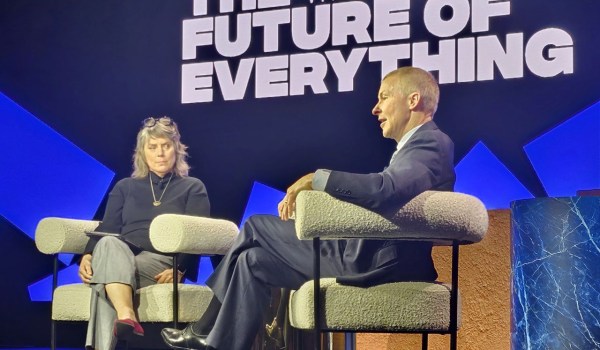
Last week I had the pleasure of seeing United Airlines CEO Scott Kirby at the WSJ Future of Everything Festival. And to hear from him about the just-announced United JetBlue…

Get Customer Experience Basics Right and You Don’t Need to Invest in Wow Moments
Wow Moments are a Customer Experience hot topic. Customer experience professionals ideate how to build, prioritize, finance, and measure these Wow Moments. Chip and Dan Heath wrote a whole book on the topic: The Power of Moments. No Wow Moment saves you from negative word of mouth if your brand fails to get the customer experience basics right or to deliver the expected brand experience consistently.

What You Need To Do To Start 2018 Right
It is the end of December and we are all in reflective moods. Did I do enough for my customer experience career this year? Did I build the right team…
Digital Customer Experience Strategy – Top Three Mistakes
How many of you have interacted with financial and insurance institutions who seem to have forgotten the invention of the world wide web and applications design? In 2021, Major players…
Customer Experience Best Practices for 2018?
The JetBlue blog features Liliana Petrova in a new four-part series. The series is on Customer Experience and Customer Experience Innovation. 2017 Lessons Liliana gathers insight from 2017 customer experience…

What is Journey Mapping?
Although we have published more than 130 articles on customer experience, we still have not dedicated an article to journey mapping. Journey mapping is the most widely recognized customer experience…

How to Scale a High Trust Health Service Without Breaking Patient Confidence
When a healthcare technology company begins to scale, the pressure can feel punishing. The patient can get lost in the momentum of growth. And quickly, profit projections can stumble into…

3 Challenges of Hybrid Working and How to Overcome Them
According to a Gallup study, 53% of Americans expect to work in a hybrid arrangement in 2022 and beyond. This number is significant enough for corporate America to get hybrid…

How Southwest Can Own Customer Experience Again
The collapse of the Southwest passenger experience this holiday season is an unlikely jumping off point for a conversation on how to own customer experience transformation. Unfortunately, it is not…

Fan Experience: CX Lessons for Hosting Major Events
With the World Cup coming to New Jersey and the greater New York area in 2026, the time is now to create positive fan experience moments. The 2026 Soccer World…

Customer Experience Audit: Domino’s Making the Right CX Choices
Editor’s Note: This post is part of a series of Customer Experience Audit – as series of articles featuring examples of good customer experience and bad customer experience in practice….

How to Build Customer-Centric Culture
Before we address how to build customer-centric culture, let’s examine the terminology: what culture is and what it is not. Culture is not executives talking about high level strategy. Equally,…

Customer Experience Audit: eBay’s Vibrant Marketplace of the Future
Editor’s Note: This post is part of a series of Customer Experience Audits. They highlight advances in artificial intelligence in retail and other technologies. See all audit stories. Two years…

What is Wayfinding?
I did not always know what wayfinding means. But ever since I left Bulgaria to come to America I have been looking to find my way. The first time I…

Why Bt2B Businesses Must Think Like B2C in the Next Decade
B2B vs B2B thinking makes a real difference when it comes to customer experience. According to Gartner at least 80% of B2B buyers now expect the same buying experience as…

How to Overcome Hospitality Industry Challenges by Empowering Employees
If you are a hospitality industry leader, or a leader in another business sector who has been reading about the industry, you have encountered some grim statistics. It is true….

How to Be an Entrepreneur: 5 Things I Learned in 5 Months as an Entrepreneur
The life of an entrepreneur is different every day, but the one thing that remains the same is that we are always learning. These are my lessons in how to…

5 Tips to Create Great Customer Experience Design Strategy
A customer experience design strategy that is sustainable and successful starts by having a vision and knowing who your customer is. This launching point enables you to design customer experiences…

Autonomous Service Starts at the Top: A CEO To Do List
In a recent article, we explored the controversial news that the customer service agent role as we know it is dead. The AI service agent is taking its place. Granted,…

The Risk No Insurer Prices: Why Customer Experience is Costing Insurance Companies Renewals
Insurers are experts in pricing physical and actuarial risk. What too few have learned to price effectively is the slow, compounding erosion that comes from fragmented customer service. What is…

What is Customer Experience Transformation?
To meet the needs of the empowered 21st Century consumer, most companies, especially larger enterprises, need to embark on a customer experience transformation. Imagine a car manufacturer that does not…

What is Customer Experience for Built Environments?
A tweet grabbed our attention this week: “The Atlanta Airport (ATL) designers were like ‘and then what if we had them run 5k?’” In addition to making us laugh, this…

Beyond Customer Satisfaction: 3 Unexpected Ways CX Drives Value
It is time to debunk the nice-to-have myth about customer experience. It is true the discipline operates in the space of perception, feelings, and emotion. What is equally true, but…
Hotel Service Recovery Strategies in Action: Real-World Example and Lessons Learned
From both a revenue and service delivery point of view, a hotel stay equals more than providing a place to stay. Done well, it creates an experience that makes guests…

Poor Integration is Bad for Customer Journey and Worse for Brands
Although we all have bad customer experiences, there is still a big debate about “the CX field” and whether it will survive the test of time. There is no doubt…

What is the best question for your CX Survey?
As customer experience professionals, we need to factor in this disconnect when we design surveys. And when we react to survey results. Customers have an image of who they want to be. However, their behaviors do not always reflect that image.

How Smart Do Humans Want AI To Get?
Earlier, we covered the basics of AI and what it is in theory. Today, we talk more about existing practical applications of AI and more examples of artificial intelligence. And…
Organizational Culture and Access to Information
By and large, people perceive culture as an HR discipline. The most common perception is that culture covers the soft side of performance. Culture is about how you do things, not so much about what you do. This approach to culture could not be more wrong. In fact, organizational culture is about so much more than a few words in a performance review sheet. It is about leaders expressing values, and the action guidance their cultural behaviors provide.

Customer Experience Audit: Uber Bets On Self-Driving Cars With Big Volvo Purchase
The question that remains unanswered is who will be part of the future of transportation. Uber is going for the vertical integration – the whole pie. The future industry of urban transportation will be made of players in three different categories: cars, self-driving software, and ride-sharing network. In contrast, Lyft approaches the future through partnerships.

NPS Best Practices
Last week I spoke at the Corinium CCO Fall Conference. One of the discussions we had was on the very popular topic of Net Promoter Score best practices and its…

Are You Ready to Go Exclusive with Jane, Your Digital Concierge?
In 2015 JetBlue introduced bag fees. Seven years after the competition. The media exploded. Many publications were negative. They blamed the airline for “selling out.” One headline read “A New…

Why You Need Culture Not Call Center Training for Customer-Centric CX
If the organization does not understand what customer experience is, you will not get the funding or organizational support you need to build customer-centric experiences.

How to make work at home work?
Post-COVID employee experience is a top priority of every HR executive. Most executives I know are losing sleep over this piece of organizational culture. Their challenge is to design the…

Employee Centric Culture – Culture is King
In 2017 we introduced our ROI series recognizing the challenges all customer experience professionals have to obtain funding for CX initiatives and to prove their positive returns. Our second ROI…

Service Design vs Customer Experience 2021
Customer experience design as a discipline is relatively new. Service design vs customer experience design adds another layer of confusion. For starters, CX design is not yet popular enough to…

Contactless and Self-Service are Here to Stay
Our 5th 2021 customer experience trend highlights contactless and self-service experiences across industries. Before we dive into this topic, let’s take a moment to define what contactless and self-service mean…

A Customer Experience Strategy will Define Your Success in 2021
While there may not be a magic pill to guarantee the perfect customer experience, there is one thing that every organization needs to transform into a customer-centric business. And that…

Customer Experience Survey: Why Customers Are Not Responding
When you solicit customer feedback sometimes matters more than how you ask the questions. In the case of a survey about new biometrics boarding initiatives my team and I created for JetBlue, we had a list of feedback that was most important for us.

How @T4 makes real customer experience impact
Today we share our impressions from visiting our welcoming host Chad at JFK Terminal 4 in NYC. We also celebrate Chad as an effective Customer Experience professional/practitioner. His work is…

Customer Experience Audit: Starbucks Bets On The Physical Experience
Starbucks is opting in for the physical experience in order to become a lifestyle brand while other brands are investing in omni-channel experience.

Customer Experience Design – How Do You Want Customers To Feel?
Last week, we talked about CX Design in terms of space and function. Today, we continue our customer experience design journey to talk about the design of emotions and feelings. All…

Customer Experience, Self Service, and the Gift of Time
Time is the most precious gift in life. If you think about it, time is the one thing we all want more of. As we get older and busier, time gets even more valuable to us.

5 Ways Customer Experience Consultants Keep Customer Promises
Customer experience is the follow-through on brand promises across every interaction. Some organizations assume the importance of customer experience is limited to commercial brands. This is far from true. In…

The Great Re-onboading: How to Bring Back Your Employees
Re-onboarding is the next employee experience organizations need to tackle. Since March 2020, leaders have encountered pandemic shutdowns, remote workforce transitions, and the Great Resignation. As restrictions lift and we…

2026 Customer Experience Trends Every CEO Should Watch
Customer expectations are shifting faster than most organizations can adapt. Over the last year, we have been talking to a variety of audiences about the reality forward-thinking CEOs cannot afford…

What is Revenge Travel and Why People Do It
LinkedIn is overflowing with articles and company news in response to COVID-19. We are starting to see renderings of future casino experiences that are anything but human-centric. People are beginning…

How to Prepare for AI: Dispatches from CR Summit, Charleston
On the eve of the #CRSummit in Charleston, customer experience leaders from various industries held the first AI Committee meeting. AI is a challenging topic to cover because it has…

Grateful for Customer Experience Heroes
When we launched The Petrova Experience, we did so with the words “in pursuit of customer happiness.” Pursuit of happiness is part of every interaction we have with our clients,…

The seamless travel experience we deserve
This week on the CES 2020 main stage Delta’s CEO Ed Bastian presented a vision about the future of seamless travel experience that “might happen in just a few years.”…

Human Experience: Do You Really Know Your Customers?
Steve Jobs said: “Get closer than ever to your customers. So close that you tell them what they need before they realize it themselves.” He did not just say that….

How to Solve the 2025 Customer Retention Problem
It’s 2025, and businesses across sectors have a customer retention problem. U.S. companies alone lose an estimated $168 billion annually due to customer attrition, as revealed in a CallMiner whitepaper….

5 Ways to Leverage OpenAI for Customer Experience
Back in 2017 when we served on the AI Advisory Committee for Execs In the Know, we wrote an article about the role of artificial intelligence in the future of…

From Pain Points to Magical Moments: Transform the Customer Experience
Argyle Journal interviewed Liliana Petrova about emerging self service technology and meeting and exceeding customer expectations in airports. One such way, as Liliana explains, is to create magical customer experience…

Guest Experience: Fusion of Hospitality and Brand Connection through Design
For a customer experience consultant who designs guest experience, and a lover of the customer experience discipline, visiting a new-to-me hotel can go one of two ways. Sometimes, I am…

Interoperability is a Business Risk for Medtech and a Healthcare Risk for Patients
Looking at patient experience and healthcare interoperability in the medtech environment, any observer (customer experience expert or not) recognizes something is broken. A thorough exploration of what is broken exposes…

Lessons Learned at the Forrester Conference: “Data is the New Sexy”
Once a year I look for an event to attend where I can learn something new and get better at what I do. This year, I attended an event hosted…

Why Customer Retention is the True Measure of SaaS Success
Guest Post by Callie Reynolds for The Petrova Experience In SaaS (Software as a Service), like in most businesses, sales is king. Sales gets the glory, and while I’d like…

NYC Subway CX Kills Chivalry in the City
Brands have the power to make customers feel ignored, and even angry. The CX Pyramid crumbles and customer-to-customer behavior, in addition to individual experiences, suffer. Case in point, the New York MTA System.

Travel Experience Stories: How Not to Leave Customers Stranded
Meet Diane. Diane is traveling with her 2 year old and 5 year old to her in-laws’ house for Thanksgiving. This is the one annual trip she takes. And she…

3 Customer Experience Strategy Lessons for 2023
Customer experience strategy guides exceptional experience and bolsters growth. When executed well, it impacts not only your market share, but the entire industry in which you operate. In fact, a…

Bad Travel Experience
As we come to the end of the summer season, it is time to talk about travel – good and bad travel experience. And how the sharing economy has both…
United Airlines Culture Problem
I am often asked what organizational culture is. Frequently, I meet with executives who are feeling defeated by the scale and complexity of leading cultural transformations. So, where do you…
Macy’s Retail Experience Risk: The Billion Dollar Lesson
With the holiday season fast approaching, it is a smart time to seek lessons from retail customer experience leaders and laggards. At the root of those lessons is the importance…

What is Telemedicine? Keeping Medicine at the Heart
Guest Post by Dr. Melynda Barnes for The Petrova Experience. In this post Dr. Barnes answers the question “what is telemedicine,” and reminds us to keep medicine at the heart…

For Complex Infrastructure Projects, Teaming is All About Timing
According to a 2025 Design-Build Utilization Study, design-build is projected to represent over 47% of US construction spending by 2028, to total more than $1.1 trillion. With projects of this…

Why Good CX Programs Fail
Digital technology powers employee experience on the inside to deliver seamless, intuitive experience to customers on the outside. So, when you are creating Customer Experience Programs, you must plan and…

How Hospitality Can Save Tourism
Travel experience experts need to remember why people travel. For most tourists, it is all about the destination. The destination is why you leave home. Before you make the decision…

Is AI Really The Answer?
Earlier this week we shared some of the pitfalls of implementing self-service and highlighted the importance of strategic and empathetic implementation. AI (artificial intelligence) is one of the self-service tools…

What Flight Delays Teach about Customer Recovery
One of the things we enjoy most about customer experience design for the aviation industry is tackling its unique complexities. And there are many complexities! With more than 4.17 million…

How to Get Enough Funding for CX Initiatives
Delivering impactful customer experience programming starts with making the business case for customer experience to executive leadership. This is a straightforward objective. However, it requires strategy, clarity, education, and communication…
What’s the Scope
Launched by CXPA (the Customer Experience Professional Association) in 2013, and held annually on the first Tuesday of October, CX Day aims to “advance customer experience as a professional role…