

What the United JetBlue Partnership Signals for Passenger Experience and Airline Revenue Optimization
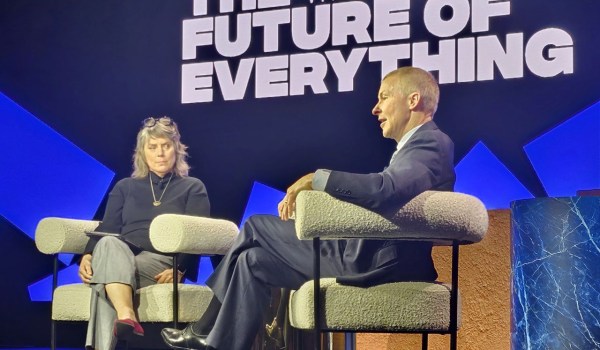
Last week I had the pleasure of seeing United Airlines CEO Scott Kirby at the WSJ Future of Everything Festival. And to hear from him about the just-announced United JetBlue partnership that will bring United back to JFK in 2027. First, and most importantly, don’t call it a merger. Kirby was clear to point this out, and to explain, rightly, that “a lot can be done without a merger.” As aviation customer experience consultants, we recognize the scope of what can be done in the context of this partnership. The value it poses to customers, how it can positively impact revenue for both airlines. And how it invites other airlines to think about consumer value and revenue generation in new ways.
At a time when airlines are faced with economic and service disruption challenges, strong partnerships offer two important features. First, they open up more options for disruption management. Second, they create opportunities to grow and leverage loyalty programs. United and JetBlue recognize this, announcing they will extend reciprocal loyalty benefits across the two airlines. That includes benefits like priority boarding and seat upgrades, important passenger benefits that motivate them to earn and redeem more rewards, faster. Especially as more choices become available to them through the partnership.
Passenger Experience Benefits of the United JetBlue Partnership
The fact that this is a partnership, rather than a merger, improves the likelihood of seamless experience delivery. Internally, for each airline and its employees, there is no brain drain. There will not be a culture change. There is no integration of systems the way there would be in a merger. And there are no job losses. So it staves off the downsides of a merger. This matters for the airlines internally, of course. Also, it creates seamlessness for passengers. Since a seamless journey is the baseline expectation for experience-driven revenue streams, the path to successful outcomes for airlines and passengers looks promising.
Because we are in the business of passenger experience, we recognize the advantages that choice and control of the journey offer customers. This partnership empowers customers with convenient access to business and leisure destinations. JetBlue still has a phenomenal network on the East Coast, particularly in New York and Boston, and to Caribbean destinations. This is valuable for United passengers who previously did not have this level of access. It saves them the difficulty of developing that level of access from scratch.
For New York-area travelers in particular, increasing the choices of airports and flights helps customers personalize their experience and increase their options when planning travel. This aligns with a core customer experience value of providing consumer choice. Customers have more choices. Prices may go down because there are more flights (though, notably, the airlines say they will not collaborate on how they handle pricing or flight scheduling). More importantly, it brings additional convenience and personalization to the travel experience. In a world in which every brand, airlines included, is competing against the last best experience a customer has (from any provider, in any industry), the impact of choice, convenience, and personalization cannot be underestimated.
Loyalty Drives Airline Revenue
As we frequently discuss with airlines, loyalty is the only way to generate the lifetime value of the passenger. In fact, it is a critical opportunity to generate revenue for airlines over time. So, let’s consider the United Airlines, JetBlue Airways partnership through this lens. Reciprocal rewards enable the airlines to leverage customer loyalty to yield revenue for both airlines.
The loyalty benefit to airlines is clear. In 2024, United Airlines attributed 12.9% of its earnings to loyalty marketing and points redemption. Interestingly, Southwest, synonymous with low-cost (and infamous for its SysOps-related meltdown in 2023), attributed 21.1% of its revenue to loyalty marketing and points redemption. The more legacy model airlines have real opportunity to further leverage loyalty for revenue.
Moves like this one demonstrate how United and JetBlue can tap into loyalty as a sustained revenue driver going forward. Revenue gains are real, for airlines and airports, on and off the plane. According to a 2024 report in AX News, the average rewards member spends around 30% more in concessions per transaction. There is also data that confirms loyalty rewards programs keep customers flying. Airlines for America reports 77% of customers redeem points within one year of accruing them through travel rewards credit card.
What is the Value to the Passenger?
Importantly, loyalty benefits the customer, too. We don’t only say this because we are customer experience consultants who put customer happiness at the center of the experience. Rather, we say it because airline loyalty programs are standout examples of how investment in customer experience, and more importantly, innovative approaches to offering value to customers, lead to improvement of the human experience and put more money in the hands of both airlines and passengers. This is CX 101. What is good for the customer is good for the brand in a measurable way.
The airline industry has proven that loyalty to a carrier is the primary way for a customer to get value from their airline. To get value out of their relationship with that airline. Think of all the ways customers extract value from airline loyalty programs. As the airline, if you design the passenger experience right, meaning with an eye on the lifetime value of your customer, you create value-add moments along every phase of the customer journey. Beginning with booking and ending long after the flight lands. Loyalty programs enable customers to elevate their own experience, from preferential boarding to on-board beverages, to last-minute changes.
The Real Consumer Value of the United JetBlue Partnership
Here is the consumer value: adding flexibility and personalization to your passenger’s journey. Succinctly put, airline carrier loyalty programs are the path to deriving that consumer value. This is what makes the United JetBlue partnership good for both United and JetBlue passengers, because customers are getting more paths on which they can consume value.
So what is loyalty, really, from the customer standpoint? How does a consumer interact with loyalty? They earn it and they redeem it. To make this work, that consumer must continually earn rewards. And they don’t do that only by flying. In fact, more than 60% of frequent flyer miles are now earned through non-flight activities.
But earning is only a piece of the puzzle. From the airline perspective, you need your customers choosing to earn rewards because they actively want to use those rewards. As the airline, it is in your best interest, then, to offer as many options as possible for customers to cash in on earned rewards in ways that keep them connected to you and keep revenue flowing to you.
Back to the consumer. As your consumer uses rewards value, they must continue to accrue more value to break out of the earn-and-burn cycle and move into a network of continuous engagement with your brand. Typically, this network of earning potential is where airlines struggle. Thus, the introduction of credit cards that offer airline points. Airline affiliated cards make earning and using rewards work for the consumer.
Another massive move to expand the potential for earning is partnerships like the United JetBlue partnership. Because the partnership opens up new airports and new routes for customers who are loyalty program members of one or the other airline, it amplifies customer choice, and keeps them close to your brand even when they are making use of a service your brand previously lacked access to. This includes the East Coast networks of flights that JetBlue brings to the table, and the availability of United flights out of JFK starting in 2027, thanks to the partnership. This is all a significant net gain for customers of both JetBlue and United.
Low-Cost vs. Lifetime Value
But in an economy that faces instability, the question remains, why not simply design your revenue model around becoming the low-cost carrier? For starters, because that model is not as simple as it might seem. But, more importantly, because it does not work. We echo Scott Kirby’s comments from at the WSJ Future of Everything Festival last week, when he said the low-cost carrier model does not work because passengers do not fly the low-cost airline regularly. Remember, airlines derive value from loyalty. And lifetime value is the holy grail of sustained revenue.
This reminds me of a joke we used to tell at JetBlue, back in the day: raise your hand if you’ve ever flown Spirit; raise your hand if you’ll do it again. It’s the do it again that presents airlines with the opportunity to benefit from customer lifetime value, built in large part through loyalty programs, but not limited to those programs. It warrants mentioning that things are changing for Spirit, too. Long known as the low-cost airline, Spirit is shifting to focus more on front-of-plane experience and front-of-plane revenue, with positive effects on their bottom line.
How to Build Lifetime Customer Value in a Partnership Scenario
The Petrova Experience has proven the revenue impact of the lifetime value of customer happiness across industries. In workshops with the New Jersey Tourism Board, we helped design the path to turn one-time visitors to destination ambassadors. We have led conversations with the FIFA World Cup 2026™ New York New Jersey Host Committee on leveraging lifetime value starting with a single fan experience. And we have worked in the aviation space for years to design seamless passenger experiences that enable moments of discovery along the customer journey that create commercial opportunities for airlines.
Lifetime customer value starts with a customer-first mindset. At the top of the article, we mentioned that the partnership offers opportunities for better disruption management, which is keenly important for airlines. When an airline prioritizes customer recovery, it builds loyalty. Further, as an airline, you can amplify loyalty benefits, especially when you are working with reciprocal loyalty like United and JetBlue will now be able to do, by prioritizing recovery of elite status flyers.
Customer Recovery as Lifetime Value Driver
As we all know, though, customer recovery through disruption is challenging in the complex aviation environment. In order to make customer recovery actionable, you must act on a robust customer experience strategy. And that strategy must be supported by customer-first technology that empowers employee teams to deliver relevant, timely solutions to your customers.
For airlines, in particular, this requires building, maintaining, and utilizing a robust CRM. If you have worked with a firm like ours, you know that when your CRM works in a customer-first way, you can action customer recovery so it is fast, personalized, and meaningful. You do this when you leverage data and technology tools, along with hospitality standards to know what, when, and how to address painpoints along the customer journey, from small value-add moments to experience saving-efforts in disruption scenarios.
For more on how to drive revenue across the passenger journey, contact us. And add your name to the invitation list for our summer revenue webinar for airline executives, July 9.

United CEO does not care about #customers happiness. Really?
Lately, I have been thinking about United Airlines and its organizational culture. Initially, I thought about United Airlines culture because someone asked whether it is possible to build a customer-centric…

How to Build Your Customer Experience Roadmap?
This summer, The Petrova Experience conducted a Customer Experience Preparedness Survey. One of our questions assessed brand maturity in terms of customer experience strategy. Only 28% of the respondents had…

Paperless Customer Journey – JetBlue Deviceless Boarding
JetBlue Biometrics – Innovation and Disruption This year, JetBlue entered the ranks of the innovators who disrupt industries by applying customer experience technology. They not only imagine the future. They…

Let’s Get You Certified as a Customer Experience Professional!
Like all mature professions, customer experience has a certification that is internationally recognized. Adding it to your resume will signal to the business community that you are serious about customer experience and your aspiration to be part of its leadership ranks…

FIFA World Cup, LA Olympics 28, and the Business of Customer Experience
Because we are experience designers (of fan experience transportation hubs and systems), who also happen to be mega-soccer fans, three years before the first ball was kicked at MetLife Stadium,…

Customer Experience Trends – 8 Actionable Tactics in 2021
As we begin Q4 of an eventful 2020, it’s time to look out for the 2021 customer experience trends and tactics for creating exceptional experiences in increasingly complex environments. We…

Why CX Design Needs to be in Your Transportation Project RFP
Ever heard this line while working on an RFP? “I know your value, but I don’t know where to put you.” We hear it all the time. Why? Because, historically,…

3 Ways to Create a Better Employee Experience Strategy
Guest Post by Gabe Smith, CCXP for The Petrova Experience The relationship between employee experience strategy and customer experience has long been discussed. Without engaged employees, we’re told, it’s difficult…

What is Customer Experience Day?
Although I opened my consulting practice this year, I have been working on customer experience for much longer. The first time I celebrated CXDay officially was only two years ago….

When There is No Chat in Chat Support
Today we talk about chat support best practices, the customer experience VALUE that it creates, and the ROI of the business case to implement it. Although we are skeptical about…

2021 Customer Loyalty Strategy – Relationships over Transactions
According to the Salesforce Connected Customer Report, 90% of consumers expect companies to clearly demonstrate their values and 66% expect brands to demonstrate empathy. In other words, when thinking about…
What the United JetBlue Partnership Signals for Passenger Experience and Airline Revenue Optimization
Last week I had the pleasure of seeing United Airlines CEO Scott Kirby at the WSJ Future of Everything Festival. And to hear from him about the just-announced United JetBlue…

Get Customer Experience Basics Right and You Don’t Need to Invest in Wow Moments
Wow Moments are a Customer Experience hot topic. Customer experience professionals ideate how to build, prioritize, finance, and measure these Wow Moments. Chip and Dan Heath wrote a whole book on the topic: The Power of Moments. No Wow Moment saves you from negative word of mouth if your brand fails to get the customer experience basics right or to deliver the expected brand experience consistently.

What You Need To Do To Start 2018 Right
It is the end of December and we are all in reflective moods. Did I do enough for my customer experience career this year? Did I build the right team…
Digital Customer Experience Strategy – Top Three Mistakes
How many of you have interacted with financial and insurance institutions who seem to have forgotten the invention of the world wide web and applications design? In 2021, Major players…
Customer Experience Best Practices for 2018?
The JetBlue blog features Liliana Petrova in a new four-part series. The series is on Customer Experience and Customer Experience Innovation. 2017 Lessons Liliana gathers insight from 2017 customer experience…

What is Journey Mapping?
Although we have published more than 130 articles on customer experience, we still have not dedicated an article to journey mapping. Journey mapping is the most widely recognized customer experience…

How to Scale a High Trust Health Service Without Breaking Patient Confidence
When a healthcare technology company begins to scale, the pressure can feel punishing. The patient can get lost in the momentum of growth. And quickly, profit projections can stumble into…

3 Challenges of Hybrid Working and How to Overcome Them
According to a Gallup study, 53% of Americans expect to work in a hybrid arrangement in 2022 and beyond. This number is significant enough for corporate America to get hybrid…

How Southwest Can Own Customer Experience Again
The collapse of the Southwest passenger experience this holiday season is an unlikely jumping off point for a conversation on how to own customer experience transformation. Unfortunately, it is not…

Fan Experience: CX Lessons for Hosting Major Events
With the World Cup coming to New Jersey and the greater New York area in 2026, the time is now to create positive fan experience moments. The 2026 Soccer World…

Customer Experience Audit: Domino’s Making the Right CX Choices
Editor’s Note: This post is part of a series of Customer Experience Audit – as series of articles featuring examples of good customer experience and bad customer experience in practice….

How to Build Customer-Centric Culture
Before we address how to build customer-centric culture, let’s examine the terminology: what culture is and what it is not. Culture is not executives talking about high level strategy. Equally,…

Customer Experience Audit: eBay’s Vibrant Marketplace of the Future
Editor’s Note: This post is part of a series of Customer Experience Audits. They highlight advances in artificial intelligence in retail and other technologies. See all audit stories. Two years…

What is Wayfinding?
I did not always know what wayfinding means. But ever since I left Bulgaria to come to America I have been looking to find my way. The first time I…

Why Bt2B Businesses Must Think Like B2C in the Next Decade
B2B vs B2B thinking makes a real difference when it comes to customer experience. According to Gartner at least 80% of B2B buyers now expect the same buying experience as…

How to Overcome Hospitality Industry Challenges by Empowering Employees
If you are a hospitality industry leader, or a leader in another business sector who has been reading about the industry, you have encountered some grim statistics. It is true….

How to Be an Entrepreneur: 5 Things I Learned in 5 Months as an Entrepreneur
The life of an entrepreneur is different every day, but the one thing that remains the same is that we are always learning. These are my lessons in how to…

5 Tips to Create Great Customer Experience Design Strategy
A customer experience design strategy that is sustainable and successful starts by having a vision and knowing who your customer is. This launching point enables you to design customer experiences…

Autonomous Service Starts at the Top: A CEO To Do List
In a recent article, we explored the controversial news that the customer service agent role as we know it is dead. The AI service agent is taking its place. Granted,…

The Risk No Insurer Prices: Why Customer Experience is Costing Insurance Companies Renewals
Insurers are experts in pricing physical and actuarial risk. What too few have learned to price effectively is the slow, compounding erosion that comes from fragmented customer service. What is…

What is Customer Experience Transformation?
To meet the needs of the empowered 21st Century consumer, most companies, especially larger enterprises, need to embark on a customer experience transformation. Imagine a car manufacturer that does not…

What is Customer Experience for Built Environments?
A tweet grabbed our attention this week: “The Atlanta Airport (ATL) designers were like ‘and then what if we had them run 5k?’” In addition to making us laugh, this…

Beyond Customer Satisfaction: 3 Unexpected Ways CX Drives Value
It is time to debunk the nice-to-have myth about customer experience. It is true the discipline operates in the space of perception, feelings, and emotion. What is equally true, but…
Hotel Service Recovery Strategies in Action: Real-World Example and Lessons Learned
From both a revenue and service delivery point of view, a hotel stay equals more than providing a place to stay. Done well, it creates an experience that makes guests…

Poor Integration is Bad for Customer Journey and Worse for Brands
Although we all have bad customer experiences, there is still a big debate about “the CX field” and whether it will survive the test of time. There is no doubt…

What is the best question for your CX Survey?
As customer experience professionals, we need to factor in this disconnect when we design surveys. And when we react to survey results. Customers have an image of who they want to be. However, their behaviors do not always reflect that image.

How Smart Do Humans Want AI To Get?
Earlier, we covered the basics of AI and what it is in theory. Today, we talk more about existing practical applications of AI and more examples of artificial intelligence. And…
Organizational Culture and Access to Information
By and large, people perceive culture as an HR discipline. The most common perception is that culture covers the soft side of performance. Culture is about how you do things, not so much about what you do. This approach to culture could not be more wrong. In fact, organizational culture is about so much more than a few words in a performance review sheet. It is about leaders expressing values, and the action guidance their cultural behaviors provide.

Customer Experience Audit: Uber Bets On Self-Driving Cars With Big Volvo Purchase
The question that remains unanswered is who will be part of the future of transportation. Uber is going for the vertical integration – the whole pie. The future industry of urban transportation will be made of players in three different categories: cars, self-driving software, and ride-sharing network. In contrast, Lyft approaches the future through partnerships.

NPS Best Practices
Last week I spoke at the Corinium CCO Fall Conference. One of the discussions we had was on the very popular topic of Net Promoter Score best practices and its…

Are You Ready to Go Exclusive with Jane, Your Digital Concierge?
In 2015 JetBlue introduced bag fees. Seven years after the competition. The media exploded. Many publications were negative. They blamed the airline for “selling out.” One headline read “A New…

Why You Need Culture Not Call Center Training for Customer-Centric CX
If the organization does not understand what customer experience is, you will not get the funding or organizational support you need to build customer-centric experiences.

How to make work at home work?
Post-COVID employee experience is a top priority of every HR executive. Most executives I know are losing sleep over this piece of organizational culture. Their challenge is to design the…

Employee Centric Culture – Culture is King
In 2017 we introduced our ROI series recognizing the challenges all customer experience professionals have to obtain funding for CX initiatives and to prove their positive returns. Our second ROI…

Service Design vs Customer Experience 2021
Customer experience design as a discipline is relatively new. Service design vs customer experience design adds another layer of confusion. For starters, CX design is not yet popular enough to…

Contactless and Self-Service are Here to Stay
Our 5th 2021 customer experience trend highlights contactless and self-service experiences across industries. Before we dive into this topic, let’s take a moment to define what contactless and self-service mean…

A Customer Experience Strategy will Define Your Success in 2021
While there may not be a magic pill to guarantee the perfect customer experience, there is one thing that every organization needs to transform into a customer-centric business. And that…

Customer Experience Survey: Why Customers Are Not Responding
When you solicit customer feedback sometimes matters more than how you ask the questions. In the case of a survey about new biometrics boarding initiatives my team and I created for JetBlue, we had a list of feedback that was most important for us.

How @T4 makes real customer experience impact
Today we share our impressions from visiting our welcoming host Chad at JFK Terminal 4 in NYC. We also celebrate Chad as an effective Customer Experience professional/practitioner. His work is…

Customer Experience Audit: Starbucks Bets On The Physical Experience
Starbucks is opting in for the physical experience in order to become a lifestyle brand while other brands are investing in omni-channel experience.

Customer Experience Design – How Do You Want Customers To Feel?
Last week, we talked about CX Design in terms of space and function. Today, we continue our customer experience design journey to talk about the design of emotions and feelings. All…

Customer Experience, Self Service, and the Gift of Time
Time is the most precious gift in life. If you think about it, time is the one thing we all want more of. As we get older and busier, time gets even more valuable to us.

5 Ways Customer Experience Consultants Keep Customer Promises
Customer experience is the follow-through on brand promises across every interaction. Some organizations assume the importance of customer experience is limited to commercial brands. This is far from true. In…

The Great Re-onboading: How to Bring Back Your Employees
Re-onboarding is the next employee experience organizations need to tackle. Since March 2020, leaders have encountered pandemic shutdowns, remote workforce transitions, and the Great Resignation. As restrictions lift and we…

2026 Customer Experience Trends Every CEO Should Watch
Customer expectations are shifting faster than most organizations can adapt. Over the last year, we have been talking to a variety of audiences about the reality forward-thinking CEOs cannot afford…

What is Revenge Travel and Why People Do It
LinkedIn is overflowing with articles and company news in response to COVID-19. We are starting to see renderings of future casino experiences that are anything but human-centric. People are beginning…

How to Prepare for AI: Dispatches from CR Summit, Charleston
On the eve of the #CRSummit in Charleston, customer experience leaders from various industries held the first AI Committee meeting. AI is a challenging topic to cover because it has…

Grateful for Customer Experience Heroes
When we launched The Petrova Experience, we did so with the words “in pursuit of customer happiness.” Pursuit of happiness is part of every interaction we have with our clients,…

The seamless travel experience we deserve
This week on the CES 2020 main stage Delta’s CEO Ed Bastian presented a vision about the future of seamless travel experience that “might happen in just a few years.”…

Human Experience: Do You Really Know Your Customers?
Steve Jobs said: “Get closer than ever to your customers. So close that you tell them what they need before they realize it themselves.” He did not just say that….

How to Solve the 2025 Customer Retention Problem
It’s 2025, and businesses across sectors have a customer retention problem. U.S. companies alone lose an estimated $168 billion annually due to customer attrition, as revealed in a CallMiner whitepaper….

5 Ways to Leverage OpenAI for Customer Experience
Back in 2017 when we served on the AI Advisory Committee for Execs In the Know, we wrote an article about the role of artificial intelligence in the future of…

From Pain Points to Magical Moments: Transform the Customer Experience
Argyle Journal interviewed Liliana Petrova about emerging self service technology and meeting and exceeding customer expectations in airports. One such way, as Liliana explains, is to create magical customer experience…

Guest Experience: Fusion of Hospitality and Brand Connection through Design
For a customer experience consultant who designs guest experience, and a lover of the customer experience discipline, visiting a new-to-me hotel can go one of two ways. Sometimes, I am…

Interoperability is a Business Risk for Medtech and a Healthcare Risk for Patients
Looking at patient experience and healthcare interoperability in the medtech environment, any observer (customer experience expert or not) recognizes something is broken. A thorough exploration of what is broken exposes…

Lessons Learned at the Forrester Conference: “Data is the New Sexy”
Once a year I look for an event to attend where I can learn something new and get better at what I do. This year, I attended an event hosted…

Why Customer Retention is the True Measure of SaaS Success
Guest Post by Callie Reynolds for The Petrova Experience In SaaS (Software as a Service), like in most businesses, sales is king. Sales gets the glory, and while I’d like…

NYC Subway CX Kills Chivalry in the City
Brands have the power to make customers feel ignored, and even angry. The CX Pyramid crumbles and customer-to-customer behavior, in addition to individual experiences, suffer. Case in point, the New York MTA System.

Travel Experience Stories: How Not to Leave Customers Stranded
Meet Diane. Diane is traveling with her 2 year old and 5 year old to her in-laws’ house for Thanksgiving. This is the one annual trip she takes. And she…

3 Customer Experience Strategy Lessons for 2023
Customer experience strategy guides exceptional experience and bolsters growth. When executed well, it impacts not only your market share, but the entire industry in which you operate. In fact, a…

Bad Travel Experience
As we come to the end of the summer season, it is time to talk about travel – good and bad travel experience. And how the sharing economy has both…

United Airlines Culture Problem
I am often asked what organizational culture is. Frequently, I meet with executives who are feeling defeated by the scale and complexity of leading cultural transformations. So, where do you…
Macy’s Retail Experience Risk: The Billion Dollar Lesson
With the holiday season fast approaching, it is a smart time to seek lessons from retail customer experience leaders and laggards. At the root of those lessons is the importance…

What is Telemedicine? Keeping Medicine at the Heart
Guest Post by Dr. Melynda Barnes for The Petrova Experience. In this post Dr. Barnes answers the question “what is telemedicine,” and reminds us to keep medicine at the heart…

For Complex Infrastructure Projects, Teaming is All About Timing
According to a 2025 Design-Build Utilization Study, design-build is projected to represent over 47% of US construction spending by 2028, to total more than $1.1 trillion. With projects of this…

Why Good CX Programs Fail
Digital technology powers employee experience on the inside to deliver seamless, intuitive experience to customers on the outside. So, when you are creating Customer Experience Programs, you must plan and…

How Hospitality Can Save Tourism
Travel experience experts need to remember why people travel. For most tourists, it is all about the destination. The destination is why you leave home. Before you make the decision…

Is AI Really The Answer?
Earlier this week we shared some of the pitfalls of implementing self-service and highlighted the importance of strategic and empathetic implementation. AI (artificial intelligence) is one of the self-service tools…

What Flight Delays Teach about Customer Recovery
One of the things we enjoy most about customer experience design for the aviation industry is tackling its unique complexities. And there are many complexities! With more than 4.17 million…

Even the US Government is Jumping on the Customer Experience Train
As we get ready for 2021, we have been diving in to the top customer experience trends we see on the horizon. So far, we have looked at why customer…

Life, Liberty, and the Pursuit of [Customer] Happiness
Seven years ago, when we launched The Petrova Experience, the 250th Anniversary of the founding of the United States felt far away. However, its founding principles, particularly the pursuit of…