

Autonomous Customers, Traveler Privacy and More Questions for CX Professionals in a Changing World
“As we move toward a more automated culture, most travelers will adapt to a Jetsonian, automated lifestyle. Every industry we know will be disrupted. For those of us in aviation, this signals the shift from aviation as a service industry to a transactional one that is potentially devoid of the personal touches that made the romance of flight an event.” So, how do we understand the autonomous customer? And how can we serve them?
As I board my flight to Denver to speak at the AAAE Conference on “Autonomous Airports,” I can’t help but question. What does autonomous airport really mean? And who is the autonomous customer?
The customer experience value of an airport itself is not autonomous. Rather, the emerging autonomous airport experience aims to birth, enable, and empower the autonomous customer. This presents more questions for CX professionals. Especially those in aviation.
What is an autonomous customer?
The autonomous customer uses time better. Consequently, the autonomous has more time. Today, we have a “holding room” at airport gates. Even the term sounds limiting. What is a customer supposed to do in a holding room? Be held?
Autonomous airports are open spaces with no physical or process boundaries between the individual customer touch points. Think check-in, bag drop, etc. As a result, there is no barrier between crewmember and customer. Eliminating barriers shifts the power from airport procedures and processes to the traveler. This makes travel more enjoyable.
Because of this customer experience-driven design, the autonomous customer navigates the experience at his/her own pace. We do not “hold” the customer anywhere. Instead, the airport is a menu of tools and services. The customer has the power to choose. Who wouldn’t want that?
What about Grandma’s journey?
Autonomous airports enable both customers and crewmembers. A roving crew has access to more information and more tools on-the-go. This helps them take care of customers of all ages. Especially those who don’t want to (or are not able to) do so themselves.
Perhaps Grandma will be intimidated the first time (although not all grandmas are alike!). However, she will quickly appreciate the self-driving device that whisks her and her bags from one gate to another in mere minutes.
What about privacy? Does autonomy mean my airline knows everything about me?
Autonomy is also about accountability. On both sides. Customers want information and services at the right times. It is impossible to deliver that without access to certain customer information or preferences.
Additionally, customers want seamless journeys across the airport. To design those journeys, airlines and airports must access customer history. For example, if you want the airline to wait for the customer one extra minute at the gate, the airline needs to know the customer is physically at the airport. Even more so, the airline should know if the customer has passed security.
In the case of JetBlue’s autonomous airport customer experience design, Bag Buddy, one of my ideas, was designed to pick up customer bags at their homes and transport them directly to their destinations. That seamless movement of objects and people rests on the foundations of data sharing. Specifically, it rests on good data that is appropriate and useful in delivering the experience customers want.
Questions remain. As customer experience experts continue to design autonomous airports and meet the needs of the autonomous customer, new questions arise. For now, let’s demystify the autonomous airport.
Information that will allow the airport as a physical asset to expand its boundaries and reach people’s homes is at the heart of the autonomous airport. Data allows physical boundaries to merge. It creates one overall experience of transporting people and their belongings across space. That is a future we all want, Jetsons fans or not.
How to Use Design and Technology to Transform Autonomous Customer Experiences?
Get tips and share your ideas as a Member of The Petrova Experience.


New Frontiers in Passenger Experience: Where is the Passenger in the Urban Air Mobility Ecosystem?
Two years ago, I stood on stage at the Aviation Americas Festival in Miami and asked a provocative question: What if the future of aviation isn’t just about aircraft, but about experience? At the time, urban air mobility, including electric vertical takeoff and landing vehicles…

How AI and the Future of Humanity will co-exist?
I was born in 1980 and grew up with Terminator. Skynet, the AI with a consciousness that refused to shut itself for self-preservation, was my biggest fear. When I was growing up in Eastern Europe, I used to joke that the only reason I would…

The ROI of Customer Experience
Knowing the ROI of customer experience helps to fund CX projects and make intelligent investments in customer experience. But a deeper examination into the question about CX return on investment gets to the heart of what customer experience means for your business, your customers, and…

Even the US Government is Jumping on the Customer Experience Train
As we get ready for 2021, we have been diving in to the top customer experience trends we see on the horizon. So far, we have looked at why customer experience is more important even though customer experience programs demonstrate how CX is still a…

What is Wayfinding?
I did not always know what wayfinding means. But ever since I left Bulgaria to come to America I have been looking to find my way. The first time I heard the term “wayfinding” was in JetBlue Airways when I worked on the fusion design…

How To Define Your Purpose And Have Unique Culture
If you Google the word “purpose” you get the definition “the reason for which something exists.” This is a challenge if you think about it in the context of organizational culture. And it is for this reason that so few brands have organizational cultures based…

How to Solve the 2025 Customer Retention Problem
It’s 2025, and businesses across sectors have a customer retention problem. U.S. companies alone lose an estimated $168 billion annually due to customer attrition, as revealed in a CallMiner whitepaper. Well after the pandemic’s immediate impacts on consumer behavior, customer retention remains a critical challenge…

The ROI of Investing in Organizational Culture
Investing in organizational culture is a strategic and operational imperative for employee retention, scalable growth, and successful mergers and acquisitions. Organizational culture is not what you do as a leader or what employees do in their day-to-day. It is about how leadership and employees work…

Customer Experience Audit: Domino’s Making the Right CX Choices
Editor’s Note: This post is part of a series of Customer Experience Audit – as series of articles featuring examples of good customer experience and bad customer experience in practice. Today’s example features a good example of how to use customer experience technology to leverage…

NYC Subway CX Kills Chivalry in the City
Brands have the power to make customers feel ignored, and even angry. The CX Pyramid crumbles and customer-to-customer behavior, in addition to individual experiences, suffer. Case in point, the New York MTA System.

Hiring Tips: Who Should I Hire First on My CX Team
The pressure to demonstrate business impact and ROI on your Customer Experience initiatives quickly makes your first hire even more important. As usual, there is no answer that fits all scenarios perfectly. We have some helpful strategies to consider based on the structure of your organization and your goals.

End to End Customer Experience – How to Get it Right
When we think of travel, we often think of the flight experience. But the end to end customer experience is complex, and includes all modes of transportation that get you to and from your destination. Because of this complexity, customers rarely enjoy great end to…

The ROI of Customer Experience Programs
What customer experience is, and how well brands think they are executing customer experience, and how well they are actually doing it are often at odds. According to Bain, 80% of CEOs believe they deliver superior customer experience while, 8% of their customers agree. PatientPop…

How @T4 makes real customer experience impact
Today we share our impressions from visiting our welcoming host Chad at JFK Terminal 4 in NYC. We also celebrate Chad as an effective Customer Experience professional/practitioner. His work is worth sharing on several levels. For those who are given the role of Customer Experience…

Service Design vs Customer Experience 2021
Customer experience design as a discipline is relatively new. Service design vs customer experience design adds another layer of confusion. For starters, CX design is not yet popular enough to be part of school curricula. Many industries do not even have the notion of customer…

Would You Pitch In To Save Toys “R” Us For Your Children To Experience? #ToysRUsGoFundMe
Last week we laid out the big moves that the leadership of Toys ‘R’ Us failed to take to evolve with customer needs and thus joins other brands as examples of bad customer experience. This week, billionaire Isaac Larian set up a GoFundMe campaign to raise…

Return to Office – how to get it right in 2022?
Last week, the CEO of Better.com, Vishal Gard, made the news again. This time, it was for the executive’s massive blunder of firing 900 people via Zoom. A blunder that would never have happened if Better.com had a return to office plan that defined how…
What’s the Scope
Launched by CXPA (the Customer Experience Professional Association) in 2013, and held annually on the first Tuesday of October, CX Day aims to “advance customer experience as a professional role and business discipline.” This year’s CXDay theme is “good CX delivers better outcomes for customers,…

How to Be an Entrepreneur: 5 Things I Learned in 5 Months as an Entrepreneur
The life of an entrepreneur is different every day, but the one thing that remains the same is that we are always learning. These are my lessons in how to be an entrepreneur that I have learned in the last five months of my entrepreneur…

Bad Customer Experience
Doing the right thing when things go wrong is not exactly a good business case. But many do it anyway. Why? Because brands want to protect (and grow) their brand equity through human-centered customer experience design of their products and services. In that sense, the…

Customer Experience Audit: Cadillac Scores Millennial Customers with Future-Forward Thinking
Editor’s Note: This post is part of a Customer Experience Audit series. See all the audit stories. The automotive industry is right next to the airline industry in terms of innovation and keeping up with the pace of technology growth. Surprisingly, both are extremely slow to…

Why Customer Retention is the True Measure of SaaS Success
Guest Post by Callie Reynolds for The Petrova Experience In SaaS (Software as a Service), like in most businesses, sales is king. Sales gets the glory, and while I’d like to say this has never bothered me as a big champion of the sales world…

Employee Engagement and Wellness In The Workplace: Guest Post
Today, The Petrova Experience brings you a guest article about employee engagement and organizational culture. This piece is by Natalie DeVito, of Commonwealth Joe. Commonwealth Joe is an innovative company, new to the New York City market. It offers boutique coffee and beverage services to…

Customer Experience Technology View of your Call Center
By 2022 the global cloud based contact center market is growing from USD 6.8Bn in 2017 to 20.93Bn in 2022. This makes for CAGR of 25.2%. If you do not get on this journey, you risk falling behind and becoming irrelevant in less than five…

Poor Integration is Bad for Customer Journey and Worse for Brands
Although we all have bad customer experiences, there is still a big debate about “the CX field” and whether it will survive the test of time. There is no doubt in my mind that customer experience is here to stay. The brands that catch on…

Top CX Design Challenges in 2021
Customer experience design challenges in 2021 remind us of the overall challenges that face organizations in a year marked by changing expectations and demands. Top customer experience design challenges include finding and coordinating the right people, navigating complexities like who you are designing for, and…

Customer Experience Audit: eBay’s Vibrant Marketplace of the Future
Editor’s Note: This post is part of a series of Customer Experience Audits. They highlight advances in artificial intelligence in retail and other technologies. See all audit stories. Two years ago RJ Pittman and eBay made a big bet by making AI (specifically artificial intelligence…
Keep The Customer Focus in 2018
In her latest post for JetBlue’s Into the Blue blog series on customer experience design, Liliana Petrova talks customer experience innovation. She explores how to combine innovation and human behavior to keep the customer in focus. Additionally, Liliana looks at the new strategies customer experience…
What the United JetBlue Partnership Signals for Passenger Experience and Airline Revenue Optimization
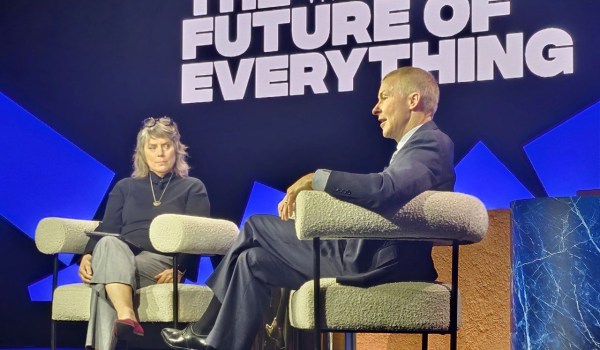
Last week I had the pleasure of seeing United Airlines CEO Scott Kirby at the WSJ Future of Everything Festival. And to hear from him about the just-announced United JetBlue partnership that will bring United back to JFK in 2027. First, and most importantly, don’t…

Retail Experience Design of the Future
In preparation for this article about omni-channel retail experience of the future, I thought first about the definition of omni-channel customer experience. I wanted to share with you a simple, easy-to-understand definition. All definitions require you to know other business concepts in order to understand…

Trust Is the Treatment: How to Achieve ROI on Patient Experience through CX Strategy
Patient experience is not a soft metric. It is an engine for financial performance, improved clinical outcomes, and sustained patient loyalty. For hospital executives and family medical practitioners alike, investing in experience is ethically responsible, certainly. It is also fiscally imperative. Patient Experience ROI is…

Liliana Petrova Talks Patient Experience in Healthcare Podcast
Recently, we recorded a podcast on patient experience in healthcare with Stacey Richter. Today, we are excited to share it with you. On the episode, we discuss travel and healthcare industry parallels. And I talk about applying customer experience design principles to improving patient experience….

Customer Loyalty Begins In-House
Ten years ago, creating customer loyalty meant assigning a membership number customers fed back to brands at the time of purchase. Customers went through the trouble of keeping track of loyalty numbers, hoping to collect enough points along the

Why Good CX Programs Fail
Digital technology powers employee experience on the inside to deliver seamless, intuitive experience to customers on the outside. So, when you are creating Customer Experience Programs, you must plan and budget for the time and resources technology teams have to commit. This work spans from…

Customer Experience Trends – 8 Actionable Tactics in 2021
As we begin Q4 of an eventful 2020, it’s time to look out for the 2021 customer experience trends and tactics for creating exceptional experiences in increasingly complex environments. We rounded up Eight 2021 Customer Experience Trends and Tactics to be aware of as we…

Airport Experience – Are You Letting Down Your Precious 2021 Travelers?
A month and a half ago, as part of our ongoing conversation about airport experience, we introduced the concept of revenge travel. We pleaded with the public to trust us aviation professionals and airport experience designers and fly again… SOON. Now is the Time…

The Customer Relationship Blind Spot Scorecards Can’t Catch
Allow me to set a scene that is commonplace for customer experience consultants and the B2B clients who first sit across the table from us. The B2B company across the table has seen some attrition among their smaller, newer customers. Their response times may be…

Extend Your Travel Experience Value Proposition
Last December the Ladders published a piece that discusses business travelers who extend travel beyond the timeline of the business trip. The article says, “[a]ccording to a new study by La Quinta by Wyndham, nearly two-thirds (64%) of business travelers who have extended a trip have…

3 Customer Experience Strategy Lessons for 2023
Customer experience strategy guides exceptional experience and bolsters growth. When executed well, it impacts not only your market share, but the entire industry in which you operate. In fact, a well-crafted, consistently deployed CX strategy built to address customer personas, needs, and wants, and to…

Am I A Good Candidate For A Customer Experience Role?
People often ask me what experience they need to be a good fit for customer experience roles.

What is Customer Experience Day?
Although I opened my consulting practice this year, I have been working on customer experience for much longer. The first time I celebrated CXDay officially was only two years ago. Until recently, in fact, the Customer Experience field has been growing at a rather slow…

Lessons Learned at the Forrester Conference: “Data is the New Sexy”
Once a year I look for an event to attend where I can learn something new and get better at what I do. This year, I attended an event hosted by customer experience research organization Forrester – the Forrester Global Council Meeting and the CXNYC2018…

Customer Experience Audit: FedEx Omnichannel Disaster
In our Strategy, Org Design & Culture series, we cover customer-focused companies that are willing to adapt, take risks and discover new ways of staying relevant. Sometimes, we encounter brands that are delivering bad customer experiences because they are missing the mark on basic customer…

A Customer Experience Strategy will Define Your Success in 2021
While there may not be a magic pill to guarantee the perfect customer experience, there is one thing that every organization needs to transform into a customer-centric business. And that is a customer experience strategy. Customer experience strategy in 2021 is not something you save…

What is the Real Cost of Employee Experience?
There are two types of leaders (and organizational cultures) that stand to benefit most from improving employee experience. The first kind have 40% or higher turnover and think their frontline employees have a culture problem. The second have 40% or higher growth rate and think…

3 Cost Conscious Mistakes in Hospitality Implementation that Lose Money
Hospitality is a cornerstone of customer experience in travel, healthcare, and across industries. There is no question that hospitality is essential for creating world class, seamless experiences and driving customer loyalty. However, when it comes time to cut costs, it is often where businesses start….

Customer Experience Design – How Do You Want Customers To Feel?
Last week, we talked about CX Design in terms of space and function. Today, we continue our customer experience design journey to talk about the design of emotions and feelings. All of this adds up to how to deliver great customer experience. The new look of…

United Airlines Culture Problem
I am often asked what organizational culture is. Frequently, I meet with executives who are feeling defeated by the scale and complexity of leading cultural transformations. So, where do you begin with cultural transformation? And as someone invested in organizational culture and leadership, how do…

Customer Experience Survey: Why Customers Are Not Responding
When you solicit customer feedback sometimes matters more than how you ask the questions. In the case of a survey about new biometrics boarding initiatives my team and I created for JetBlue, we had a list of feedback that was most important for us.

How to Get Enough Funding for CX Initiatives
Delivering impactful customer experience programming starts with making the business case for customer experience to executive leadership. This is a straightforward objective. However, it requires strategy, clarity, education, and communication to accomplish successfully. It sounds like a lot, doesn’t it? The main driver for all…

Think Strategically about Telehealth in 2021
Today, we examine telehealth strategy for an in-depth look at this 2021 customer experience trend. As we continue our conversation about why telehealth is here to stay in 2021, we look at how thinking strategically empowers providers and health systems to put the patient at…

What is Taxing Your Customer Experience?
In our customer experience consulting engagements with organizations from travel and transportation to corporate environments, we see the same six challenges to delivering seamless customer experiences. The struggle to deliver experiences that meet and exceed customer expectations across these six fronts threaten the CX-ROI connection…
Customer Experience Best Practices for 2018?
The JetBlue blog features Liliana Petrova in a new four-part series. The series is on Customer Experience and Customer Experience Innovation. 2017 Lessons Liliana gathers insight from 2017 customer experience lessons learned. Then charts the course for customer experience that delivers technology solutions in new…

Customer Experience Audit: New York Times Beats Google
Editor’s Note: This post is part of a series of Customer Experience Audits. In this series we walk you through customer experience examples across industries. We feature brands that made strategic investments in cross channel customer experience and brands that have missed the mark. We…

Let’s Get You Certified as a Customer Experience Professional!
Like all mature professions, customer experience has a certification that is internationally recognized. Adding it to your resume will signal to the business community that you are serious about customer experience and your aspiration to be part of its leadership ranks…

How a Failed Bus Experience becomes a Rally Cry for Passengers
A single experience can shed light on major vulnerabilities in transportation experience. A bus trip we took from Atlantic City reveals the danger of breaking promises to customers, the importance of disruption management, clear communication, and reliable technology, and the fundamental human need for hospitality….

Customer Experience Audit: Mobile Provider Eliminates Remote Workforce
How to balance the efficiency call center metric FCR (first call resolution) with wait and talk time? JetBlue promotes human interactions as a brand promise.

Customer Experience Plan is More Important than Ever
Last week we published eight Customer Experience Trends to look out for in 2021. Today we are diving deeper into the first one: Customer Experience is more important than ever to consumers. What does that mean to you? It is time to design your customer experience…

Create Your Tribe: How Great CX Makes a Lifestyle Brand
Newcomers to the market realize that their business is only as strong as the growth of their customer base. With that in mind, senior leaders work hard to shorten the distance between them and the customer.
When Not To Invest In Self-Service Technology?
What is self-service? It is something every progressive brand aspires to have more of. Few implement it successfully. Self-service is a new tool to optimize a company’s workforce by removing transactions from the system. All industries are looking at it as a strategy of the…

Interoperability is a Business Risk for Medtech and a Healthcare Risk for Patients
Looking at patient experience and healthcare interoperability in the medtech environment, any observer (customer experience expert or not) recognizes something is broken. A thorough exploration of what is broken exposes fundamental gaps the average observer (including patients) might miss. We know providers face high levels…

Aviation Industry, Coronavirus Isn’t the Only Thing Killing Us
Eighteen years ago, September 11th caused a three-day halt of the US commercial airlines and resulted in a 31.6% reduction in travel in September 2001 compared to the previous year. Think about it. Three days. On March 11th this year, President Trump issued a 30…

Healthcare Whitepaper: Impact of Patient ‘I Wants’ in Healthcare
Rachel Dreyfus joins The Petrova Experience with a guest blog about patient experience. Background A culture of positive patient experience is increasingly important in Healthcare, affecting patient outcomes and satisfaction. Yet in America, this industry is challenged with time-consuming processes and requirements coupled with high…

How to talk to your CFO about customer experience and revenue growth
Last month we introduced the topic of Customer Experience ROI and the complexity of building a good business case for it. The Customer Experience business case is strong, but not easy to prove. Today we will focus on two big wins of a successful customer experience investment – revenue and customer growth of your business.

Customer Experience, Self Service, and the Gift of Time
Time is the most precious gift in life. If you think about it, time is the one thing we all want more of. As we get older and busier, time gets even more valuable to us.

Fan Experience: CX Lessons for Hosting Major Events
With the World Cup coming to New Jersey and the greater New York area in 2026, the time is now to create positive fan experience moments. The 2026 Soccer World Cup final promises historic attendance. And the recent Paris Olympic Games and Paralympic Games inspire…

Bad Travel Experience
As we come to the end of the summer season, it is time to talk about travel – good and bad travel experience. And how the sharing economy has both democratized the act of travel and elevated customer expectations. Today, a host in Pereira, Colombia,…

From Pain Points to Magical Moments: Transform the Customer Experience
Argyle Journal interviewed Liliana Petrova about emerging self service technology and meeting and exceeding customer expectations in airports. One such way, as Liliana explains, is to create magical customer experience moments from customer pain points. Creating these moments starts with intentional customer experience design. Solving…

Contactless and Self-Service are Here to Stay
Our 5th 2021 customer experience trend highlights contactless and self-service experiences across industries. Before we dive into this topic, let’s take a moment to define what contactless and self-service mean to us. And what kind of an impact they are making on customers – and…

The seamless travel experience we deserve
This week on the CES 2020 main stage Delta’s CEO Ed Bastian presented a vision about the future of seamless travel experience that “might happen in just a few years.” Many of us have been working towards this vision for the last 5 years. In…

Macy’s Retail Experience Risk: The Billion Dollar Lesson
With the holiday season fast approaching, it is a smart time to seek lessons from retail customer experience leaders and laggards. At the root of those lessons is the importance of honoring customer promises and creating a holistic experience across your business (whether retail or…

How a Personal Interaction builds Repeat Customers
A customer-centric methodology is key to the successful outcome of my interaction with Hello Spud. It is the reason this story appears here, and not among the CX Big Fails! The company did not send an automated response. It did not deliver a message stating “sorry we couldn’t help you, would you like something else.” Instead, the company co-founder reached out to me personally across multiple channels (a handwritten note, followed by personal emails).

Customer Facing Experience: Communication and Hospitality
Today, we are talking about communication as part of the customer facing experience. This is one of the most misused and misinterpreted notions both in our professional lives and our personal lives. How many times has your partner, a brand, or your leadership told you…

Customer Journey Mapping Tools in 2021
Before we dive into customer journey mapping tools, we must keep in mind that, by itself, journey mapping is not a customer experience product or service. A journey map is a visual representation of your end-to-end customer experience. Think of a journey map as a…
How Do You Know You Are Making The Right Big Bet?
The future of customer experience is full of opportunities. However, the technologies of the future are not enough. Adaptive, memorable customer experiences require empathy and innovation. Liliana tackles this in an installment of JetBlue Into the Blue blog series. Along with her guests, Liliana explores…

What is Human-Centered Design and how to Leverage it in 2021?
At its core, design is about value creation. In the world of Customer Experience, value-driven design requires CX professionals to use empathy to imagine a future customer experience that is easy, fast, and seamless. When we think of how to design human-centered experience applying customer…

Employee Centric Culture – Culture is King
In 2017 we introduced our ROI series recognizing the challenges all customer experience professionals have to obtain funding for CX initiatives and to prove their positive returns. Our second ROI post covered how a well built customer experience can increase revenue and customer growth of…

Holiday Wishes for Great CX: Career Advice Edition
Every successful customer experience initiative starts with a skilled CX team. Brush up on your CX skills to strengthen the business case for CX; to develop relationships within your organization; and to deliver standout customer experiences in the new year.

2021 Customer Loyalty Strategy – Relationships over Transactions
According to the Salesforce Connected Customer Report, 90% of consumers expect companies to clearly demonstrate their values and 66% expect brands to demonstrate empathy. In other words, when thinking about customer loyalty strategy, you need to understand that customers want you to CARE. Why do…

Coronavirus Travel: What Does Hospitality Mean Now?
I want to tell you about my recent passenger experience. Earlier this week, I traveled to New Orleans from JFK Terminal 5 in New York. I had planned an airport conference a few months ago. Although many colleagues chose not to travel, I decided to…
Customer Experience Audit: FedEx Omnichannel Disaster
In our Strategy, Org Design & Culture series, we cover customer-focused companies that are willing to adapt, take risks and discover new ways of staying relevant. Sometimes, we encounter brands that are delivering bad customer experiences because they are missing the mark on basic customer…

JetBlue Leading Customer Experience
Since I used to lead the JetBlue customer experience, people often ask what is behind the JetBlue experience magic. Or, as one of our clients refers to it, the “JetBlue Simple.” So the fundamentals that went into creating that signature experience are often on my…