

Organizational Culture and Access to Information
By and large, people perceive organizational culture as an HR discipline. The most common perception is that culture covers the soft side of performance. Culture is about how you do things, not so much about what you do. Innovative organizational culture puts that into practice seamlessly.
The Big Culture misperception
This approach to culture could not be more wrong. In fact, organizational culture is about so much more than a few words in a performance review sheet. It is about leaders expressing values, and the action guidance their cultural behaviors provide.
Let’s imagine your leadership makes a public commitment to customer-centricity. The act of stating a commitment to culture is not, in itself, culture. This is probably the biggest misperception among leaders.
Even if you make a few posters and put them on your office walls, you still do not have a values-driven culture or a customer-centric culture. Culture is not something you say. It is all the things you do.
Lead by Example
Employees observe leaders. All their actions signal the organizational norms to employees. These become the “rules of the game.”
What is allowed/is not allowed? How are decisions made? Who makes those decisions? What actions (or lack of actions) are rewarded?
All of these questions define the boundaries of accepted behaviors. And thus, they define culture. So, if you are a leader who wants to build a customer-centric culture, you must have the self-discipline to be consistent. You must make leadership decisions driven by the customer.
What does innovative organizational culture mean in practice?
If you do not have an internal customer insights team, build one as soon as you can. There is a difference between having an internal team and sourcing a vendor that charges you for every survey you want to develop.
If you are serious about customer experience, you need an internal team that is accessible to the business and serves the business’ needs.
If Culture is King, Data is Queen
Currently, data is the least obvious side of customer-centric culture. In order for brands to build hospitality-infused experiences, they need to start with data and insights. These insights tell your brand your customers’ needs and preferences. As a customer experience professional without access to that information, you are blind. Or worse, you are biased to use a sample of one as a guide for the entire experience design.
Customer Data Informs Organizational Culture
In this sense, access to customer data is a defining part of customer-centric culture. When employees get to know customer preferences via surveys, they incorporate those preferences into their actions intuitively. Additionally, when employees are informed of customer actions from beacon and location data, they use that information to design spaces. Without democratizing customer data and insights, you can’t have customer-centric products and services.
Sharing insights across the organization is one side of the data coin for customer-centric organizations. The other side is how leaders themselves use these insights. If leaders do not study insights and implement them into their day-to-day decisions, they signal to employees that customer preferences are not important. Moreover, if leaders do not share survey insights with the organization, they are muting the voice of the customer.
In a customer-driven organization, leaders act on behalf of the customer. This is a pretty powerful statement, so let me repeat it. Leaders ACT ON BEHALF of their customer.
That means that leaders know the customer. They care about asking the customer his/her opinion. And they commit to acting in response to those opinions.
If you want to build a values-driven culture that focuses on the customer, you have a lot of work ahead of you. Keep in mind, it is not about one big thing you do. Rather, many everyday actions amount to one big FEELING of culture. That feeling motivates your employees to stay. And it motivates your customers to return for more experiences, co-created with them.
For guidance in building values-driven culture that focuses on the customer, learn more about our approach for creative innovative organizational culture.


Interoperability is a Business Risk for Medtech and a Healthcare Risk for Patients
Looking at patient experience and healthcare interoperability in the medtech environment, any observer (customer experience expert or not) recognizes something is broken. A thorough exploration of what is broken exposes fundamental gaps the average observer (including patients) might miss. We know providers face high levels…

United Airlines Culture Problem
I am often asked what organizational culture is. Frequently, I meet with executives who are feeling defeated by the scale and complexity of leading cultural transformations. So, where do you begin with cultural transformation? And as someone invested in organizational culture and leadership, how do…

How to Get Enough Funding for CX Initiatives
Delivering impactful customer experience programming starts with making the business case for customer experience to executive leadership. This is a straightforward objective. However, it requires strategy, clarity, education, and communication to accomplish successfully. It sounds like a lot, doesn’t it? The main driver for all…

Customer Experience Plan is More Important than Ever
Last week we published eight Customer Experience Trends to look out for in 2021. Today we are diving deeper into the first one: Customer Experience is more important than ever to consumers. What does that mean to you? It is time to design your customer experience…

For Complex Infrastructure Projects, Teaming is All About Timing
According to a 2025 Design-Build Utilization Study, design-build is projected to represent over 47% of US construction spending by 2028, to total more than $1.1 trillion. With projects of this scale and complexity it is critical to identify the sequencing and skills that determine success…

What is Human-Centered Design and how to Leverage it in 2021?
At its core, design is about value creation. In the world of Customer Experience, value-driven design requires CX professionals to use empathy to imagine a future customer experience that is easy, fast, and seamless. When we think of how to design human-centered experience applying customer…

How to approach Return-to-Office Resistance
There is a general resistance to return to office. People do not want to go back to the pre-pandemic office routine, particularly to a 5-day-a-week, in-office schedule. Out of ten thousand Goldman Sachs employees, only half showed up to the office when CEO Solomon called…

CX Skills Builder: Own the Customer Experience
Often, Customer Experience professionals do not believe that they can improve customer experience by impacting the experience design for their customers. Why? What causes this disconnect? I once got a call from an acquaintance saying that her mom got the loyalty points for flying to…

Service Design vs Customer Experience 2021
Customer experience design as a discipline is relatively new. Service design vs customer experience design adds another layer of confusion. For starters, CX design is not yet popular enough to be part of school curricula. Many industries do not even have the notion of customer…

The in-person work office design that will bring your employees back
According to PwC 95% of company executives still believe employees need to be in the office to maintain strong company culture. Like we have said before, the return to office and in-person work office design is not only about communications, processes and technology. The future…

Poor Integration is Bad for Customer Journey and Worse for Brands
Although we all have bad customer experiences, there is still a big debate about “the CX field” and whether it will survive the test of time. There is no doubt in my mind that customer experience is here to stay. The brands that catch on…

Holiday Wishes for Great CX: Career Advice Edition
Every successful customer experience initiative starts with a skilled CX team. Brush up on your CX skills to strengthen the business case for CX; to develop relationships within your organization; and to deliver standout customer experiences in the new year.

Airports of the Future: Trends and Innovations
Every year since we founded The Petrova Experience, we write about travel around the holiday season. It has become something of a tradition for us. This year, I will not start by updating you on 2024 holiday season travel numbers. Or how current volume stacks…

What is Journey Mapping?
Although we have published more than 130 articles on customer experience, we still have not dedicated an article to journey mapping. Journey mapping is the most widely recognized customer experience design and management concept. It is also the most poorly executed customer experience tool. Myriad…

How to Solve the 2025 Customer Retention Problem
It’s 2025, and businesses across sectors have a customer retention problem. U.S. companies alone lose an estimated $168 billion annually due to customer attrition, as revealed in a CallMiner whitepaper. Well after the pandemic’s immediate impacts on consumer behavior, customer retention remains a critical challenge…
How Do You Know You Are Making The Right Big Bet?
The future of customer experience is full of opportunities. However, the technologies of the future are not enough. Adaptive, memorable customer experiences require empathy and innovation. Liliana tackles this in an installment of JetBlue Into the Blue blog series. Along with her guests, Liliana explores…

Autonomous Service Starts at the Top: A CEO To Do List
In a recent article, we explored the controversial news that the customer service agent role as we know it is dead. The AI service agent is taking its place. Granted, this solves multiple problems relating to cost, efficiency, and consistency of customer experience, as we…

3 Cost Conscious Mistakes in Hospitality Implementation that Lose Money
Hospitality is a cornerstone of customer experience in travel, healthcare, and across industries. There is no question that hospitality is essential for creating world class, seamless experiences and driving customer loyalty. However, when it comes time to cut costs, it is often where businesses start….

Autonomous Customers, Traveler Privacy and More Questions for CX Professionals in a Changing World
“As we move toward a more automated culture, most travelers will adapt to a Jetsonian, automated lifestyle. Every industry we know will be disrupted. For those of us in aviation, this signals the shift from aviation as a service industry to a transactional one that…

Center of Excellence: The Antidote to Failed Customer Experience Programs
It’s no secret that even good CX programs fail. Back in 2018, Bob Thompson of CustomerThink shared the “inconvenient truth” that “93% of customer experience programs are failing.” Gartner echoed this two years ago. It found “most Customer Experience Programs are not delivering on the…

Aviation Industry, Coronavirus Isn’t the Only Thing Killing Us
Eighteen years ago, September 11th caused a three-day halt of the US commercial airlines and resulted in a 31.6% reduction in travel in September 2001 compared to the previous year. Think about it. Three days. On March 11th this year, President Trump issued a 30…

Brand and Customer Experience – Make the Customer Know Who You Are
Now that we have helped you become experts in the design of space and function and the design of feelings, it is time to turn our attention to aesthetics, and to connect customer experience design to brand identity. T5 is an expression of the JetBlue brand. When customers enter…

5 Ways to Leverage OpenAI for Customer Experience
Back in 2017 when we served on the AI Advisory Committee for Execs In the Know, we wrote an article about the role of artificial intelligence in the future of business. Our article called out, rather presciently, the need for governance, standards, and the human…
United CEO does not care about #customers happiness. Really?
Lately, I have been thinking about United Airlines and its organizational culture. Initially, I thought about United Airlines culture because someone asked whether it is possible to build a customer-centric culture in a company that is NOT founded with the customer at the center. In…

Create Your Tribe: How Great CX Makes a Lifestyle Brand
Newcomers to the market realize that their business is only as strong as the growth of their customer base. With that in mind, senior leaders work hard to shorten the distance between them and the customer.

Why I Don’t Love Chatbots
Today, we tackle the value proposition that chatbots are more valuable to companies than customers. I reject this. The ROI simply is not there, especially since better customer experience is not there. I have experienced both fully automated bots and “augmented” service agents interactions using…

Where Should CX Sit at the Table?
Before we begin talking about where CX should sit in the organization, I want to clarify one thing. Customer Experience is not a single person.

Why CX Design Needs to be in Your Transportation Project RFP
Ever heard this line while working on an RFP? “I know your value, but I don’t know where to put you.” We hear it all the time. Why? Because, historically, customer experience design has been looked at as the last step, nice-to-have for transportation design-build…
How Facial Recognition Works for Your Customers?
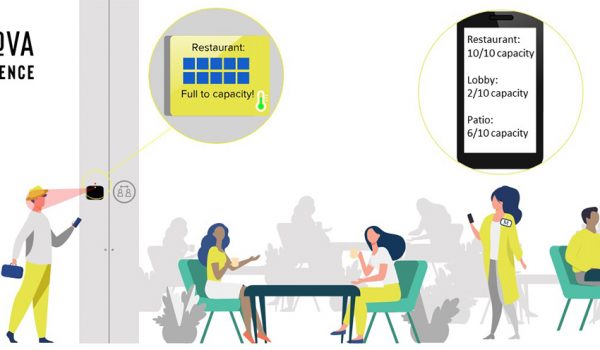
One of the hurdles for Customer Experience Consultants like us is proving the business case for bringing us on board. Leaders often think that if they talk about being customer-centric at their all hands meetings, their companies will automatically transform into customer-led organizations. I wish…

The Customer Service Agent is Dead
When we outlined our CX trends for 2026, we talked about how autonomous service is replacing traditional customer service. Yes, our claim that the CSA (customer service agent) role is dead has a dramatic ring to it. But aren’t we in a dramatic time? Things…

How to Be an Entrepreneur: 5 Things I Learned in 5 Months as an Entrepreneur
The life of an entrepreneur is different every day, but the one thing that remains the same is that we are always learning. These are my lessons in how to be an entrepreneur that I have learned in the last five months of my entrepreneur…

Customer Loyalty Begins In-House
Ten years ago, creating customer loyalty meant assigning a membership number customers fed back to brands at the time of purchase. Customers went through the trouble of keeping track of loyalty numbers, hoping to collect enough points along the

The Wholehearted Traveler and Other 2024 Travel Trends
Back in 2020, we predicted the rise of the Revenge Traveler and the impact it would have on travel and hospitality experience providers. As we approach 2024, we are spotting a new type of traveler on the horizon. And a set of trends that will…

Customer Experience Audit: Uber Bets On Self-Driving Cars With Big Volvo Purchase
The question that remains unanswered is who will be part of the future of transportation. Uber is going for the vertical integration – the whole pie. The future industry of urban transportation will be made of players in three different categories: cars, self-driving software, and ride-sharing network. In contrast, Lyft approaches the future through partnerships.

Why No One is Collecting Authentic Customer Feedback
Businesses need customer feedback collection to thrive in a competitive market. Everyone thinks they are collecting and acting on customer feedback, yet 80% of US companies failed to increase customer satisfaction since 2010. And customer retention rates are plunging. So, despite what many companies think,…

It’s Time to Meet The Petrova Experience!
Today marks one of the big milestones in my life. This is the day I am officially choosing to live my dream. We are launching The Petrova Experience, a customer experience consulting, coaching and membership organization. I remember the day I fell in love with…

Employee Engagement and Wellness In The Workplace: Guest Post
Today, The Petrova Experience brings you a guest article about employee engagement and organizational culture. This piece is by Natalie DeVito, of Commonwealth Joe. Commonwealth Joe is an innovative company, new to the New York City market. It offers boutique coffee and beverage services to…

FIFA World Cup, LA Olympics 28, and the Business of Customer Experience
Because we are experience designers (of fan experience transportation hubs and systems), who also happen to be mega-soccer fans, three years before the first ball was kicked at MetLife Stadium, The Petrova Experience keynoted at the New Jersey Travel and Tourism Conference in 2023, talking…

No Pass During Construction: Why Airports Must Rethink Customer Experience in the Era of Capital Programs
Throughout the US, airports are entering one of the most consequential decades of infrastructure development in the history of modern aviation. According to Airports Council International–North America (ACI‑NA), US airports are facing more than $151 billion in necessary infrastructure projects between 2023 and 2027. That…

Extend Your Travel Experience Value Proposition
Last December the Ladders published a piece that discusses business travelers who extend travel beyond the timeline of the business trip. The article says, “[a]ccording to a new study by La Quinta by Wyndham, nearly two-thirds (64%) of business travelers who have extended a trip have…

Retail Experience Design of the Future
In preparation for this article about omni-channel retail experience of the future, I thought first about the definition of omni-channel customer experience. I wanted to share with you a simple, easy-to-understand definition. All definitions require you to know other business concepts in order to understand…

Customer Experience ROI. Is It Worth Doing?
The business case for Customer Service is complex. Gone are the days when we bought a piece of hardware that depreciates over 5 or 10 year on the balance sheet. CX does not even show up on our assets list. At least not with that name.

Beyond Customer Satisfaction: 3 Unexpected Ways CX Drives Value
It is time to debunk the nice-to-have myth about customer experience. It is true the discipline operates in the space of perception, feelings, and emotion. What is equally true, but not centralized in budget conversations, is that customer experience has unique, and important, strategic value….

Life, Liberty, and the Pursuit of [Customer] Happiness
Seven years ago, when we launched The Petrova Experience, the 250th Anniversary of the founding of the United States felt far away. However, its founding principles, particularly the pursuit of happiness, felt immediate and relevant. So much so that when we came up with our…

Culture Starts at the Top
Without a leader who believes that today’s business success is about acquiring and retaining customers, you cannot even begin the process of building a culture. Leaders who are passionate about the customer are also passionate about creating culture and employee engagement.

Healthcare Experience Horror Story
We talk about good vs bad customer experiences. And we give examples of organizations that do things well or poorly. But we rarely are able to shine the light on a truly horrific experience. We found one in our latest healthcare experience. Complexity is Not…

What is Customer Experience Strategy?
In our last article we talked about the importance of strategic thinking. Today, we build on this topic and walk you through the nuts and bolts of customer experience strategy. Customer experience strategy is often missing in organizations. However, it is foundational for the creation…

Customer Experience Audit: FedEx Omnichannel Disaster
In our Strategy, Org Design & Culture series, we cover customer-focused companies that are willing to adapt, take risks and discover new ways of staying relevant. Sometimes, we encounter brands that are delivering bad customer experiences because they are missing the mark on basic customer…

The Invisible Friction Points Weakening Manufacturer Customer Experience
For years, manufacturers have competed on product quality, operational efficiency, and price. Our current environment of supply chain volatility, talent shortages, and the elevated customer expectations in the “experience economy” means CX is, in many ways, the new QC. Why is customer experience the new…

How Well Do You Understand AI Applications?
In the last week I spoke about AI at the Argyle Forum webinar and at the ConnectID Conference in Washington, DC. Technology is emerging

Bad Customer Experience
Doing the right thing when things go wrong is not exactly a good business case. But many do it anyway. Why? Because brands want to protect (and grow) their brand equity through human-centered customer experience design of their products and services. In that sense, the…

Why Good CX Programs Fail
Digital technology powers employee experience on the inside to deliver seamless, intuitive experience to customers on the outside. So, when you are creating Customer Experience Programs, you must plan and budget for the time and resources technology teams have to commit. This work spans from…

How @T4 makes real customer experience impact
Today we share our impressions from visiting our welcoming host Chad at JFK Terminal 4 in NYC. We also celebrate Chad as an effective Customer Experience professional/practitioner. His work is worth sharing on several levels. For those who are given the role of Customer Experience…

How a Personal Interaction builds Repeat Customers
A customer-centric methodology is key to the successful outcome of my interaction with Hello Spud. It is the reason this story appears here, and not among the CX Big Fails! The company did not send an automated response. It did not deliver a message stating “sorry we couldn’t help you, would you like something else.” Instead, the company co-founder reached out to me personally across multiple channels (a handwritten note, followed by personal emails).

5 Things You Can Do to Provide Excellent Passenger Experience in 2022
The Wall Street Journal predicts this Thanksgiving will be among the busiest travel days in decades, with 55 million travelers anticipated to be moving through US airports and other transportation hubs and highways. In fact, “2022 is expected to be the third-busiest year for Thanksgiving…

Customer Experience Technology View of your Call Center
By 2022 the global cloud based contact center market is growing from USD 6.8Bn in 2017 to 20.93Bn in 2022. This makes for CAGR of 25.2%. If you do not get on this journey, you risk falling behind and becoming irrelevant in less than five…

How to Build a Customer-Centric Culture for Highly Effective Teams
When we look at how to build a customer-centric culture, we must look inside the organization first. True customer centricity happens when an organization masters group dynamics to harnesses the power of strong teams that collaborate on the common goal of meeting and exceeding customer…
What the United JetBlue Partnership Signals for Passenger Experience and Airline Revenue Optimization
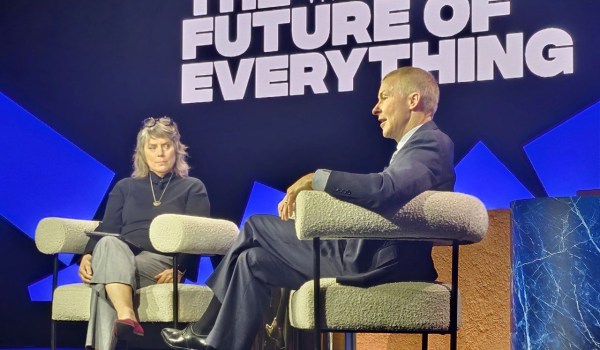
Last week I had the pleasure of seeing United Airlines CEO Scott Kirby at the WSJ Future of Everything Festival. And to hear from him about the just-announced United JetBlue partnership that will bring United back to JFK in 2027. First, and most importantly, don’t…

Web Experience is Having a Comeback
In the third quarter of 2020 US e-commerce sales went up 36.7% compared with the same period in 2019. Websites have come back to center stage. However, we are not seeing an equivalent shift in web experience that matches the shift in today’s consumer behavior. Retailers…

Get Customer Experience Basics Right and You Don’t Need to Invest in Wow Moments
Wow Moments are a Customer Experience hot topic. Customer experience professionals ideate how to build, prioritize, finance, and measure these Wow Moments. Chip and Dan Heath wrote a whole book on the topic: The Power of Moments. No Wow Moment saves you from negative word of mouth if your brand fails to get the customer experience basics right or to deliver the expected brand experience consistently.

How Hospitality Can Save Tourism
Travel experience experts need to remember why people travel. For most tourists, it is all about the destination. The destination is why you leave home. Before you make the decision to travel, and long before you arrive, you have a desire to go to a…

#CXTHUS Exchange Insights – winners and losers?
Attending a customer experience conference is a significant investment of time and money. Even if you are speaker at the conference, like I was last week, the time away from your non-stop email flow can bring more stress than pleasure to your days. Once we…

Think Strategically about Telehealth in 2021
Today, we examine telehealth strategy for an in-depth look at this 2021 customer experience trend. As we continue our conversation about why telehealth is here to stay in 2021, we look at how thinking strategically empowers providers and health systems to put the patient at…

Is AI Really The Answer?
Earlier this week we shared some of the pitfalls of implementing self-service and highlighted the importance of strategic and empathetic implementation. AI (artificial intelligence) is one of the self-service tools in the customer service professional toolbox today. It is also one of the new buzzwords,…

Fan Experience: CX Lessons for Hosting Major Events
With the World Cup coming to New Jersey and the greater New York area in 2026, the time is now to create positive fan experience moments. The 2026 Soccer World Cup final promises historic attendance. And the recent Paris Olympic Games and Paralympic Games inspire…
CX Skills Builders: You May Have a CX Job and Not Know It
Last week we talked about the identity crisis of CX professionals and we urged you to fix any small problem or seam on the customer journey in order to build internal brand equity and buy in.
When Not To Invest In Self-Service Technology?
What is self-service? It is something every progressive brand aspires to have more of. Few implement it successfully. Self-service is a new tool to optimize a company’s workforce by removing transactions from the system. All industries are looking at it as a strategy of the…

The Risk No Insurer Prices: Why Customer Experience is Costing Insurance Companies Renewals
Insurers are experts in pricing physical and actuarial risk. What too few have learned to price effectively is the slow, compounding erosion that comes from fragmented customer service. What is the real cost of the customer who receives different answers from different channels? Or agents…

The One CX Goal You Need to Set for 2019
For 2019, I urge you to make only one CX goal – bring about business success with your customer experience work. Don’t just do work in the general sense. Rather, set a CX goal that has a real impact on your customers and their experiences with your brand.

The ROI of Customer Experience Programs
What customer experience is, and how well brands think they are executing customer experience, and how well they are actually doing it are often at odds. According to Bain, 80% of CEOs believe they deliver superior customer experience while, 8% of their customers agree. PatientPop…

What is Wayfinding?
I did not always know what wayfinding means. But ever since I left Bulgaria to come to America I have been looking to find my way. The first time I heard the term “wayfinding” was in JetBlue Airways when I worked on the fusion design…

3 Call Center Mistakes You Are Making
No matter how often my peers and I say that technology is not the answer, call center managers still ask…

What is Customer Experience for Built Environments?
A tweet grabbed our attention this week: “The Atlanta Airport (ATL) designers were like ‘and then what if we had them run 5k?’” In addition to making us laugh, this public passenger feedback stresses exactly what customer experience in your design-build project is. We are…

How to Prepare for AI: Dispatches from CR Summit, Charleston
On the eve of the #CRSummit in Charleston, customer experience leaders from various industries held the first AI Committee meeting. AI is a challenging topic to cover because it has varied customer experience applications, depending on a brand’s growth cycle, customer base and business challenges….

3 Challenges of Hybrid Working and How to Overcome Them
According to a Gallup study, 53% of Americans expect to work in a hybrid arrangement in 2022 and beyond. This number is significant enough for corporate America to get hybrid working right today. Unfortunately, early indicators show we are on the wrong path. Here are…

5 Ways Customer Experience Consultants Keep Customer Promises
Customer experience is the follow-through on brand promises across every interaction. Some organizations assume the importance of customer experience is limited to commercial brands. This is far from true. In fact, every organization that has a customer – a passenger, patient, or guest – makes…

CX Skills Builder: How to articulate your CX Value and secure your budget
Two weeks ago we urged you to find CX problems and fix them instead of diagnosing and mapping them. That is

Customer Experience Audit: New York Times Beats Google
Editor’s Note: This post is part of a series of Customer Experience Audits. In this series we walk you through customer experience examples across industries. We feature brands that made strategic investments in cross channel customer experience and brands that have missed the mark. We…

Customer Experience Survey: Why Customers Are Not Responding
When you solicit customer feedback sometimes matters more than how you ask the questions. In the case of a survey about new biometrics boarding initiatives my team and I created for JetBlue, we had a list of feedback that was most important for us.

How to Sell the C-Suite on Customer Experience
You finally got your big career break. You are leading a project that requires executive approval. So, now what? Intuitively, you know that this is a chance to make a first impression on the right people. But you have no idea how to approach this…
United Airlines Culture Problem
I am often asked what organizational culture is. Frequently, I meet with executives who are feeling defeated by the scale and complexity of leading cultural transformations. So, where do you begin with cultural transformation? And as someone invested in organizational culture and leadership, how do…
3 Challenges of Hybrid Working and How to Overcome Them
According to a Gallup study, 53% of Americans expect to work in a hybrid arrangement in 2022 and beyond. This number is significant enough for corporate America to get hybrid working right today. Unfortunately, early indicators show we are on the wrong path. Here are…