

How Customer Experience Promises Threaten Manufacturer Growth
Rarely, does a business lose major accounts due to dramatic or public failure. They lose major accounts due to mismanaged relationships, a loss that is all-too common in a manufacturing setting due to the tension between the customer experience promise and the complexity of delivery. Relationships with manufacturing enterprise customers erodes steadily and quietly through loss of trust. Customer trust erodes as a result of inconsistent delivery, misaligned expectations, and friction. Often, no one on the manufacturer side sees these failures until the damage on the customer side is done. Ultimately, it is not the customer experience promise that imposes the threat to organizational growth. It is the failure to build systems that support delivery on that promise.
New clients seek us out when they face a nasty surprise during the renewal phase of their customer journeys. Suddenly (from the manufacturer perspective), customers are backing out or pulling away. When the failure to renew becomes your trigger for customer-first response, you have missed the opportunity to salvage the customer relationship.
For operations and customer‑experience leaders inside manufacturing organizations, this is the nightmare scenario. Your customer is unhappy. Your account team is frustrated. And your internal organizational response fixates on blame and panic. Meanwhile, your customer is still waiting for the experience you promised them when they entered the relationship with you.
Nightmare scenario notwithstanding, all is not lost. These problems are predictable (we have seen it all before!) and preventable. Prevention of customer attrition starts with leveraging customer experience intentionally for your operational goals. To help unpack that, let’s first take a look at those predictable patterns that a manufacturer strategically oriented toward customer retention should learn to recognize and avoid.
Inconsistency Drives Customer Attrition
In manufacturing, there is a general belief that, if the product is good and the plant is running, the customer relationship is solid. I have to tell you right now, that kind of reductive thinking leads to attrition. Enterprise customers judge their experience on many factors beyond product quality and your organization’s self-perceived efficiency.
Customers want consistency across every site, every handoff, and every interaction. Customers cannot be made to see or suffer your internal complexities. Today’s manufacturing customer expects the same quality whether your Plant A or Plant G fulfills their order.
Of course, the expectation of consistency does not stop with product quality. It extends to customer expectations around communication. We see the value in practice (and the threat if there are breakages) of a consistent, predictable communication cadence. That means, from the point of view of my customer, I know what to expect and when to expect it. I am interfacing with an organization that is keenly aware of the customer journey, to the point at which it sends me alerts and updates the exact moment I need them, before I am fully aware of my need. If you are chasing your customer’s needs, or their friction points, you are losing the race. And they are losing the return on their investment in you.
Are You Speaking the Same Language?
Within the space of communications and operations, language clarity is another form of consistency as customer satisfaction driver. For instance, before making a promise to your customer, confirm you both agree on the definitions of “on time,” “complete,” “delay,” and other key terms relevant to their experience with you. This is not to say that, as a leader, you need to let the customer define your operational response for you. Rather it is to say, you must communicate expectations clearly internally to employee teams and externally to your customers so everyone is on the same page and there are no unpleasant surprises.
A shared definition of success, how to get there, and what experience benchmarks look like, goes a long way in delivering experiences that build customer trust and loyalty.
The Promise-Delivery Divide
Loyalty, as we know, comes down to following through on experience promises. So, make sure to have an operational model posed to consistently deliver on experience promises. If your performance does not match your promises, how can you have expect customer trust?
As we have seen, this is particularly important for leaders who sit at the intersection of operations, customer experience, and continuous improvement. All too often, when we first engage with leaders in this position, we catch them at a moment in which they are daily battling the negative effects of inconsistency. If you are in this position, how can you reasonably expect to deliver seamless experiences with underlying systems and expectations out of alignment?
The answer is, you cannot. You are not set up for success. So, what you really should be asking is, how do I find the seams. Where are they? And what am I going to do to achieve solutions that benefit my business and my customers?
Identify Customer Experience Seams
Siloed operations create seams. In a siloed organization, each plant, function, and team sees only their slice of the work. However, as we have mentioned before, customer experience touches every facet of the operation. And everyone in your organization has a customer experience job, whether they know it or not. Spoiler: as a leader, it’s your job to make sure they know it. That means it’s time to break the silos to eliminate the gaps that interrupt a seamless experience (also known as your customer’s expected – promised – experience).
In the field, we see manufacturers underestimate how deeply site‑to‑site variation shapes your customer’s perception of reliability. Processes change over time without documentation. Internal communication styles and employee culture vary from plant to plant. And quality can fluctuate in ways that may feel minor (or even unnoticeable because it has become your accepted norm) internally. Externally, this translates to inconsistency and lack of reliability. Your customer’s lived-experience conflicts with their expectation. For them, you become a partner who is dependable one month, unreliable the next.
The Experience Threat Lurks in Silos
Compounding the issue is the persistent gap between sales promises and operations that are not structured to deliver on those promises. Expectations that were clear during the sales cycle become ambiguous during delivery. The consequence: your customer feels the disconnect long before it shows up in internal metrics. By the time issues surface, often during quarterly business reviews or renewal conversations, the customer frustration has taken root. You are already in the space of mistrust.
What makes this cycle so difficult to break is the absence of a single, credible view of the source of your customer friction points. This is where a customer experience audit delivers value, providing a picture of the breaks in your customer journey and connecting those breaks to their sources. Operations may believe the problem lies in over‑commitment; sales may believe it lies in under‑delivery; service teams are usually caught in the middle. Each function sees only its own slice of the experience (there’s that silo, again), while the customer feels it all.
Among our CX Audit engagements, this is the pattern we have been seeing, and what we are brought in to fix: experience breaks at the handoffs. Until those handoffs are designed, aligned, and governed with intention, even the strongest manufacturers will continue to lose trust until they break down silos and develop a customer-first operation built for seamless experiences that deliver on promises.
The Escalation Spiral: Minor Issues, Major Risks
When friction goes unmanaged inside the organization, it initiates a chain reaction. A customer encounters an inconsistency in the form of a missed communication, a deviation in quality, or a delivery experience that fails to meet expectations. As a result, that customer turns to their account team for answers. Now, here is where you have the control to remedy the situation with the customer experience dream scenario. Unlike the previously described nightmare scenario, our (achievable) customer experience dream scenario is turning a potential detractor who has had a negative experience into a brand advocate because of the expert, customer-first way you manage your response.
To turn the detractor into an advocate, though, your account team needs to have full visibility to understand the customer’s problem without forcing a lengthy or repeated explanation. The account team also needs visibility across the operation to understand what broke, how it broke, and what they can do to remedy it in a way that is efficient, personalized, and immediately valuable. And, the account team needs to communicate from a position of a customer-first culture that has skilled them to apply language that is understandable and meaningful to the customer and that authentically communicates your brand values. And your brand value.
I wish I could tell you this level of customer-centricity is the norm in manufacturing. Unfortunately, it is not (nor is it the norm in many industries). And that is why attrition continues to pose a threat. Instead of our dream CX scenario, what usually happens is the account team lacks visibility to the full picture. Their hands are tied (which is another way of saying the operation you built disempowers your employees).
So, they escalate the customer complaint internally, in hopes they can find someone within the operation who can fix it. Best case, a seasoned problem‑solver steps in, patches the immediate problem (puts out the fire), and restores (a temporary) calm. Do not let that temporary calm fool you. What this escalation pattern creates is weak visibility to an increasingly serious problem. Why? Because the underlying cause remains untouched. The same issue resurfaces weeks or months later, usually in a slightly different form. What you then mistakenly see as a series of isolated incidents is, in fact, a systemic pattern. And that pattern repeats itself across plants, teams, and customer touchpoints. The fire burns out of control.
What happens next? Margin erodes as a result of rework, concessions, and expedited efforts to recover customer trust that lack strategic grounding and intentional design. In this environment, as a leader, your time is consumed by fighting the fire instead of driving strategic improvement. Suddenly, your organization is seen as reactive, instead of reliable. And your credibility plummets.
What Best‑in‑Class Manufacturers Do Differently
Escalations like these are symptoms of a system that was not intentionally designed around the customer’s end‑to‑end experience. Conversely, manufacturers who consistently retain and grow their largest accounts build predictable, repeatable experiences that scale across sites and functions. And are founded on a shared customer experience strategy that aligns with the business strategy. These organizations take the time to define what following through on promises looks like from their customer’s perspective. They ensure every plant, team, and role understands how to deliver on those promises. They create a unified view of friction origination, making the formerly invisible visible, so teams can address root causes rather than triage symptoms. And they invest in early‑warning systems that surface customer risk before it becomes an escalation, allowing teams to intervene proactively rather than reactively, communicating in language that is personalized and supportive.
A best-in-class manufacturer translates sales commitments into operational reality. In fact, they embed those customer promises into behaviors, handoffs, and accountability structures across the operation. This is the heart of our impact with clients. We help manufacturers turn customer expectations into a delivery system that is consistent, transparent, and resilient. With that in place, you are empowered to scale without sacrificing trust. To scale by building trust.
If you are ready to build an operation that delivers on promises, schedule time to talk with us about the next right steps for you and your teams.


Travel Experience Stories: How Not to Leave Customers Stranded
Meet Diane. Diane is traveling with her 2 year old and 5 year old to her in-laws’ house for Thanksgiving. This is the one annual trip she takes. And she…

How to Build Your Customer Experience Roadmap?
This summer, The Petrova Experience conducted a Customer Experience Preparedness Survey. One of our questions assessed brand maturity in terms of customer experience strategy. Only 28% of the respondents had…

Can One Email Build Loyalty? #MYWESTELM
This is exemplary management of the post-purchase journey touch-point. For years, this level of management has been non-existent. At best, it tends to come in the form of an email confirmation that purchased items have been delivered.

A Customer Experience Strategy will Define Your Success in 2021
While there may not be a magic pill to guarantee the perfect customer experience, there is one thing that every organization needs to transform into a customer-centric business. And that…

How to Build a Customer-Centric Culture for Highly Effective Teams
When we look at how to build a customer-centric culture, we must look inside the organization first. True customer centricity happens when an organization masters group dynamics to harnesses the…

How to approach Return-to-Office Resistance
There is a general resistance to return to office. People do not want to go back to the pre-pandemic office routine, particularly to a 5-day-a-week, in-office schedule. Out of ten…

Coronavirus Travel: What Does Hospitality Mean Now?
I want to tell you about my recent passenger experience. Earlier this week, I traveled to New Orleans from JFK Terminal 5 in New York. I had planned an airport…

What is Telemedicine? Keeping Medicine at the Heart
Guest Post by Dr. Melynda Barnes for The Petrova Experience. In this post Dr. Barnes answers the question “what is telemedicine,” and reminds us to keep medicine at the heart…

Customer Loyalty Begins In-House
Ten years ago, creating customer loyalty meant assigning a membership number customers fed back to brands at the time of purchase. Customers went through the trouble of keeping track of loyalty numbers, hoping to collect enough points along the

The Biggest AI Mistake Most companies are Making
Much of AI news focuses on the importance of regulation, data risks, and intellectual property debates. And of course there is the rally cry “AI is coming for our jobs.”…

Customer Experience Audit: Mobile Provider Eliminates Remote Workforce
How to balance the efficiency call center metric FCR (first call resolution) with wait and talk time? JetBlue promotes human interactions as a brand promise.

Empathy in Customer Experience
As customer experience and hospitality professionals, we use the word empathy all the time. It is the baseline of experience design. Yet, few of us truly understand it, or how…

How to Sell the C-Suite on Customer Experience
You finally got your big career break. You are leading a project that requires executive approval. So, now what? Intuitively, you know that this is a chance to make a…

The ROI of Customer Experience
Knowing the ROI of customer experience helps to fund CX projects and make intelligent investments in customer experience. But a deeper examination into the question about CX return on investment…

Holiday Wishes for Great CX: Career Advice Edition
Every successful customer experience initiative starts with a skilled CX team. Brush up on your CX skills to strengthen the business case for CX; to develop relationships within your organization; and to deliver standout customer experiences in the new year.

Why CX Design Needs to be in Your Transportation Project RFP
Ever heard this line while working on an RFP? “I know your value, but I don’t know where to put you.” We hear it all the time. Why? Because, historically,…

Are You Ready to Go Exclusive with Jane, Your Digital Concierge?
In 2015 JetBlue introduced bag fees. Seven years after the competition. The media exploded. Many publications were negative. They blamed the airline for “selling out.” One headline read “A New…

How to talk to your CFO about customer experience and revenue growth
Last month we introduced the topic of Customer Experience ROI and the complexity of building a good business case for it. The Customer Experience business case is strong, but not easy to prove. Today we will focus on two big wins of a successful customer experience investment – revenue and customer growth of your business.

Get Customer Experience Basics Right and You Don’t Need to Invest in Wow Moments
Wow Moments are a Customer Experience hot topic. Customer experience professionals ideate how to build, prioritize, finance, and measure these Wow Moments. Chip and Dan Heath wrote a whole book on the topic: The Power of Moments. No Wow Moment saves you from negative word of mouth if your brand fails to get the customer experience basics right or to deliver the expected brand experience consistently.

Customer Experience Audit: Domino’s Making the Right CX Choices
Editor’s Note: This post is part of a series of Customer Experience Audit – as series of articles featuring examples of good customer experience and bad customer experience in practice….

Celebrate National CX Day
Did you know that tomorrow is National CX Day? Some of you may not even know what “CX” means or why there is a day to celebrate CX. CX stands…

#CXTHUS Exchange Insights – winners and losers?
Attending a customer experience conference is a significant investment of time and money. Even if you are speaker at the conference, like I was last week, the time away from…
Customer Experience Best Practices for 2018?
The JetBlue blog features Liliana Petrova in a new four-part series. The series is on Customer Experience and Customer Experience Innovation. 2017 Lessons Liliana gathers insight from 2017 customer experience…

Think Strategically about Telehealth in 2021
Today, we examine telehealth strategy for an in-depth look at this 2021 customer experience trend. As we continue our conversation about why telehealth is here to stay in 2021, we…
A Lot of Data, Not Enough Insight
A month ago I saw a Forrester presentation on Customer Experience measurement that began with a great quote from the Global Bank: “We are drowning in data and starving for…

What is Wayfinding?
I did not always know what wayfinding means. But ever since I left Bulgaria to come to America I have been looking to find my way. The first time I…

How to Build Customer-Centric Culture
Before we address how to build customer-centric culture, let’s examine the terminology: what culture is and what it is not. Culture is not executives talking about high level strategy. Equally,…

What Holiday Parties Teach about Hospitality
Last week The Petrova Experience, like many companies, hosted our holiday party. In good customer experience fashion, we put significant effort into finding the perfect location. We agonized over the…

Life, Liberty, and the Pursuit of [Customer] Happiness
Seven years ago, when we launched The Petrova Experience, the 250th Anniversary of the founding of the United States felt far away. However, its founding principles, particularly the pursuit of…

3 Call Center Mistakes You Are Making
No matter how often my peers and I say that technology is not the answer, call center managers still ask…

The Great Re-onboading: How to Bring Back Your Employees
Re-onboarding is the next employee experience organizations need to tackle. Since March 2020, leaders have encountered pandemic shutdowns, remote workforce transitions, and the Great Resignation. As restrictions lift and we…

Aviation Industry, Coronavirus Isn’t the Only Thing Killing Us
Eighteen years ago, September 11th caused a three-day halt of the US commercial airlines and resulted in a 31.6% reduction in travel in September 2001 compared to the previous year….

Healthcare Whitepaper: Impact of Patient ‘I Wants’ in Healthcare
Rachel Dreyfus joins The Petrova Experience with a guest blog about patient experience. Background A culture of positive patient experience is increasingly important in Healthcare, affecting patient outcomes and satisfaction….

Eliminate Customer Stress with Good CX
Good customer experiences design either gives back customer time or alleviates customer anxiety. If a brand’s CX isn’t achieving one of those goals, the customer isn’t getting any real or…

Top 5 Customer Experience Design Principles in 2021
Customer experience design principles are difficult for organizations to understand and apply. Time and again, we see this in organizations, even though we encounter customer experience design principles in our…

How Well Do You Understand AI Applications?
In the last week I spoke about AI at the Argyle Forum webinar and at the ConnectID Conference in Washington, DC. Technology is emerging

5 Things You Can Do to Provide Excellent Passenger Experience in 2022
The Wall Street Journal predicts this Thanksgiving will be among the busiest travel days in decades, with 55 million travelers anticipated to be moving through US airports and other transportation…

Airports of the Future: Trends and Innovations
Every year since we founded The Petrova Experience, we write about travel around the holiday season. It has become something of a tradition for us. This year, I will not…

Are You Thinking Strategically?
Today, we are elevating our conversation to thinking strategically. The Petrova Experience is in the strategy creation business. So, we frequently encounter the difficulty businesses have anticipating, let alone defining,…

Extend the Customer Journey with AI
Superior customer experience hinges on seamless customer journeys. We build strategies around this, design CX programs, and map the journeys of customer personas, all with the aim to meet customer…
How Facial Recognition Works for Your Customers?
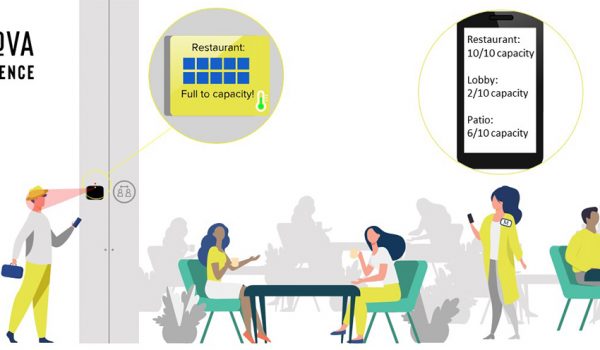
One of the hurdles for Customer Experience Consultants like us is proving the business case for bringing us on board. Leaders often think that if they talk about being customer-centric…

Do You Know Where Your Inventory Is?
When I worked in the airline business our most embarrassing incident was “losing a minor”. We never lost a child, of course. But we might not have known where a…

Customer Experience Audit: Starbucks Bets On The Physical Experience
Starbucks is opting in for the physical experience in order to become a lifestyle brand while other brands are investing in omni-channel experience.

United CEO does not care about #customers happiness. Really?
Lately, I have been thinking about United Airlines and its organizational culture. Initially, I thought about United Airlines culture because someone asked whether it is possible to build a customer-centric…

Customer Journey Mapping Tools in 2021
Before we dive into customer journey mapping tools, we must keep in mind that, by itself, journey mapping is not a customer experience product or service. A journey map is…
Digital Customer Experience Strategy – Top Three Mistakes
How many of you have interacted with financial and insurance institutions who seem to have forgotten the invention of the world wide web and applications design? In 2021, Major players…

The ROI of Investing in Organizational Culture
Investing in organizational culture is a strategic and operational imperative for employee retention, scalable growth, and successful mergers and acquisitions. Organizational culture is not what you do as a leader…

Beyond the Arena: Transform Local Experience for World Class Events
Let’s get honest about local experience around major events. While it is exciting for the world to show up in your hometown for a major event like the World Cup…

From Pain Points to Magical Moments: Transform the Customer Experience
Argyle Journal interviewed Liliana Petrova about emerging self service technology and meeting and exceeding customer expectations in airports. One such way, as Liliana explains, is to create magical customer experience…

No Pass During Construction: Why Airports Must Rethink Customer Experience in the Era of Capital Programs
Throughout the US, airports are entering one of the most consequential decades of infrastructure development in the history of modern aviation. According to Airports Council International–North America (ACI‑NA), US airports…

Where Should CX Sit at the Table?
Before we begin talking about where CX should sit in the organization, I want to clarify one thing. Customer Experience is not a single person.

Customer Experience Trends – 8 Actionable Tactics in 2021
As we begin Q4 of an eventful 2020, it’s time to look out for the 2021 customer experience trends and tactics for creating exceptional experiences in increasingly complex environments. We…

Liliana Petrova Talks Patient Experience in Healthcare Podcast
Recently, we recorded a podcast on patient experience in healthcare with Stacey Richter. Today, we are excited to share it with you. On the episode, we discuss travel and healthcare…

The One CX Goal You Need to Set for 2019
For 2019, I urge you to make only one CX goal – bring about business success with your customer experience work. Don’t just do work in the general sense. Rather, set a CX goal that has a real impact on your customers and their experiences with your brand.

Why No One is Collecting Authentic Customer Feedback
Businesses need customer feedback collection to thrive in a competitive market. Everyone thinks they are collecting and acting on customer feedback, yet 80% of US companies failed to increase customer…

Let’s Get You Certified as a Customer Experience Professional!
Like all mature professions, customer experience has a certification that is internationally recognized. Adding it to your resume will signal to the business community that you are serious about customer experience and your aspiration to be part of its leadership ranks…

Customer Experience Survey: Why Customers Are Not Responding
When you solicit customer feedback sometimes matters more than how you ask the questions. In the case of a survey about new biometrics boarding initiatives my team and I created for JetBlue, we had a list of feedback that was most important for us.

5 Ways Customer Experience Consultants Keep Customer Promises
Customer experience is the follow-through on brand promises across every interaction. Some organizations assume the importance of customer experience is limited to commercial brands. This is far from true. In…

The in-person work office design that will bring your employees back
According to PwC 95% of company executives still believe employees need to be in the office to maintain strong company culture. Like we have said before, the return to office…

What is the best question for your CX Survey?
As customer experience professionals, we need to factor in this disconnect when we design surveys. And when we react to survey results. Customers have an image of who they want to be. However, their behaviors do not always reflect that image.

Freelance Customer Experience Lessons for Freelancers
For small businesses and freelancers alike, it’s important to recognize that your business is as strong as the relationships you build with your customers. That’s just one of the key…

Customer Experience Audit: New York Times Beats Google
Editor’s Note: This post is part of a series of Customer Experience Audits. In this series we walk you through customer experience examples across industries. We feature brands that made…

3 Cost Conscious Mistakes in Hospitality Implementation that Lose Money
Hospitality is a cornerstone of customer experience in travel, healthcare, and across industries. There is no question that hospitality is essential for creating world class, seamless experiences and driving customer…

Customer Experience Audit: FedEx Omnichannel Disaster
In our Strategy, Org Design & Culture series, we cover customer-focused companies that are willing to adapt, take risks and discover new ways of staying relevant. Sometimes, we encounter brands…

Hospitality Experience and Why We lack Seamless Travel Experiences
Hospitality is taken for granted across government agencies, airlines and hotels. In my line of work, I often hear “I want to have the JetBlue customer experience.” Although many claim…

Return to Office – how to get it right in 2022?
Last week, the CEO of Better.com, Vishal Gard, made the news again. This time, it was for the executive’s massive blunder of firing 900 people via Zoom. A blunder that…

How a Personal Interaction builds Repeat Customers
A customer-centric methodology is key to the successful outcome of my interaction with Hello Spud. It is the reason this story appears here, and not among the CX Big Fails! The company did not send an automated response. It did not deliver a message stating “sorry we couldn’t help you, would you like something else.” Instead, the company co-founder reached out to me personally across multiple channels (a handwritten note, followed by personal emails).

United Airlines Culture Problem
I am often asked what organizational culture is. Frequently, I meet with executives who are feeling defeated by the scale and complexity of leading cultural transformations. So, where do you…
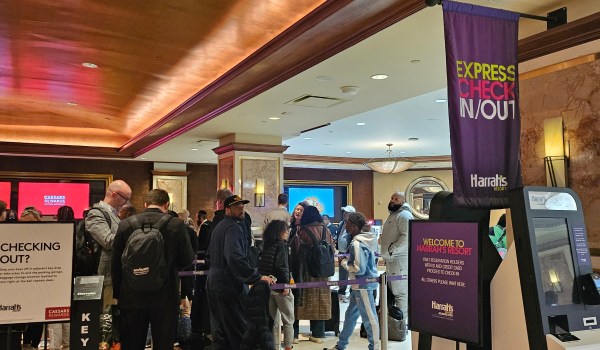
Hotel Service Recovery Strategies in Action: Real-World Example and Lessons Learned
From both a revenue and service delivery point of view, a hotel stay equals more than providing a place to stay. Done well, it creates an experience that makes guests…

Do You Know Why The Iconic Brand Toys ‘R’ Us Closed Doors Despite All Our Memories? #RetailBlues
The year is 2016. You are the CEO of Toys ‘R’ Us. Your brand still controls 13.6% of the toy market although the company is highly leveraged, a strategy of…

How to Be an Entrepreneur: 5 Things I Learned in 5 Months as an Entrepreneur
The life of an entrepreneur is different every day, but the one thing that remains the same is that we are always learning. These are my lessons in how to…

Customer Experience Audit: Uber Bets On Self-Driving Cars With Big Volvo Purchase
The question that remains unanswered is who will be part of the future of transportation. Uber is going for the vertical integration – the whole pie. The future industry of urban transportation will be made of players in three different categories: cars, self-driving software, and ride-sharing network. In contrast, Lyft approaches the future through partnerships.

Customer Experience Technology View of your Call Center
By 2022 the global cloud based contact center market is growing from USD 6.8Bn in 2017 to 20.93Bn in 2022. This makes for CAGR of 25.2%. If you do not…

How to make work at home work?
Post-COVID employee experience is a top priority of every HR executive. Most executives I know are losing sleep over this piece of organizational culture. Their challenge is to design the…

What is Revenge Travel and Why People Do It
LinkedIn is overflowing with articles and company news in response to COVID-19. We are starting to see renderings of future casino experiences that are anything but human-centric. People are beginning…

2026 Customer Experience Trends Every CEO Should Watch
Customer expectations are shifting faster than most organizations can adapt. Over the last year, we have been talking to a variety of audiences about the reality forward-thinking CEOs cannot afford…

Is Covid19 What We Needed to Build Seamless End-to-End Travel Experience?
On January 10th, we published an article called The Future of Travel We Deserve. In it, we laid out the foundation necessary to implement innovation at scale. Four months later,…

What is Big Data and Why Should I Care?
Big data has become part of our daily language. We read about it. We see companies that are “experts in big data.” LinkedIn is filled with engineers and analysts who…

How To Define Your Purpose And Have Unique Culture
If you Google the word “purpose” you get the definition “the reason for which something exists.” This is a challenge if you think about it in the context of organizational…

What is Taxing Your Customer Experience?
In our customer experience consulting engagements with organizations from travel and transportation to corporate environments, we see the same six challenges to delivering seamless customer experiences. The struggle to deliver…

How to Get Enough Funding for CX Initiatives
Delivering impactful customer experience programming starts with making the business case for customer experience to executive leadership. This is a straightforward objective. However, it requires strategy, clarity, education, and communication…

The ROI of Customer Experience Programs
What customer experience is, and how well brands think they are executing customer experience, and how well they are actually doing it are often at odds. According to Bain, 80%…