

What is Taxing Your Customer Experience?
In our customer experience consulting engagements with organizations from travel and transportation to corporate environments, we see the same six challenges to delivering seamless customer experiences. The struggle to deliver experiences that meet and exceed customer expectations across these six fronts threaten the CX-ROI connection necessary to shift customer experience from a cost center to a revenue driver.
Across industries, we see organizations struggling with fragmented digital and physical experiences; long wait times and inefficiencies (including challenges with queue management); and personalization that fails to connect with real customer needs. We also see CX challenges with limited accessibility and inclusivity, and complex navigation and communication. And ultimately, we identified the most significant threat to customer experience as a sustainable program and a revenue driver: lack of strategic alignment between the customer experience strategy and the business strategy.
The good news is, real, actionable solutions are available to businesses. And those solutions do not require massive overhauls to the ways you do business. Rather, they require an intentional, strategic approach that leverages customer feedback and actions intelligent strategy to better serve both your customer and your bottom line.
Fragmented Digital and Physical Experiences
Consider travel and transportation spaces (though it certainly is not limited to this environment). Note the challenges customers seeking seamless experiences face. Today’s customer expects smooth transitions across digital platforms, mobile apps, kiosks, and in-person services. However, many organizations continue to rely on disjointed systems. These disjointed systems create friction that leads to broken experiences, frustrated guests, and overtaxed employee teams.
Fragmented travel and transportation experiences persist due to inconsistent systems and multiple digital touchpoints. Though we see improvements in these scenarios in the US and internationally, seamless engagement continues to pose difficulties for passengers and the systems that guide them.
As far back as 2020, we wrote articles highlighting the experience benefits of digital assistants, or a digital concierge, to help bridge the gap between physical and digital environments to build stronger customer relationships and meet customer needs at scale in changing environments.
Solutions to the Experience Fragmentation Challenge
Of course, the digital concierge is not the only solution to fragmented digital and physical experiences. And we certainly do not propose it as a “patch” to the larger problem that fragmented experiences push to the forefront. Ultimately, to overcome the challenge of fragmented experiences in ways that are sustainable and repeatable, it is imperative to invest in intentional CX design, journey mapping, and CX technology design. But again, none of that happens in a vacuum. The right kind of journey mapping, and customer experience design that drive revenue have two key features. First, they connect to both the customer experience strategy and the business strategy. Second, they align all customer touchpoints holistically.
Of course, none of this can be done successfully without a robust understanding of who your customer is and what your customer needs and wants. As we explore in detail later in the article, Voice-of-Customer (VOC) insights are also essential to resolving the fragmented experiences challenge. Voice of the Customer Programs further help you to identify usability gaps and create more seamless interactions across your customer’s journey.
Long Wait Times and Inefficiency
Excessive wait times have a significant negative impact on customer satisfaction. And on internal efficiencies. The list of inefficiencies and poor queue management is long. We see examples in airports around the world, and in local transportation hubs. Whether waiting for check-in, approvals, or ticketing services, these inefficiencies create frustration at best, and erode brand trust at worst.
A 2023 study by the International Air Transport Association (IATA) identifies congestion at airports as a major challenge, despite the advent of technologies designed to improve efficiencies and promote seamless travel. In addition to confirming what we all know on the ground, namely, that queues remain a problem, the IATA report recommends biometric technology and digital IDs to improve passenger flow. All CX efficiency and security solutions we have identified and discussed in the conversations we have led on modernizing air travel and transportation hub experiences.
Solutions to Queuing and Efficiency Challenges
To tackle inefficiencies, organizations must adopt a human-centered approach. That approach enables you to integrate stakeholder collaboration and communication, and to refine operational workflows. Journey mapping further supports this effort. Journey mapping helps to identify painpoints and streamline customer interactions at every touchpoint. All of this improves flow, increases efficiency, and optimizes customer experience engagement.
Remember, customer happiness is at the core of efficiency. While efficiency creates operations challenges, and operations can and should be designed and executed in ways that improves efficiency, the need for seamless, comfortable, guided experiences is a human need. So, hospitality standards and training also come into play as a solutions-driver for efficiency. Hospitality standards and training, like customer experience programming, is more than a nice to have. These are fundamental engines of seamless, guided, efficient experiences that passengers and guests crave, and that airports, transportation hubs, and brands across industries need in order to see experience ROI.
Personalization Without Research
Of course, you need to know who you are creating CX programming for, and how to action hospitality within your brand. Within that scope, personalization is a powerful tool for engagement. However, personalization only enhances customer experience when it is executed well. And all too often, it is executed poorly. What does that look like? And how does it happen? Poor execution of personalization happens when you initiate programming without doing the proper research into customer personas. Absent research, it is impossible to understand (and deliver) what customers need and want, and what motivates them in their interactions with your brand.
Just like the broken digital and physical experiences we highlighted at the top of the article, personalization without research into what you are personalizing and how you are personalizing it can yield disconnected experiences. We see this frequently in corporate environments. Forbes reports that this occurs because “[c]orporate strategies were not designed to serve the unique needs of people in today’s age of personalization.” Failure to adapt to the era of personalization results in customer disengagement and, ultimately leads to customer churn.
Solutions to Personalization Challenges
The solution to personalization challenges lies in truly knowing who your customer is, including what they need, what they want, and what motivates them. This comes through customer research and Voice of the Customer (VOC) programs. But, as we always say, having the program is not enough. Customer research and customer feedback programs must be aligned with CX and business strategy. At the most basic level, you need to know what you are asking, who you are asking, and how you are asking. Feedback truly is a gift, so you must invest in it in order to reap the benefits from it for your organization and for your current and future customers.
That means it is essential to set the goal to capture authentic customer feedback. To do that, we recommend integrating research-driven programming. This enables you to ensure that your personalization is thoughtful, relevant, and aligned with your customer personas in meaningful ways that translate into experience and satisfaction gains.
Limited Accessibility and Inclusivity
Accessibility remains overlooked in many corporate and transportation environments. Organizations often fail to provide accommodations for individuals with disabilities or diverse language needs. That alienates key customer groups. But it also undermines the essential tenets of customer experience, which put human experience at the center of interactions with your brand. It should go without saying that when we make claims about human experience, we do mean the experiences of all humans.
Central to any conversation about accessibility (and we have led many) is the understanding that truly accessible design, namely, universal design, goes beyond compliance. Universal design enables truly inclusive experiences in train stations and airports, as well as in office buildings, public spaces, and health centers and hospitals. Design for accessibility takes many forms, including digital accessibility design in transportation, like real-time flight information and adaptive self-service kiosks. And that is only the tip of the iceberg.
Solutions to Increase Accessibility Across Customer Experiences
To address accessibility barriers and to find new opportunities to introduce universal design impactfully, the first step is, once again, to ensure you know your customer. That knowledge starts with customer feedback programs.
To fully capture accessible design opportunities along your customer’s journey and across digital and physical modalities, we see positive changes through CX and accessibility audits. Finally, applying the principles of human-centered universal design (for airports and transportation hubs especially, this includes wayfinding strategies aligned with universal design) transforms experiences for all. By embedding accessibility into core design and CX strategies, it becomes possible to move towards truly inclusive experiences that are welcoming for all guests.
Complex Navigation and Communication
Customers frequently struggle with unclear communication and navigation in transportation hubs and other environments. Whether it is confusing airport wayfinding or inconsistent brand messaging, these unnecessary complexities add unwanted stress to experiences. Clear wayfinding; consistent, reliable service delivery; convenience; and clear communication are all drivers of customer satisfaction across environments. But they are often underfunded or tacked on to programming to late.
In the retail setting, we have talked about how communication breakdowns happen when technology is not integrated across channels and customer service agents lack access to the information they need to support customers empathetically and actionably. In aviation, we have studied the impact of communication strategies for supporting customer recovery efforts during irregular operations (IROP), including flight delays. All these scenarios reveal the importance of orienting your customer and making them feel safe, guided and cared for.
Solutions to Navigation and Communication Challenges
Organizations can mitigate communication and navigation challenges through wayfinding strategies, customer-centric communication plans, and journey mapping that refines navigation touchpoints.
Most importantly, resolution of these challenges requires strategic alignment and cross-stakeholder collaboration. This alignment ensures that the information customers receive is consistent, intuitive, accessible, and actionable.
Lack of Strategic Alignment
None of these solutions are possible without customer experience strategy alignment with the overall business strategy. However, misalignment between CX efforts and corporate strategy happens frequently. And when it does, it leads to inefficiencies and wasted resources.
To bridge this gap, implement CX strategy consulting and establish CX Centers of Excellence that ensure customer experience remains a central driver of operational success and revenue.
Solutions for CX Strategic Alignment
CX strategy consulting empowers you to define what customer centricity means to your organization by creating a shared mental model of how experience authentically reflects brand promise. An actionable CX Strategy is, of course, aligned with the business strategy. This establishes the path for the right CX investments, and accelerates the CX-ROI connection.
A CX Center of Excellence, what we like to refer to as the antidote to failed customer experience, is a centralized unit within an organization that provides training and resources, best practices, leadership, and support for a specific area of focus. The CX Center of Excellence focuses on a strategic approach to improving customer experience. That includes promoting innovation and fostering growth. A successful Center of Excellence makes an organization stronger and more impactful, fueled by a clear, unifying purpose that guides decision making.
For more on maximizing customer experience value for your organization, schedule a complimentary call with us.


Life, Liberty, and the Pursuit of [Customer] Happiness
Seven years ago, when we launched The Petrova Experience, the 250th Anniversary of the founding of the United States felt far away. However, its founding principles, particularly the pursuit of…

Top CX Design Challenges in 2021
Customer experience design challenges in 2021 remind us of the overall challenges that face organizations in a year marked by changing expectations and demands. Top customer experience design challenges include…

Even the US Government is Jumping on the Customer Experience Train
As we get ready for 2021, we have been diving in to the top customer experience trends we see on the horizon. So far, we have looked at why customer…

Customer Experience Technology View of your Call Center
By 2022 the global cloud based contact center market is growing from USD 6.8Bn in 2017 to 20.93Bn in 2022. This makes for CAGR of 25.2%. If you do not…

Customer Experience for Vertical Takeoff
VTOLs (vertical take-off and landing vehicles) are projected to hit mature industry status in 2035 (Aviation International News). In just over ten years, the entire aviation ecosystem will be radically…

How to Be an Entrepreneur: 5 Things I Learned in 5 Months as an Entrepreneur
The life of an entrepreneur is different every day, but the one thing that remains the same is that we are always learning. These are my lessons in how to…

2021 Customer Loyalty Strategy – Relationships over Transactions
According to the Salesforce Connected Customer Report, 90% of consumers expect companies to clearly demonstrate their values and 66% expect brands to demonstrate empathy. In other words, when thinking about…
What’s the Scope
Launched by CXPA (the Customer Experience Professional Association) in 2013, and held annually on the first Tuesday of October, CX Day aims to “advance customer experience as a professional role…

Poor Integration is Bad for Customer Journey and Worse for Brands
Although we all have bad customer experiences, there is still a big debate about “the CX field” and whether it will survive the test of time. There is no doubt…
No Pass During Construction: Why Airports Must Rethink Customer Experience in the Era of Capital Programs
Throughout the US, airports are entering one of the most consequential decades of infrastructure development in the history of modern aviation. According to Airports Council International–North America (ACI‑NA), US airports…

Travel Experience Stories: How Not to Leave Customers Stranded
Meet Diane. Diane is traveling with her 2 year old and 5 year old to her in-laws’ house for Thanksgiving. This is the one annual trip she takes. And she…

Create Your Tribe: How Great CX Makes a Lifestyle Brand
Newcomers to the market realize that their business is only as strong as the growth of their customer base. With that in mind, senior leaders work hard to shorten the distance between them and the customer.

Customer Understanding for Airport Customer Experience: Theory vs Practice
One of the (many!) interesting things about working in airport customer experience for as long as our team has, is watching how the language around customer experience changes as ideas…

Web Experience is Having a Comeback
In the third quarter of 2020 US e-commerce sales went up 36.7% compared with the same period in 2019. Websites have come back to center stage. However, we are not seeing…

What is Customer Experience for Built Environments?
A tweet grabbed our attention this week: “The Atlanta Airport (ATL) designers were like ‘and then what if we had them run 5k?’” In addition to making us laugh, this…

How to Prepare for AI: Dispatches from CR Summit, Charleston
On the eve of the #CRSummit in Charleston, customer experience leaders from various industries held the first AI Committee meeting. AI is a challenging topic to cover because it has…

How Well Do You Understand AI Applications?
In the last week I spoke about AI at the Argyle Forum webinar and at the ConnectID Conference in Washington, DC. Technology is emerging

How To Define Your Purpose And Have Unique Culture
If you Google the word “purpose” you get the definition “the reason for which something exists.” This is a challenge if you think about it in the context of organizational…

Customer Experience Audit: Starbucks Bets On The Physical Experience
Starbucks is opting in for the physical experience in order to become a lifestyle brand while other brands are investing in omni-channel experience.

The ROI of Investing in Organizational Culture
Investing in organizational culture is a strategic and operational imperative for employee retention, scalable growth, and successful mergers and acquisitions. Organizational culture is not what you do as a leader…

Customer Experience Audit: eBay’s Vibrant Marketplace of the Future
Editor’s Note: This post is part of a series of Customer Experience Audits. They highlight advances in artificial intelligence in retail and other technologies. See all audit stories. Two years…

JetBlue Leading Customer Experience
Since I used to lead the JetBlue customer experience, people often ask what is behind the JetBlue experience magic. Or, as one of our clients refers to it, the “JetBlue…

How Hospitality Can Save Tourism
Travel experience experts need to remember why people travel. For most tourists, it is all about the destination. The destination is why you leave home. Before you make the decision…

Customer Experience Audit: New York Times Beats Google
Editor’s Note: This post is part of a series of Customer Experience Audits. In this series we walk you through customer experience examples across industries. We feature brands that made…

Hiring Tips: Who Should I Hire First on My CX Team
The pressure to demonstrate business impact and ROI on your Customer Experience initiatives quickly makes your first hire even more important. As usual, there is no answer that fits all scenarios perfectly. We have some helpful strategies to consider based on the structure of your organization and your goals.

Airport Experience – Are You Letting Down Your Precious 2021 Travelers?
A month and a half ago, as part of our ongoing conversation about airport experience, we introduced the concept of revenge travel. We pleaded with the public to trust us…

Customer Experience Trends – 8 Actionable Tactics in 2021
As we begin Q4 of an eventful 2020, it’s time to look out for the 2021 customer experience trends and tactics for creating exceptional experiences in increasingly complex environments. We…

Would You Pitch In To Save Toys “R” Us For Your Children To Experience? #ToysRUsGoFundMe
Last week we laid out the big moves that the leadership of Toys ‘R’ Us failed to take to evolve with customer needs and thus joins other brands as examples of…

What is Customer Experience Strategy?
In our last article we talked about the importance of strategic thinking. Today, we build on this topic and walk you through the nuts and bolts of customer experience strategy….

How to approach Return-to-Office Resistance
There is a general resistance to return to office. People do not want to go back to the pre-pandemic office routine, particularly to a 5-day-a-week, in-office schedule. Out of ten…

Employee Centric Culture – Culture is King
In 2017 we introduced our ROI series recognizing the challenges all customer experience professionals have to obtain funding for CX initiatives and to prove their positive returns. Our second ROI…

Fan Experience: CX Lessons for Hosting Major Events
With the World Cup coming to New Jersey and the greater New York area in 2026, the time is now to create positive fan experience moments. The 2026 Soccer World…

Freelance Customer Experience Lessons for Freelancers
For small businesses and freelancers alike, it’s important to recognize that your business is as strong as the relationships you build with your customers. That’s just one of the key…

Guest Experience: Fusion of Hospitality and Brand Connection through Design
For a customer experience consultant who designs guest experience, and a lover of the customer experience discipline, visiting a new-to-me hotel can go one of two ways. Sometimes, I am…

3 Customer Experience Strategy Lessons for 2023
Customer experience strategy guides exceptional experience and bolsters growth. When executed well, it impacts not only your market share, but the entire industry in which you operate. In fact, a…

How to Build Customer-Centric Culture
Before we address how to build customer-centric culture, let’s examine the terminology: what culture is and what it is not. Culture is not executives talking about high level strategy. Equally,…

From Pain Points to Magical Moments: Transform the Customer Experience
Argyle Journal interviewed Liliana Petrova about emerging self service technology and meeting and exceeding customer expectations in airports. One such way, as Liliana explains, is to create magical customer experience…

5 Things You Can Do to Provide Excellent Passenger Experience in 2022
The Wall Street Journal predicts this Thanksgiving will be among the busiest travel days in decades, with 55 million travelers anticipated to be moving through US airports and other transportation…

How a Failed Bus Experience becomes a Rally Cry for Passengers
A single experience can shed light on major vulnerabilities in transportation experience. A bus trip we took from Atlantic City reveals the danger of breaking promises to customers, the importance…
Autonomous Customers, Traveler Privacy and More Questions for CX Professionals in a Changing World
“As we move toward a more automated culture, most travelers will adapt to a Jetsonian, automated lifestyle. Every industry we know will be disrupted. For those of us in aviation,…

A Customer Experience Strategy will Define Your Success in 2021
While there may not be a magic pill to guarantee the perfect customer experience, there is one thing that every organization needs to transform into a customer-centric business. And that…

Customer Experience ROI. Is It Worth Doing?
The business case for Customer Service is complex. Gone are the days when we bought a piece of hardware that depreciates over 5 or 10 year on the balance sheet. CX does not even show up on our assets list. At least not with that name.

Why Customer Retention is the True Measure of SaaS Success
Guest Post by Callie Reynolds for The Petrova Experience In SaaS (Software as a Service), like in most businesses, sales is king. Sales gets the glory, and while I’d like…

Diversity is more than difference of color
Yesterday I had the privilege to join a panel on how to develop diversity and inclusion on your teams at Developer Week in Brooklyn. I was really excited to learn…

Customer Experience Audit: FedEx Omnichannel Disaster
In our Strategy, Org Design & Culture series, we cover customer-focused companies that are willing to adapt, take risks and discover new ways of staying relevant. Sometimes, we encounter brands…

NPS Best Practices
Last week I spoke at the Corinium CCO Fall Conference. One of the discussions we had was on the very popular topic of Net Promoter Score best practices and its…

5 Ways Customer Experience Consultants Keep Customer Promises
Customer experience is the follow-through on brand promises across every interaction. Some organizations assume the importance of customer experience is limited to commercial brands. This is far from true. In…

3 Cost Conscious Mistakes in Hospitality Implementation that Lose Money
Hospitality is a cornerstone of customer experience in travel, healthcare, and across industries. There is no question that hospitality is essential for creating world class, seamless experiences and driving customer…

How to Build a Customer-Centric Culture for Highly Effective Teams
When we look at how to build a customer-centric culture, we must look inside the organization first. True customer centricity happens when an organization masters group dynamics to harnesses the…

Bad Travel Experience
As we come to the end of the summer season, it is time to talk about travel – good and bad travel experience. And how the sharing economy has both…

Coronavirus Travel: What Does Hospitality Mean Now?
I want to tell you about my recent passenger experience. Earlier this week, I traveled to New Orleans from JFK Terminal 5 in New York. I had planned an airport…

Customer Experience Audit: Cadillac Scores Millennial Customers with Future-Forward Thinking
Editor’s Note: This post is part of a Customer Experience Audit series. See all the audit stories. The automotive industry is right next to the airline industry in terms of…

Liliana Petrova Talks Patient Experience in Healthcare Podcast
Recently, we recorded a podcast on patient experience in healthcare with Stacey Richter. Today, we are excited to share it with you. On the episode, we discuss travel and healthcare…
Digital Customer Experience Strategy – Top Three Mistakes
How many of you have interacted with financial and insurance institutions who seem to have forgotten the invention of the world wide web and applications design? In 2021, Major players…

CX Skills Builder: Own the Customer Experience
Often, Customer Experience professionals do not believe that they can improve customer experience by impacting the experience design for their customers. Why? What causes this disconnect? I once got a…

What is the best question for your CX Survey?
As customer experience professionals, we need to factor in this disconnect when we design surveys. And when we react to survey results. Customers have an image of who they want to be. However, their behaviors do not always reflect that image.

How a Personal Interaction builds Repeat Customers
A customer-centric methodology is key to the successful outcome of my interaction with Hello Spud. It is the reason this story appears here, and not among the CX Big Fails! The company did not send an automated response. It did not deliver a message stating “sorry we couldn’t help you, would you like something else.” Instead, the company co-founder reached out to me personally across multiple channels (a handwritten note, followed by personal emails).

Do You Know Where Your Inventory Is?
When I worked in the airline business our most embarrassing incident was “losing a minor”. We never lost a child, of course. But we might not have known where a…

Why No One is Collecting Authentic Customer Feedback
Businesses need customer feedback collection to thrive in a competitive market. Everyone thinks they are collecting and acting on customer feedback, yet 80% of US companies failed to increase customer…

What is Human-Centered Design and how to Leverage it in 2021?
At its core, design is about value creation. In the world of Customer Experience, value-driven design requires CX professionals to use empathy to imagine a future customer experience that is…

Holiday Wishes for Great CX: Career Advice Edition
Every successful customer experience initiative starts with a skilled CX team. Brush up on your CX skills to strengthen the business case for CX; to develop relationships within your organization; and to deliver standout customer experiences in the new year.

Interoperability is a Business Risk for Medtech and a Healthcare Risk for Patients
Looking at patient experience and healthcare interoperability in the medtech environment, any observer (customer experience expert or not) recognizes something is broken. A thorough exploration of what is broken exposes…

Trust Is the Treatment: How to Achieve ROI on Patient Experience through CX Strategy
Patient experience is not a soft metric. It is an engine for financial performance, improved clinical outcomes, and sustained patient loyalty. For hospital executives and family medical practitioners alike, investing…

Why I Don’t Love Chatbots
Today, we tackle the value proposition that chatbots are more valuable to companies than customers. I reject this. The ROI simply is not there, especially since better customer experience is…

Customer Loyalty Begins In-House
Ten years ago, creating customer loyalty meant assigning a membership number customers fed back to brands at the time of purchase. Customers went through the trouble of keeping track of loyalty numbers, hoping to collect enough points along the

Contactless and Self-Service are Here to Stay
Our 5th 2021 customer experience trend highlights contactless and self-service experiences across industries. Before we dive into this topic, let’s take a moment to define what contactless and self-service mean…

Extend Your Travel Experience Value Proposition
Last December the Ladders published a piece that discusses business travelers who extend travel beyond the timeline of the business trip. The article says, “[a]ccording to a new study by La…

Bad Customer Experience
Doing the right thing when things go wrong is not exactly a good business case. But many do it anyway. Why? Because brands want to protect (and grow) their brand…

Lessons Learned at the Forrester Conference: “Data is the New Sexy”
Once a year I look for an event to attend where I can learn something new and get better at what I do. This year, I attended an event hosted…

What is Big Data and Why Should I Care?
Big data has become part of our daily language. We read about it. We see companies that are “experts in big data.” LinkedIn is filled with engineers and analysts who…

Why Millennial Investors are Abandoning You
It’s time to talk about the Millennial investor, a critical market for financial services firms in the next five years. For the past decade, the media talked about the impact…

What is Wayfinding?
I did not always know what wayfinding means. But ever since I left Bulgaria to come to America I have been looking to find my way. The first time I…

How Seamless Customer Journeys Drive Revenue
Many travel and transportation executives identify revenue sources narrowly. Think ticket sales, ancillary fees like baggage and amenities fees or premium upgrades. Many customer experience practitioners limit their scope to…

Journey Mapping to Avoid Travel Horror Stories
Welcome to the busiest week of US summer travel. AAA predicts travel this week across airports, train stations, and roads, will reach higher than pre-pandemic levels for the first time….

Top 5 Customer Experience Design Principles in 2021
Customer experience design principles are difficult for organizations to understand and apply. Time and again, we see this in organizations, even though we encounter customer experience design principles in our…

Customer Experience Survey: Why Customers Are Not Responding
When you solicit customer feedback sometimes matters more than how you ask the questions. In the case of a survey about new biometrics boarding initiatives my team and I created for JetBlue, we had a list of feedback that was most important for us.

How to Solve the 2025 Customer Retention Problem
It’s 2025, and businesses across sectors have a customer retention problem. U.S. companies alone lose an estimated $168 billion annually due to customer attrition, as revealed in a CallMiner whitepaper….
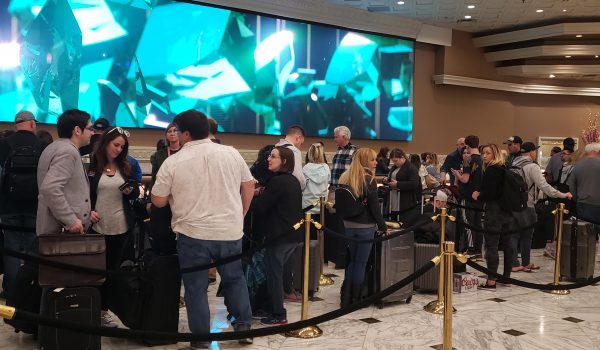
What Can Casino Consulting Firms Learn from Airlines?
Today we’re talking about casino experience. Casinos and airlines are similar in their operational complexity and sense of wonder. They also are similar in the way they can implement technology…

For Complex Infrastructure Projects, Teaming is All About Timing
According to a 2025 Design-Build Utilization Study, design-build is projected to represent over 47% of US construction spending by 2028, to total more than $1.1 trillion. With projects of this…

How to Sell the C-Suite on Customer Experience
You finally got your big career break. You are leading a project that requires executive approval. So, now what? Intuitively, you know that this is a chance to make a…
What’s the Scope
Launched by CXPA (the Customer Experience Professional Association) in 2013, and held annually on the first Tuesday of October, CX Day aims to “advance customer experience as a professional role…

Is Covid19 What We Needed to Build Seamless End-to-End Travel Experience?
On January 10th, we published an article called The Future of Travel We Deserve. In it, we laid out the foundation necessary to implement innovation at scale. Four months later,…