
What’s the Scope
Launched by CXPA (the Customer Experience Professional Association) in 2013, and held annually on the first Tuesday of October, CX Day aims to “advance customer experience as a professional role and business discipline.”
This year’s CXDay theme is “good CX delivers better outcomes for customers, employees, and organizations.” It would be easy to write a breezy tribute to the value of customer experience. Or a heartfelt celebration of our clients who remind us daily that the work we do is important – it is valued and valuable. That it is a privilege to work with builders of a better future in infrastructure, technology, healthcare, aviation. All this is true. And we could talk about it all day, every day. Customer experience is, after all, our passion.
But, we are The Petrova Experience, and we are never apt to take the easy road. On CX Day 2026, we want to address a challenge that is core to the customer experience discipline: What is the scope?
At The Petrova Experience, we recognize how customer experience shapes operational performance, brand credibility, and organizational alignment on a daily basis. What we also recognize is a persistent structural challenge that limits our discipline’s effectiveness: the absence of a clearly defined scope. So, how do we handle that?
The Discipline Without a Definition
Customer experience has matured rapidly. Recognized as a strategic priority, CX is a core competency across industries. Yet, the discipline itself lacks a shared definition of scope. Organizations interpret customer experience through the lens of their own structure. They silo CX into survey programs, digital interfaces, and frontline service. They remember to mention customer experience in brand expression conversations, but it does not always extend beyond the mention. Many acknowledge the role of experience in operational improvement, but it the relationship between the two often goes undeveloped (or underdeveloped). Each of these interpretations captures a piece of the truth. None captures the whole.
The result, therefore, does not come as a surprise. Across industries, customers, passengers, and stakeholders encounter fragmented accountability, inconsistent role definitions, misaligned investments, and feedback systems that do not meaningfully inform decision‑making. Caught in the ambiguity, customer experience emerges as a collection of activities rather than a coherent, consistent discipline.
The irony is, of course, that scope is the proper foundation on which customer experience must be built to deliver outcomes that add value for those customers, passengers, and stakeholders.
The Scope is the System
Customer experience is responsible for the performance of the end‑to‑end system that delivers customer outcomes. This is the defining characteristic of our CX discipline.
The system, which supports end-to-end journeys and exceptional experiences is, by necessity, and by nature, cross-functional. CX touches every part of an operation, because every part of the operation can and must be geared toward the needs of the customer.
Looking at the system, the places that must align with customer experience strategy are varied. It starts internally with customer-first policies and procedures. Then it goes to the digital architecture that underpins experience, from technology solutions to data flows. Experience best practices guide operational handoffs long before they are made visible in physical environments. And finally, with the core understanding that exceptional employee experience yields exceptional customer experience, customer-centric strategy, mission and values guide hiring, employee training and governance. It is precisely this holistic approach that enables the experiences we celebrate on CX Day.
As such, system-level responsibility differentiates customer experience from every adjacent function. It also makes our discipline inherently executive in nature. Cross-functional authority, strategic clarity, and operational literacy are essential. For this reason, when CX is scoped to the system, the it becomes structurally capable of delivering value it promises.
What are the Boundaries?
Optimization starts with defined boundaries of the system. This includes answering questions like where does the customer journey begin and end. It extends to real conversations about the functions that materially influence customer experience outcomes. On the technology side, it looks at defining what data is required to understand performance. And how the operation can affect customer experience.
Addressing these questions at the executive level empowers customer experience leaders to establish governance, align stakeholders, and design feedback systems that capture operational realities. This is where authentic CX impact originates.
Establish Accountability
It is important to think of scope as an accountability structure. When CX defines the system it is responsible for, it defines the outcomes it must deliver and the mechanisms through which those outcomes are produced.
Executives often assume accountability emerges from metrics. In practice, accountability emerges from scope. Once the system is defined, customer experience becomes responsible for the conditions that enable the customer’s outcome; the data required to understand performance; the operational decisions that influence performance; and the governance that ensures consistency.
Viewed in this way, we see a mirror of the accountability model used in operations, finance, and technology. Customer experience is the same. Importantly, accountability is operational, not theoretical. For example, if the defined system includes booking, arrival, and check‑in, then CX is accountable for the following:
- clear booking information
- reliable arrival pathways
- predictable, easy-to-navigate check‑in processes
- actionable feedback mechanisms that reveal where the system fails
Because the system is defined, accountability is measurable. As such, it becomes actionable. Then, accountability can be shared because the system crosses functions, according to its design.
As a result, executives recognize customer experience value as standard organizational governance applied to a customer‑facing system.
System Optimization in Practice
System optimization is the core of CX’s operational value. It is our discipline’s ability to translate customer outcomes into organizational requirements.
That optimization includes aligning strategy with operational capability and designing processes that reduce friction. It also ensures technology supports customer behaviors and empowers employees with clear expectations and the tools to achieve those expectations, and enables employees with clear expectations and tools
Further, optimization, aligned with a customer experience strategy that is grounded in the business strategy, establishes feedback loops that inform decisions. And builds governance that protects the quality of experience delivery into the future.
This is the daily work of customer experience leaders who operate at the intersection of brand, operations, and technology. The leaders we acknowledge today.
Two Examples: CX System Scope in Action
In honor of celebrating CX stories, allow me to share some recent examples of customer experience in action, from the medtech sector and the public transportation sector.
Healthcare: The System Begins Before the Encounter
A client of ours is redefining access to care through telehealth kiosks. In line with their spirit of innovation, they understand that their customer journey begins long before their patients step into their space. For them, customer experience begins when the patient opens the app to book an appointment. That moment determines comprehension of the service, confidence in the technology, access to care at the right time, personalization capability, and data availability for clinical and operational improvement.
With that in mind, if the booking experience is unclear, the kiosk experience cannot succeed. If the data architecture does not support personalization, the care model cannot deliver on its promise. And if the operational handoffs are inconsistent or fragmented, the clinical experience becomes unpredictable.
The proof is clear: the system begins long before the encounter. And our customer-first customer experience principles must be in place to define and optimize that system.
Transportation: When the System Spans Multiple Environments
In our work in complex transportation environments, we examine the experience of “getting to the airport.” While this key phrase appears in nearly every airport satisfaction survey, it is rarely defined.
Consider this. “Getting to the airport” includes leaving the house, navigating traffic, parking or drop‑off, entering the terminal, boarding an AirTrain, and reaching check‑in. Each step involves unique operators, environments, and constraints. Each step influences a traveler’s perception of ease. And each step contributes to the system that determines whether that traveler arrives prepared, calm, and on time. Whether they feel seen, guided, and cared for.
When organizations treat “getting to the airport” as a single question, they collect feedback, technically, but they do not gather relevant data to inform operational decisions. Conversely, when customer experience defines the holistic system, the organization gains the ability to understand and improve the experience in a way that is targeted and precise. And to collect feedback that is targeted and precise.
System Ownership Makes Outcomes Manageable
When CX owns the system, organizations can see why outcomes vary and how to improve them. Feedback becomes directional rather than descriptive. Personalization becomes a real capability (not a nice-to-have add-on). And impactful technology investments align with customer outcomes and the customer experience strategy that supports those outcomes.
Moreover, in this environment, operational teams move away from reacting to isolated issues. Instead, they work in alignment with a unified definition of success. Measurement becomes meaningful and improvements cumulative. This is where the brand promise of consistent, exceptional customer experience comes to life. With intention. And impact.
Lack of System Ownership Creates Organizational Drift
Alternately, when CX is scoped narrowly, the organization loses visibility into the mechanisms that produce customer outcomes. Feedback becomes disconnected from the operations that need to react and respond to it. Personalization strategies can end up lacking the data necessary to support experiences that build authentic customer connection.
Without a holistic, clearly defined scope, technology fragments. And frontline execution becomes inconsistent and unpredictable. Antagonists to quality customer experiences. And, importantly, governance diverges from brand promises, causing the CX fail every organization aims to avoid: not delivering on customer promises.
One thing that is important to recognize is that organizations do not drift from customer experience promises because they do not believe in the promises they are making. Or because they do not truly want to improve customer experience. They drift because they lack the structured commitment to deliver. Because there is no scope.
Scope Enables Strategic Choice
CX Scope forces organizations to articulate what matters and requires leaders to prioritize the experiences that drive value. And deprioritize those that do not. It clarifies the actionable questions to ask customers, defines the meaningful data to collect, and informs what capabilities to build.
Scope crystalizes customer experience into a focused engine. And through strategic alignment, makes that engine drive the operation.
Make Promises Real
Every brand makes promises to their customers. Defined customer experience scope determines whether the organization can deliver on those promises.
When scope is defined, technology teams know what to build, operations teams know what to design, frontline teams know what behaviors matter, and governance teams know what standards to enforce. A brand becomes a measurable, repeatable experience that inspires positive word of mouth. A brand your customers can trust.
When scope is undefined, each function can interpret the brand differently. And results become inconsistent and unsustainable.
The CX Day 2026 Challenge
Embrace customer experience as a strategic discipline with operational value. Build that value into systems holistically and intentionally through a clearly defined, agreed upon scope that can support the claims your brand makes.
Today, and as we look ahead to 2027, let’s operationalize that scope for valued, valuable experiences for our clients and their customers. Every organization deserves the opportunity to deliver on the promises they make to their customers. And we have the power to help them do that repeatably and well.
This is the work – let’s get to it!

The One CX Goal You Need to Set for 2019
For 2019, I urge you to make only one CX goal – bring about business success with your customer experience work. Don’t just do work in the general sense. Rather, set a CX goal that has a real impact on your customers and their experiences with your brand.

The Risk No Insurer Prices: Why Customer Experience is Costing Insurance Companies Renewals
Insurers are experts in pricing physical and actuarial risk. What too few have learned to price effectively is the slow, compounding erosion that comes from fragmented customer service. What is…

Customer Experience Audit: eBay’s Vibrant Marketplace of the Future
Editor’s Note: This post is part of a series of Customer Experience Audits. They highlight advances in artificial intelligence in retail and other technologies. See all audit stories. Two years…

Retail Experience Design of the Future
In preparation for this article about omni-channel retail experience of the future, I thought first about the definition of omni-channel customer experience. I wanted to share with you a simple,…
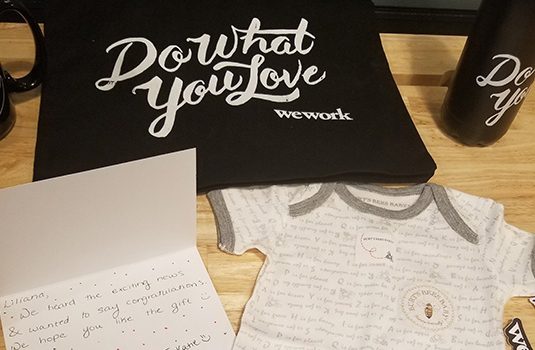
WeWork Does Customer Experience Right with a Wow Moment
Used at the right time and place along the customer’s journey, the Wow Moment is an excellent retention technique. When a brand creates personal, relevant experience at exactly the right time, it can build a lifelong, loyal customer relationship.

How to Solve the 2025 Customer Retention Problem
It’s 2025, and businesses across sectors have a customer retention problem. U.S. companies alone lose an estimated $168 billion annually due to customer attrition, as revealed in a CallMiner whitepaper….

Why you need a defined culture for customer experience?
When designed and built correctly, customer experience expresses an organization’s brand. Your brand and marketing promises serve as a guiding light to your experience team. Similarly, organizational culture serves as a goalpost for the service side of customer experience.

3 Cost Conscious Mistakes in Hospitality Implementation that Lose Money
Hospitality is a cornerstone of customer experience in travel, healthcare, and across industries. There is no question that hospitality is essential for creating world class, seamless experiences and driving customer…

Web Experience is Having a Comeback
In the third quarter of 2020 US e-commerce sales went up 36.7% compared with the same period in 2019. Websites have come back to center stage. However, we are not seeing…

When There is No Chat in Chat Support
Today we talk about chat support best practices, the customer experience VALUE that it creates, and the ROI of the business case to implement it. Although we are skeptical about…

Customer Experience for Vertical Takeoff
VTOLs (vertical take-off and landing vehicles) are projected to hit mature industry status in 2035 (Aviation International News). In just over ten years, the entire aviation ecosystem will be radically…

NPS Best Practices
Last week I spoke at the Corinium CCO Fall Conference. One of the discussions we had was on the very popular topic of Net Promoter Score best practices and its…

What is Journey Mapping?
Although we have published more than 130 articles on customer experience, we still have not dedicated an article to journey mapping. Journey mapping is the most widely recognized customer experience…

Think Strategically about Telehealth in 2021
Today, we examine telehealth strategy for an in-depth look at this 2021 customer experience trend. As we continue our conversation about why telehealth is here to stay in 2021, we…

Extend the Customer Journey with AI
Superior customer experience hinges on seamless customer journeys. We build strategies around this, design CX programs, and map the journeys of customer personas, all with the aim to meet customer…
United CEO does not care about #customers happiness. Really?
Lately, I have been thinking about United Airlines and its organizational culture. Initially, I thought about United Airlines culture because someone asked whether it is possible to build a customer-centric…

3 Ways to Create a Better Employee Experience Strategy
Guest Post by Gabe Smith, CCXP for The Petrova Experience The relationship between employee experience strategy and customer experience has long been discussed. Without engaged employees, we’re told, it’s difficult…

How Well Do You Understand AI Applications?
In the last week I spoke about AI at the Argyle Forum webinar and at the ConnectID Conference in Washington, DC. Technology is emerging

What Holiday Parties Teach about Hospitality
Last week The Petrova Experience, like many companies, hosted our holiday party. In good customer experience fashion, we put significant effort into finding the perfect location. We agonized over the…

Let’s Get You Certified as a Customer Experience Professional!
Like all mature professions, customer experience has a certification that is internationally recognized. Adding it to your resume will signal to the business community that you are serious about customer experience and your aspiration to be part of its leadership ranks…

Bad Customer Experience
Doing the right thing when things go wrong is not exactly a good business case. But many do it anyway. Why? Because brands want to protect (and grow) their brand…
What’s the Scope
Launched by CXPA (the Customer Experience Professional Association) in 2013, and held annually on the first Tuesday of October, CX Day aims to “advance customer experience as a professional role…

How to approach Return-to-Office Resistance
There is a general resistance to return to office. People do not want to go back to the pre-pandemic office routine, particularly to a 5-day-a-week, in-office schedule. Out of ten…

FIFA World Cup, LA Olympics 28, and the Business of Customer Experience
Because we are experience designers (of fan experience transportation hubs and systems), who also happen to be mega-soccer fans, three years before the first ball was kicked at MetLife Stadium,…

Is Covid19 What We Needed to Build Seamless End-to-End Travel Experience?
On January 10th, we published an article called The Future of Travel We Deserve. In it, we laid out the foundation necessary to implement innovation at scale. Four months later,…

Employee Centric Culture – Culture is King
In 2017 we introduced our ROI series recognizing the challenges all customer experience professionals have to obtain funding for CX initiatives and to prove their positive returns. Our second ROI…

What is Customer Experience Transformation?
To meet the needs of the empowered 21st Century consumer, most companies, especially larger enterprises, need to embark on a customer experience transformation. Imagine a car manufacturer that does not…

Center of Excellence: The Antidote to Failed Customer Experience Programs
It’s no secret that even good CX programs fail. Back in 2018, Bob Thompson of CustomerThink shared the “inconvenient truth” that “93% of customer experience programs are failing.” Gartner echoed…

Customer Journey Mapping Tools in 2021
Before we dive into customer journey mapping tools, we must keep in mind that, by itself, journey mapping is not a customer experience product or service. A journey map is…

The Biggest AI Mistake Most companies are Making
Much of AI news focuses on the importance of regulation, data risks, and intellectual property debates. And of course there is the rally cry “AI is coming for our jobs.”…

5 Tips to Create Great Customer Experience Design Strategy
A customer experience design strategy that is sustainable and successful starts by having a vision and knowing who your customer is. This launching point enables you to design customer experiences…

What You Need To Do To Start 2018 Right
It is the end of December and we are all in reflective moods. Did I do enough for my customer experience career this year? Did I build the right team…

Hospitality Experience and Why We lack Seamless Travel Experiences
Hospitality is taken for granted across government agencies, airlines and hotels. In my line of work, I often hear “I want to have the JetBlue customer experience.” Although many claim…

Is AI Really The Answer?
Earlier this week we shared some of the pitfalls of implementing self-service and highlighted the importance of strategic and empathetic implementation. AI (artificial intelligence) is one of the self-service tools…

The Invisible Friction Points Weakening Manufacturer Customer Experience
For years, manufacturers have competed on product quality, operational efficiency, and price. Our current environment of supply chain volatility, talent shortages, and the elevated customer expectations in the “experience economy”…

Can One Email Build Loyalty? #MYWESTELM
This is exemplary management of the post-purchase journey touch-point. For years, this level of management has been non-existent. At best, it tends to come in the form of an email confirmation that purchased items have been delivered.

Customer Experience Audit: FedEx Omnichannel Disaster
In our Strategy, Org Design & Culture series, we cover customer-focused companies that are willing to adapt, take risks and discover new ways of staying relevant. Sometimes, we encounter brands…

Where Should CX Sit at the Table?
Before we begin talking about where CX should sit in the organization, I want to clarify one thing. Customer Experience is not a single person.

Leadership During the Pandemic: Guest Post by Rachel Dreyfus
This is a guest post by Rachel Dreyfus, President, Dreyfus Advisors, who researched leadership and organizational culture during the pandemic. How has Covid19 influenced leadership over the past three months?…

What is Human-Centered Design and how to Leverage it in 2021?
At its core, design is about value creation. In the world of Customer Experience, value-driven design requires CX professionals to use empathy to imagine a future customer experience that is…

How to talk to your CFO about customer experience and revenue growth
Last month we introduced the topic of Customer Experience ROI and the complexity of building a good business case for it. The Customer Experience business case is strong, but not easy to prove. Today we will focus on two big wins of a successful customer experience investment – revenue and customer growth of your business.

Why Bt2B Businesses Must Think Like B2C in the Next Decade
B2B vs B2B thinking makes a real difference when it comes to customer experience. According to Gartner at least 80% of B2B buyers now expect the same buying experience as…

#CXTHUS Exchange Insights – winners and losers?
Attending a customer experience conference is a significant investment of time and money. Even if you are speaker at the conference, like I was last week, the time away from…
A Lot of Data, Not Enough Insight
A month ago I saw a Forrester presentation on Customer Experience measurement that began with a great quote from the Global Bank: “We are drowning in data and starving for…

Customer Facing Experience: Communication and Hospitality
Today, we are talking about communication as part of the customer facing experience. This is one of the most misused and misinterpreted notions both in our professional lives and our…

Healthcare Experience Horror Story
We talk about good vs bad customer experiences. And we give examples of organizations that do things well or poorly. But we rarely are able to shine the light on…

2026 Customer Experience Trends Every CEO Should Watch
Customer expectations are shifting faster than most organizations can adapt. Over the last year, we have been talking to a variety of audiences about the reality forward-thinking CEOs cannot afford…

The Customer Service Agent is Dead
When we outlined our CX trends for 2026, we talked about how autonomous service is replacing traditional customer service. Yes, our claim that the CSA (customer service agent) role is…

Coronavirus Travel: What Does Hospitality Mean Now?
I want to tell you about my recent passenger experience. Earlier this week, I traveled to New Orleans from JFK Terminal 5 in New York. I had planned an airport…

How to Get Enough Funding for CX Initiatives
Delivering impactful customer experience programming starts with making the business case for customer experience to executive leadership. This is a straightforward objective. However, it requires strategy, clarity, education, and communication…

How to Be an Entrepreneur: 5 Things I Learned in 5 Months as an Entrepreneur
The life of an entrepreneur is different every day, but the one thing that remains the same is that we are always learning. These are my lessons in how to…

How to make work at home work?
Post-COVID employee experience is a top priority of every HR executive. Most executives I know are losing sleep over this piece of organizational culture. Their challenge is to design the…

Interoperability is a Business Risk for Medtech and a Healthcare Risk for Patients
Looking at patient experience and healthcare interoperability in the medtech environment, any observer (customer experience expert or not) recognizes something is broken. A thorough exploration of what is broken exposes…

How Southwest Can Own Customer Experience Again
The collapse of the Southwest passenger experience this holiday season is an unlikely jumping off point for a conversation on how to own customer experience transformation. Unfortunately, it is not…

Guest Experience: Fusion of Hospitality and Brand Connection through Design
For a customer experience consultant who designs guest experience, and a lover of the customer experience discipline, visiting a new-to-me hotel can go one of two ways. Sometimes, I am…

How Smart Do Humans Want AI To Get?
Earlier, we covered the basics of AI and what it is in theory. Today, we talk more about existing practical applications of AI and more examples of artificial intelligence. And…

Fan Experience: CX Lessons for Hosting Major Events
With the World Cup coming to New Jersey and the greater New York area in 2026, the time is now to create positive fan experience moments. The 2026 Soccer World…

How a Failed Bus Experience becomes a Rally Cry for Passengers
A single experience can shed light on major vulnerabilities in transportation experience. A bus trip we took from Atlantic City reveals the danger of breaking promises to customers, the importance…

Why I Don’t Love Chatbots
Today, we tackle the value proposition that chatbots are more valuable to companies than customers. I reject this. The ROI simply is not there, especially since better customer experience is…

What Flight Delays Teach about Customer Recovery
One of the things we enjoy most about customer experience design for the aviation industry is tackling its unique complexities. And there are many complexities! With more than 4.17 million…

Why No One is Collecting Authentic Customer Feedback
Businesses need customer feedback collection to thrive in a competitive market. Everyone thinks they are collecting and acting on customer feedback, yet 80% of US companies failed to increase customer…

Beyond Customer Satisfaction: 3 Unexpected Ways CX Drives Value
It is time to debunk the nice-to-have myth about customer experience. It is true the discipline operates in the space of perception, feelings, and emotion. What is equally true, but…

CX Skills Builder: Own the Customer Experience
Often, Customer Experience professionals do not believe that they can improve customer experience by impacting the experience design for their customers. Why? What causes this disconnect? I once got a…

Culture Starts at the Top
Without a leader who believes that today’s business success is about acquiring and retaining customers, you cannot even begin the process of building a culture. Leaders who are passionate about the customer are also passionate about creating culture and employee engagement.

How to Overcome Hospitality Industry Challenges by Empowering Employees
If you are a hospitality industry leader, or a leader in another business sector who has been reading about the industry, you have encountered some grim statistics. It is true….
What Can Casino Consulting Firms Learn from Airlines?
Today we’re talking about casino experience. Casinos and airlines are similar in their operational complexity and sense of wonder. They also are similar in the way they can implement technology…

Travel Experience Stories: How Not to Leave Customers Stranded
Meet Diane. Diane is traveling with her 2 year old and 5 year old to her in-laws’ house for Thanksgiving. This is the one annual trip she takes. And she…

Bad Travel Experience
As we come to the end of the summer season, it is time to talk about travel – good and bad travel experience. And how the sharing economy has both…

Airport Experience – Are You Letting Down Your Precious 2021 Travelers?
A month and a half ago, as part of our ongoing conversation about airport experience, we introduced the concept of revenge travel. We pleaded with the public to trust us…

How To Define Your Purpose And Have Unique Culture
If you Google the word “purpose” you get the definition “the reason for which something exists.” This is a challenge if you think about it in the context of organizational…

From Pain Points to Magical Moments: Transform the Customer Experience
Argyle Journal interviewed Liliana Petrova about emerging self service technology and meeting and exceeding customer expectations in airports. One such way, as Liliana explains, is to create magical customer experience…

The ROI of Investing in Organizational Culture
Investing in organizational culture is a strategic and operational imperative for employee retention, scalable growth, and successful mergers and acquisitions. Organizational culture is not what you do as a leader…

Why CX Design Needs to be in Your Transportation Project RFP
Ever heard this line while working on an RFP? “I know your value, but I don’t know where to put you.” We hear it all the time. Why? Because, historically,…

What is Telemedicine? Keeping Medicine at the Heart
Guest Post by Dr. Melynda Barnes for The Petrova Experience. In this post Dr. Barnes answers the question “what is telemedicine,” and reminds us to keep medicine at the heart…

4 Career Tips to obtain a Customer Experience Role
In honor of the 4th of July, we are rounding up 4 career tips for CX professionals. Set aside some time during the break from work to take stock in your CX career and evaluate the steps you need to get to the next level.

How @T4 makes real customer experience impact
Today we share our impressions from visiting our welcoming host Chad at JFK Terminal 4 in NYC. We also celebrate Chad as an effective Customer Experience professional/practitioner. His work is…
Digital Customer Experience Strategy – Top Three Mistakes
How many of you have interacted with financial and insurance institutions who seem to have forgotten the invention of the world wide web and applications design? In 2021, Major players…

Employee Engagement and Wellness In The Workplace: Guest Post
Today, The Petrova Experience brings you a guest article about employee engagement and organizational culture. This piece is by Natalie DeVito, of Commonwealth Joe. Commonwealth Joe is an innovative company,…

How to Prepare for AI: Dispatches from CR Summit, Charleston
On the eve of the #CRSummit in Charleston, customer experience leaders from various industries held the first AI Committee meeting. AI is a challenging topic to cover because it has…

Why Your Employee Experience Journey Matters
This week, Andy Newman wrote a great article in The New York Times about the life of a retail sales agent. He used the example of an Old Navy sales…
How to talk to your CFO about customer experience and revenue growth
Last month we introduced the topic of Customer Experience ROI and the complexity of building a good business case for it. The Customer Experience business case is strong, but not easy to prove. Today we will focus on two big wins of a successful customer experience investment – revenue and customer growth of your business.

A Customer Experience Strategy will Define Your Success in 2021
While there may not be a magic pill to guarantee the perfect customer experience, there is one thing that every organization needs to transform into a customer-centric business. And that…