

Interoperability is a Business Risk for Medtech and a Healthcare Risk for Patients
Looking at patient experience and healthcare interoperability in the medtech environment, any observer (customer experience expert or not) recognizes something is broken. A thorough exploration of what is broken exposes fundamental gaps the average observer (including patients) might miss. We know providers face high levels of burnout and patients report low levels of satisfaction. Less obvious is that a root cause of common healthcare experience problems is the disconnect between technology tools and human processes. Namely, challenges with interoperability.
Within the patient journey, interoperability, the connectedness of data and information systems across the continuum of care, breaks when human processes that interface with the technology are not designed to support patient experience.
My Interoperability Patient Experience Story
Recently, I watched this failure unfold in real time while seeking basic health services for my child. Two healthcare institutions, both of whom report to be “interoperable,” could not complete a simple information transfer. Why? Because the receiving institution relies on fax machines. Still. In 2026. And not only fax machines. Fax machines monitored by one documentation staff member who works one 7:30 a.m. – 3:30 p.m. shift.
If you are following along, you know what is coming. A fax arrives outside the 7:30 a.m. – 3:30 p.m. window (but still during the practice’s operating hours, not to mention a standard business day). It waits. If the employee whose job it is to monitor the fax machine is out of the office for two days, that fax waits longer. And, if the workflow requires that employee to manually route the fax, the entire chain of care stalls until their return.
The scenario I have described above is not rightly called a technology failure. It is a failure of ownership of a key moment on the patient experience journey. And the cause of significant, avoidable, disruptions to the patient experience journey. As such, it is the exact type of experience failure medtech companies are positioned to solve. But only if they align with the patient journey. And only if their customers (healthcare providers) build the right processes.
The Interoperability Paradox: Network Works; Workflow Breaks
Federal interoperability infrastructure is expanding rapidly. More than 9,200 organizations now participate in the Trusted Exchange Framework and Common Agreement (TEFCA), a national framework for health information sharing established by the United States Department of Health & Human Services Office of the National Coordinator for Health Information Technology (ONC). TEFCA’s mission aligns with a patient-first mindset. Its stated purpose is “to remove barriers for sharing health records electronically among healthcare providers, patients, public health agencies, and payers.”
On a mission level, this is great news for experience practitioners and patient advocates. In practice, the gap between goals and execution remains. Patient experience lives in that gap.
Back to those 9,200 organizations. They represent more than 41,000 connections. And a jump in annual document exchange volume from around 10 million prior to 2025 to 464 million by the end of 2025, according to the ONC. The foundation has been laid. People and processes do not connect to it. Case in point, 88% of healthcare practitioners say fax‑related delays, like the scenario we described, continue to actively affect patient care as recently as October 2025.
While interoperability failures translate to problems for patient experience, customer experience experts are not the only ones who recognize the challenge. Healthcare leaders describe interoperability as a “productivity tax.” They note it drags down operations. And low-tech issues like reliance on fax machines persist, even though clinical capabilities advance.
Why is Healthcare Failing?
Technology accelerates what a process enables. So, by extension, if the process is broken, technology accelerates that break.
The root question here is, how does this accelerated breakdown take place? It is the result of strained linkages within an overall healthcare environment weakened by internal fractures, as well as pressures and external conditions that burden already-taxed systems.
Not the least of which is the human element of a reduced number of providers for an increasingly aging (high-need) population. According to a 2024 report produced by the American Association of Medical Colleges, the US faces a projected physician shortage of up to 86,000 by 2036. That is ten years away. The Commonwealth Fund reports, nearly 100 million Americans lack a regular source of primary care.
We are running out of time to fix the human-technology fractures that threaten patient experience and healthcare sector employee experience.
That is the big picture of the healthcare environment. Let’s take a closer look at the impact on patient experience. And the ways in which fractures between medtech design and human systems design amplify negative patient experience. Communication failures now factor into 40% of malpractice claims. In hospital settings, delayed information contributes to $2,500–$3,100 lost bed‑days per patient.
With fewer clinicians, fewer facilities, and fewer available resources, every unowned handoff becomes a risk event.
Interoperability is Not a Technology Problem
The instinct to solve the healthcare interoperability problem exclusively at the technology level is incorrect. Interoperability, and the seamless experience it should be calibrated to support, requires a seamless handoff to humans in the health system who interface with it and deliver experiences to their patients. When no one owns that handoff, as we witness in practice time and again, interoperability breaks. And so do patient and provider experiences.
While the medtech companies we work with are B2B companies, they understand their success hinges on predictable, positive patient and provider experience. The companies who work with us share the goal of improving patient and provider experience. Achieving that goal is a challenge that requires robust customer experience strategy to mitigate experience risk.
In that vein, through our work, when we come into a medtech company that does not yet have the right customer experience strategy or processes and procedures in place, we encounter four distinct patterns. These patterns precipitate the breakdown of interoperability and the subsequent fractures along the patient experience journey.
Causes of Patient Experience Journey Fractures
- Gaps between implementation and customer experience. In this scenario, onboarding teams set up connections and customer success teams inherit those connections without documented handoffs.
- Friction between IT and Operations. Here, we often see both sides claim responsibility for execution, with neither owning it fully. When something breaks, it remains broken.
- Churn and renewal risk. This scenario is from the customer experience perspective. It demonstrates the impact of negative experiences on medtech companies that promise seamlessness, and suffer when that seamlessness is impossible to deliver. All too often, the first visible sign of an unowned handoff is a customer saying they do not plan to renew.
- Manual workarounds mask exposure. Here, we are back to those faxes. Also, spreadsheets and one‑off calls that frontline employees use to hide the gaps in patient experience until escalation forces it into view. Which often happens too late.
In short, this is why interoperability fails even when the technology itself works. The workflow is fragile because ownership is informal, undocumented, and dependent on individuals who often lack the training to use the technology. Or are forced into workflow patterns that undermine the technology and its design intent to support patient experience.
How Interoperability Failures Hit Medtech Vendors
Right now, interoperability ownership lives nowhere on paper. It lives in one person’s memory of how things are usually done. That is why the flow breaks the moment one person is out sick, changes roles, or the company scales past the point where only one person can do it all. Mapping what actually happens, assigning a name to the owner of each step, and building that ownership so it survives turnover and growth fixes the operational gap. We do not solve this operational problem more technology. Rather, we solve it by assigning the handoff an owner.
I want to take a moment to look more closely at the real risk medtech companies face when interoperability breaks. Again, we are not talking about a feel good vs. feel bad outcome. We are talking about real experiences and threats to a company’s viability.
When interoperability fails, it can result in blocking patient access to data, for which penalties can reach $1 million per violation. As of this year, certified health-IT developers are receiving letters of nonconformity. Deputy Secretary of Health and Human Services, Jim O’Neill, explains the rationale: “[u]nblocking the flow of health information is critical to unleashing health IT innovation and transforming our healthcare ecosystem.” He continues, “[w]e will take appropriate action against any health care actors who are found to be blocking health data for patients, caregivers, providers, health innovators, and others.”
Further, interoperability is now a named M&A due‑diligence category. Boards and investors are scrutinizing interoperability readiness ahead of raises, expansions, and acquisitions. The importance of getting interoperability right cannot be understated.
So, let’s jump back to my initial story about the fax in this light. The fax that sat unanswered for two days is an event a malpractice database records as a communication failure; a due diligence team records as an interoperability red flag; and leadership records as an unmanaged risk.
For our medtech clients, this is where we protect them, by safeguarding not only the patient’s experience, but the provider’s operation.
How Customer Experience Solves the Problem
Customer experience maps actual workflow, identifies precise moments where information stalls (and that effect on the patient journey). It also uncovers hidden dependencies and failure points. Ultimately, the customer experience lens reveals how operational frictions translate to patient friction.
At the end of the day, when we apply the customer experience discipline to healthcare interoperability, we force leaders to see who owns what, when. And how to build processes around that ownership to improve patient journeys. We solve for interoperability as a human problem, not a technology problem by applying human-centered approaches to human challenges.
Because we see workflow as the patient experiences it, as well as how the team responsible for delivering the experience sees it, we design processes that make the technology worthwhile – and workable – for provider and patient.
Create Human‑Centered Processes that Support Growth
To sum it up, because technology does not create the break in interoperability, more technology does not fix it. Documented ownership of every handoff, designed from the perspective of the people who actually move the information, fixes it.
As such, for scaling medtech companies, the same three moves address the problem:
- Map the real handoffs
Process mapping uncovers the real workflow lived by documentation teams, clinicians, and partner institutions. It exposes the specific points where interoperability collapses.
- Design and assign ownership
Human-centered process design assigns clear ownership for every handoff. This eliminates the ambiguity that generates churn, compliance exposure, and deal risk.
- Build ownership to holds under growth
Training, governance, and monitoring ensure the workflow survives turnover, expansion, and new partner‑institution connections.
This is process and governance closing the experience gap technology cannot. And it is how The Petrova Experience delivers process and governance solutions to scaling medtech organizations. We help make the workflow clear, ownership explicit, and interoperability reliable.
What Medtech Leaders Need Now
If your company is scaling, integrating, or preparing for a raise, acquisition, or expansion, you cannot afford undocumented handoffs. Nor can you afford ownership gaps. What you need is interoperability that works regardless of who is on shift (or off shift!).
Recognize that medtech buyers from provider networks to hospital systems are operating inside a strained system with no margin for error. They need partners whose workflows are as reliable and well designed as their technology.
Interoperability delivers on its promises when the human processes around it are clearly defined and reliably orchestrated. Customer experience, as a discipline with operational insight and impact, enables medtech to deliver consistently on those promises.
Are you ready to deliver? Talk with us.


United CEO does not care about #customers happiness. Really?
Lately, I have been thinking about United Airlines and its organizational culture. Initially, I thought about United Airlines culture because someone asked whether it is possible to build a customer-centric…

How to Build Your Customer Experience Roadmap?
This summer, The Petrova Experience conducted a Customer Experience Preparedness Survey. One of our questions assessed brand maturity in terms of customer experience strategy. Only 28% of the respondents had…

Paperless Customer Journey – JetBlue Deviceless Boarding
JetBlue Biometrics – Innovation and Disruption This year, JetBlue entered the ranks of the innovators who disrupt industries by applying customer experience technology. They not only imagine the future. They…

Let’s Get You Certified as a Customer Experience Professional!
Like all mature professions, customer experience has a certification that is internationally recognized. Adding it to your resume will signal to the business community that you are serious about customer experience and your aspiration to be part of its leadership ranks…

FIFA World Cup, LA Olympics 28, and the Business of Customer Experience
Because we are experience designers (of fan experience transportation hubs and systems), who also happen to be mega-soccer fans, three years before the first ball was kicked at MetLife Stadium,…

Customer Experience Trends – 8 Actionable Tactics in 2021
As we begin Q4 of an eventful 2020, it’s time to look out for the 2021 customer experience trends and tactics for creating exceptional experiences in increasingly complex environments. We…

Why CX Design Needs to be in Your Transportation Project RFP
Ever heard this line while working on an RFP? “I know your value, but I don’t know where to put you.” We hear it all the time. Why? Because, historically,…

3 Ways to Create a Better Employee Experience Strategy
Guest Post by Gabe Smith, CCXP for The Petrova Experience The relationship between employee experience strategy and customer experience has long been discussed. Without engaged employees, we’re told, it’s difficult…

What is Customer Experience Day?
Although I opened my consulting practice this year, I have been working on customer experience for much longer. The first time I celebrated CXDay officially was only two years ago….

When There is No Chat in Chat Support
Today we talk about chat support best practices, the customer experience VALUE that it creates, and the ROI of the business case to implement it. Although we are skeptical about…

2021 Customer Loyalty Strategy – Relationships over Transactions
According to the Salesforce Connected Customer Report, 90% of consumers expect companies to clearly demonstrate their values and 66% expect brands to demonstrate empathy. In other words, when thinking about…
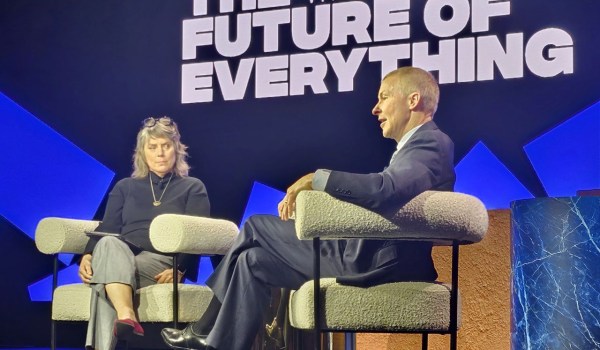
What the United JetBlue Partnership Signals for Passenger Experience and Airline Revenue Optimization
Last week I had the pleasure of seeing United Airlines CEO Scott Kirby at the WSJ Future of Everything Festival. And to hear from him about the just-announced United JetBlue…

Get Customer Experience Basics Right and You Don’t Need to Invest in Wow Moments
Wow Moments are a Customer Experience hot topic. Customer experience professionals ideate how to build, prioritize, finance, and measure these Wow Moments. Chip and Dan Heath wrote a whole book on the topic: The Power of Moments. No Wow Moment saves you from negative word of mouth if your brand fails to get the customer experience basics right or to deliver the expected brand experience consistently.

What You Need To Do To Start 2018 Right
It is the end of December and we are all in reflective moods. Did I do enough for my customer experience career this year? Did I build the right team…
Digital Customer Experience Strategy – Top Three Mistakes
How many of you have interacted with financial and insurance institutions who seem to have forgotten the invention of the world wide web and applications design? In 2021, Major players…
Customer Experience Best Practices for 2018?
The JetBlue blog features Liliana Petrova in a new four-part series. The series is on Customer Experience and Customer Experience Innovation. 2017 Lessons Liliana gathers insight from 2017 customer experience…

What is Journey Mapping?
Although we have published more than 130 articles on customer experience, we still have not dedicated an article to journey mapping. Journey mapping is the most widely recognized customer experience…

How to Scale a High Trust Health Service Without Breaking Patient Confidence
When a healthcare technology company begins to scale, the pressure can feel punishing. The patient can get lost in the momentum of growth. And quickly, profit projections can stumble into…

3 Challenges of Hybrid Working and How to Overcome Them
According to a Gallup study, 53% of Americans expect to work in a hybrid arrangement in 2022 and beyond. This number is significant enough for corporate America to get hybrid…

How Southwest Can Own Customer Experience Again
The collapse of the Southwest passenger experience this holiday season is an unlikely jumping off point for a conversation on how to own customer experience transformation. Unfortunately, it is not…

Fan Experience: CX Lessons for Hosting Major Events
With the World Cup coming to New Jersey and the greater New York area in 2026, the time is now to create positive fan experience moments. The 2026 Soccer World…

Customer Experience Audit: Domino’s Making the Right CX Choices
Editor’s Note: This post is part of a series of Customer Experience Audit – as series of articles featuring examples of good customer experience and bad customer experience in practice….

How to Build Customer-Centric Culture
Before we address how to build customer-centric culture, let’s examine the terminology: what culture is and what it is not. Culture is not executives talking about high level strategy. Equally,…

Customer Experience Audit: eBay’s Vibrant Marketplace of the Future
Editor’s Note: This post is part of a series of Customer Experience Audits. They highlight advances in artificial intelligence in retail and other technologies. See all audit stories. Two years…

What is Wayfinding?
I did not always know what wayfinding means. But ever since I left Bulgaria to come to America I have been looking to find my way. The first time I…

Why Bt2B Businesses Must Think Like B2C in the Next Decade
B2B vs B2B thinking makes a real difference when it comes to customer experience. According to Gartner at least 80% of B2B buyers now expect the same buying experience as…

How to Overcome Hospitality Industry Challenges by Empowering Employees
If you are a hospitality industry leader, or a leader in another business sector who has been reading about the industry, you have encountered some grim statistics. It is true….

How to Be an Entrepreneur: 5 Things I Learned in 5 Months as an Entrepreneur
The life of an entrepreneur is different every day, but the one thing that remains the same is that we are always learning. These are my lessons in how to…

5 Tips to Create Great Customer Experience Design Strategy
A customer experience design strategy that is sustainable and successful starts by having a vision and knowing who your customer is. This launching point enables you to design customer experiences…

Autonomous Service Starts at the Top: A CEO To Do List
In a recent article, we explored the controversial news that the customer service agent role as we know it is dead. The AI service agent is taking its place. Granted,…

The Risk No Insurer Prices: Why Customer Experience is Costing Insurance Companies Renewals
Insurers are experts in pricing physical and actuarial risk. What too few have learned to price effectively is the slow, compounding erosion that comes from fragmented customer service. What is…

What is Customer Experience Transformation?
To meet the needs of the empowered 21st Century consumer, most companies, especially larger enterprises, need to embark on a customer experience transformation. Imagine a car manufacturer that does not…

What is Customer Experience for Built Environments?
A tweet grabbed our attention this week: “The Atlanta Airport (ATL) designers were like ‘and then what if we had them run 5k?’” In addition to making us laugh, this…

Beyond Customer Satisfaction: 3 Unexpected Ways CX Drives Value
It is time to debunk the nice-to-have myth about customer experience. It is true the discipline operates in the space of perception, feelings, and emotion. What is equally true, but…

Hotel Service Recovery Strategies in Action: Real-World Example and Lessons Learned
From both a revenue and service delivery point of view, a hotel stay equals more than providing a place to stay. Done well, it creates an experience that makes guests…

Poor Integration is Bad for Customer Journey and Worse for Brands
Although we all have bad customer experiences, there is still a big debate about “the CX field” and whether it will survive the test of time. There is no doubt…

What is the best question for your CX Survey?
As customer experience professionals, we need to factor in this disconnect when we design surveys. And when we react to survey results. Customers have an image of who they want to be. However, their behaviors do not always reflect that image.

How Smart Do Humans Want AI To Get?
Earlier, we covered the basics of AI and what it is in theory. Today, we talk more about existing practical applications of AI and more examples of artificial intelligence. And…
Organizational Culture and Access to Information
By and large, people perceive culture as an HR discipline. The most common perception is that culture covers the soft side of performance. Culture is about how you do things, not so much about what you do. This approach to culture could not be more wrong. In fact, organizational culture is about so much more than a few words in a performance review sheet. It is about leaders expressing values, and the action guidance their cultural behaviors provide.

Customer Experience Audit: Uber Bets On Self-Driving Cars With Big Volvo Purchase
The question that remains unanswered is who will be part of the future of transportation. Uber is going for the vertical integration – the whole pie. The future industry of urban transportation will be made of players in three different categories: cars, self-driving software, and ride-sharing network. In contrast, Lyft approaches the future through partnerships.

NPS Best Practices
Last week I spoke at the Corinium CCO Fall Conference. One of the discussions we had was on the very popular topic of Net Promoter Score best practices and its…

Are You Ready to Go Exclusive with Jane, Your Digital Concierge?
In 2015 JetBlue introduced bag fees. Seven years after the competition. The media exploded. Many publications were negative. They blamed the airline for “selling out.” One headline read “A New…

Why You Need Culture Not Call Center Training for Customer-Centric CX
If the organization does not understand what customer experience is, you will not get the funding or organizational support you need to build customer-centric experiences.

How to make work at home work?
Post-COVID employee experience is a top priority of every HR executive. Most executives I know are losing sleep over this piece of organizational culture. Their challenge is to design the…

Employee Centric Culture – Culture is King
In 2017 we introduced our ROI series recognizing the challenges all customer experience professionals have to obtain funding for CX initiatives and to prove their positive returns. Our second ROI…

Service Design vs Customer Experience 2021
Customer experience design as a discipline is relatively new. Service design vs customer experience design adds another layer of confusion. For starters, CX design is not yet popular enough to…

Contactless and Self-Service are Here to Stay
Our 5th 2021 customer experience trend highlights contactless and self-service experiences across industries. Before we dive into this topic, let’s take a moment to define what contactless and self-service mean…

A Customer Experience Strategy will Define Your Success in 2021
While there may not be a magic pill to guarantee the perfect customer experience, there is one thing that every organization needs to transform into a customer-centric business. And that…

Customer Experience Survey: Why Customers Are Not Responding
When you solicit customer feedback sometimes matters more than how you ask the questions. In the case of a survey about new biometrics boarding initiatives my team and I created for JetBlue, we had a list of feedback that was most important for us.

How @T4 makes real customer experience impact
Today we share our impressions from visiting our welcoming host Chad at JFK Terminal 4 in NYC. We also celebrate Chad as an effective Customer Experience professional/practitioner. His work is…

Customer Experience Audit: Starbucks Bets On The Physical Experience
Starbucks is opting in for the physical experience in order to become a lifestyle brand while other brands are investing in omni-channel experience.

Customer Experience Design – How Do You Want Customers To Feel?
Last week, we talked about CX Design in terms of space and function. Today, we continue our customer experience design journey to talk about the design of emotions and feelings. All…

Customer Experience, Self Service, and the Gift of Time
Time is the most precious gift in life. If you think about it, time is the one thing we all want more of. As we get older and busier, time gets even more valuable to us.

5 Ways Customer Experience Consultants Keep Customer Promises
Customer experience is the follow-through on brand promises across every interaction. Some organizations assume the importance of customer experience is limited to commercial brands. This is far from true. In…

The Great Re-onboading: How to Bring Back Your Employees
Re-onboarding is the next employee experience organizations need to tackle. Since March 2020, leaders have encountered pandemic shutdowns, remote workforce transitions, and the Great Resignation. As restrictions lift and we…

2026 Customer Experience Trends Every CEO Should Watch
Customer expectations are shifting faster than most organizations can adapt. Over the last year, we have been talking to a variety of audiences about the reality forward-thinking CEOs cannot afford…

What is Revenge Travel and Why People Do It
LinkedIn is overflowing with articles and company news in response to COVID-19. We are starting to see renderings of future casino experiences that are anything but human-centric. People are beginning…

How to Prepare for AI: Dispatches from CR Summit, Charleston
On the eve of the #CRSummit in Charleston, customer experience leaders from various industries held the first AI Committee meeting. AI is a challenging topic to cover because it has…

Grateful for Customer Experience Heroes
When we launched The Petrova Experience, we did so with the words “in pursuit of customer happiness.” Pursuit of happiness is part of every interaction we have with our clients,…

The seamless travel experience we deserve
This week on the CES 2020 main stage Delta’s CEO Ed Bastian presented a vision about the future of seamless travel experience that “might happen in just a few years.”…

Human Experience: Do You Really Know Your Customers?
Steve Jobs said: “Get closer than ever to your customers. So close that you tell them what they need before they realize it themselves.” He did not just say that….

How to Solve the 2025 Customer Retention Problem
It’s 2025, and businesses across sectors have a customer retention problem. U.S. companies alone lose an estimated $168 billion annually due to customer attrition, as revealed in a CallMiner whitepaper….

5 Ways to Leverage OpenAI for Customer Experience
Back in 2017 when we served on the AI Advisory Committee for Execs In the Know, we wrote an article about the role of artificial intelligence in the future of…

From Pain Points to Magical Moments: Transform the Customer Experience
Argyle Journal interviewed Liliana Petrova about emerging self service technology and meeting and exceeding customer expectations in airports. One such way, as Liliana explains, is to create magical customer experience…

Guest Experience: Fusion of Hospitality and Brand Connection through Design
For a customer experience consultant who designs guest experience, and a lover of the customer experience discipline, visiting a new-to-me hotel can go one of two ways. Sometimes, I am…

Interoperability is a Business Risk for Medtech and a Healthcare Risk for Patients
Looking at patient experience and healthcare interoperability in the medtech environment, any observer (customer experience expert or not) recognizes something is broken. A thorough exploration of what is broken exposes…

Lessons Learned at the Forrester Conference: “Data is the New Sexy”
Once a year I look for an event to attend where I can learn something new and get better at what I do. This year, I attended an event hosted…

Why Customer Retention is the True Measure of SaaS Success
Guest Post by Callie Reynolds for The Petrova Experience In SaaS (Software as a Service), like in most businesses, sales is king. Sales gets the glory, and while I’d like…

NYC Subway CX Kills Chivalry in the City
Brands have the power to make customers feel ignored, and even angry. The CX Pyramid crumbles and customer-to-customer behavior, in addition to individual experiences, suffer. Case in point, the New York MTA System.

Travel Experience Stories: How Not to Leave Customers Stranded
Meet Diane. Diane is traveling with her 2 year old and 5 year old to her in-laws’ house for Thanksgiving. This is the one annual trip she takes. And she…

3 Customer Experience Strategy Lessons for 2023
Customer experience strategy guides exceptional experience and bolsters growth. When executed well, it impacts not only your market share, but the entire industry in which you operate. In fact, a…

Bad Travel Experience
As we come to the end of the summer season, it is time to talk about travel – good and bad travel experience. And how the sharing economy has both…

United Airlines Culture Problem
I am often asked what organizational culture is. Frequently, I meet with executives who are feeling defeated by the scale and complexity of leading cultural transformations. So, where do you…

Macy’s Retail Experience Risk: The Billion Dollar Lesson
With the holiday season fast approaching, it is a smart time to seek lessons from retail customer experience leaders and laggards. At the root of those lessons is the importance…

What is Telemedicine? Keeping Medicine at the Heart
Guest Post by Dr. Melynda Barnes for The Petrova Experience. In this post Dr. Barnes answers the question “what is telemedicine,” and reminds us to keep medicine at the heart…

For Complex Infrastructure Projects, Teaming is All About Timing
According to a 2025 Design-Build Utilization Study, design-build is projected to represent over 47% of US construction spending by 2028, to total more than $1.1 trillion. With projects of this…

Why Good CX Programs Fail
Digital technology powers employee experience on the inside to deliver seamless, intuitive experience to customers on the outside. So, when you are creating Customer Experience Programs, you must plan and…

How Hospitality Can Save Tourism
Travel experience experts need to remember why people travel. For most tourists, it is all about the destination. The destination is why you leave home. Before you make the decision…

Is AI Really The Answer?
Earlier this week we shared some of the pitfalls of implementing self-service and highlighted the importance of strategic and empathetic implementation. AI (artificial intelligence) is one of the self-service tools…

What Flight Delays Teach about Customer Recovery
One of the things we enjoy most about customer experience design for the aviation industry is tackling its unique complexities. And there are many complexities! With more than 4.17 million…
Is AI Really The Answer?
Earlier this week we shared some of the pitfalls of implementing self-service and highlighted the importance of strategic and empathetic implementation. AI (artificial intelligence) is one of the self-service tools…

Extend the Customer Journey with AI
Superior customer experience hinges on seamless customer journeys. We build strategies around this, design CX programs, and map the journeys of customer personas, all with the aim to meet customer…