

Customer Understanding for Airport Customer Experience: Theory vs Practice
One of the (many!) interesting things about working in airport customer experience for as long as our team has, is watching how the language around customer experience changes as ideas about how to centralize passenger needs and expectations evolve. Trade association Airports Council International (ACI), recently identified “customer understanding” as “the first pillar of airport experience management.” ACI talks about leveraging “experience sensors,” and theorizes about “listening architecture.” Language like this marks a move from a purely transactional approach to customer feedback towards a more integrated approach to engaged customer listening. The implications for airport experience strategy and design are significant.
It is important for an organization like ACI to lead conversations that elevate the customer experience discipline. Mindsets that focus on understanding the customer are important. However, identifying customer understanding as a metric for successful customer experience is not enough. It cannot, independent of building and investing in customer experience infrastructure, materially improve the daily experiences of the customers our airports serve around the world.
Translating the theory of customer understanding to practical airport customer experience improvements, requires more than promises and plans around how we think about the customer. Achieving true customer understanding, and leveraging it for customer experience impact, requires access to the funding and authority necessary to operationalize customer experience. Then, and only then, will airports make experience improvements come to life.
The Aspiration vs Action Gap
So let’s take a look at what ACI is saying about airport customer experience, along with what is practically necessary – and practically possible – to achieve outcomes that meet ACI criteria for passenger experience quality.
Through our practitioner lens, The Petrova Experience team recognizes that the ACI framework articulates what airports should achieve. That is an important first step. What it does not do as explicitly, is address the costs it takes to get there. Again, from our point of view as passenger experience designers, that equates to ACI setting an aspiration for airports who want to deliver on customer experience promises. But there is a real, and arguably widening, gap between that aspiration and the path to actualization.
If ACI calls for “customer understanding,” airports need to know (and be in a position to deliver on) what meaningful customer understanding actually costs. What are the funding requirements? What type of organizational design supports customer understanding? And how, with the limited resources at an airport’s disposal, do they align organizational structure, passenger experience design, and capital projects around the goal of delivering experiences powered by customer understanding. Beyond the theoretical.
This gap between aspiration and feasibility is a central challenge for airport executives. We have seen this in our work at airports of all sizes, and in different regions. Sourcing a CX survey vendor is not enough. Centralizing ownership of airport customer experience and empowering owners of customer experience to influence design, funding, and operations helps fill the gap. And sustained investment makes the aspirational feasible.
Today, we are diving into the real practice behind these ideas, including what is missing in infrastructure, why airports cannot delegate customer understanding downward, and how to address experience fragmentation. Within this context, we are looking at how organizational design, frontline capability, and capital‑project governance shape customer experience quality.
At the end of the day, while airports are uniquely complex operational environments, as we know better than most, airports are also like organizations across industries when it comes to customer experience infrastructure. Namely, operational excellence in customer experience begins with executive‑level decisions around funding and accountability.
Talking About Experience vs Designing Experience
ACI’s language around customer understanding reflects a growing recognition that customer experience is an essential strategic capability. ACI positions customer understanding as the output of a triangulated system that includes customer feedback, qualitative observation, and employee insight. Experience sensors, the term ACI uses, elevates frontline employees as critical sources of early detection of customer experience issues. The term listening architecture, as ACI applies it, reframes feedback collection as an integrated experience infrastructure.
These are good points! As we share with our airport and transportation clients, and in our articles, customer experience is a system; it is not a survey. With that in mind, we need to look clearly at the ACI language and the new responsibility it places on airports. If airports adopt ACI’s lexicon without adopting the organizational structures required to support it, they risk creating a rhetorical veneer of customer experience maturity without the operational structure to deliver experiences that reflect CX maturity.
Associations like ACI for airports and CXPA across industries help educate organizations on concepts relating to the value of customer experience. The challenge of staying at the level of conceptual theory is that it becomes difficult to make real and sustainable changes, even if organizations buy into the theory. Simply put, thanks to ACI, airports know what they should do (especially when they want to improve their ASQ scores). They do not know how to make the necessary internal changes to do what they need to do to make that a reality.
What lives in the gap between ACI’s call to achieve customer understanding and the practice of achieving it? For one, the very real political sensitivity of centralizing customer experience authority. Also, the cost of building and maintaining robust customer research capability. And the organizational investment necessary to enforce defined customer experience standards across an airport campus in capital projects and ongoing operations.
Achieving real customer understanding and its attendant customer experience improvements, requires real funding, centralized customer experience authority (e.g., a single, unified team responsible for all feedback collection, as opposed to a patchwork of disparate vendors), and an organizational structure that seats customer experience executives at the table where airport-wide planning and operations decisions are made.
Why Customer Experience Cannot Sit Four Levels Down
In many airports, customer experience sits too low in the organizational hierarchy, making it impossible to influence strategy, operations, and capital projects in a meaningful way. Customer experience might sit under the Chief Commercial Officer, reporting through an SVP of Customer or Terminal Experience, with a manager leading a small team of – maybe three – employees. In this type of structure, we see a manager who often is responsible for surveys, frontline programs, vendor oversight, and issue reporting. But that manager lacks the authority to enforce standards. And the budget to build a unified system.
Such a structure reflects an all too common (and increasingly outmoded) view of customer experience as a soft function. That nice-to-have hospitality layer. What customer experience actually is, and how airports must recognize it to achieve goals laid out by ACI, is an operational discipline. Customer experience must be elevated to a strategic function with political power, budgetary control, and cross‑departmental authority.
In that vein, executives must ask themselves the following, and be accountable for the answers:
- Who owns customer understanding in our airport?
- Does that team have the authority to standardize feedback collection across vendors?
- Can they influence decisions on capital projects before architectural plans are finalized?
- Do they have the budget to build a unified customer feedback system aligned with a consistent customer experience strategy?
- Are they empowered to enforce operational changes based on real customer insights?
If the answer to any of these questions is no, customer understanding is not structurally possible.
It is time to elevate customer experience inside the organizational structure of airports. That means elevating roles and reporting lines. And securing executive‑level sponsorship. Without that, airports are stuck in the space of aspiration and theory, and hamstrung in practice.
Understanding Employees as Experience Assets
ACI’s term experience sensors is powerful. It acknowledges frontline employees as critical sources of customer insight. But airports’ current implementation of frontline reporting needs to improve.
Many airports rely on retiree volunteers and low‑wage workers, some who have limited English proficiency or are under-skilled in technology. These employees and volunteers are expected to interface with insights collection technology in real time via handheld devices, while they are interacting with, and aiming to support, customers who are often in high-anxiety moments on their airport experience journey.
What we see in the field is that the interfaces on the devices frequently require multi‑layered dropdown navigation without geolocation support. Multiple, complex, manual inputs that are not intuitive pose a challenge even to a savvy user. The burden is excessive, and the return poor, for most frontline employees who lack training on how to navigate the interface smoothly. Technology teams frequently design these tools without observing the actual frontline workflow. That leads to systems that, while theoretically elegant, are practically unusable.
As such, this is a design problem. For airports to solve that problem, it is time to address frontline reporting as a product design challenge. To that end, they should ask the following, in keeping with the ACI terminology of employee sensor:
- Who are our employee sensors?
- What qualifications does the employee sensor role require?
- How do we train and compensate our employees appropriately?
- How do we design tools that match real workflow?
- How do we ensure data quality at scale?
Airports cannot build customer understanding on undertrained labor using poorly designed tools. Instead, airports must invest in frontline capability and redesign reporting systems based on real user observation. They need to treat employee sensors as skilled contributors to a strategic function. And ambassadors of exceptional customer experience.
Customer Understanding has Impact When It is Part of Capital Projects
Airports operate in two parallel worlds: operations and infrastructure. Operations manages the day‑to‑day passenger experience. Infrastructure builds the physical environment. These worlds rarely interact meaningfully, to the detriment of airport customer experience.
New terminals are often designed without input from the experts who understand passenger personas, frontline workflows, and operational constraints. By the time operations is consulted, the design is already locked.
Case in point, underground Wi‑Fi for baggage‑handling devices was omitted from a major terminal project because the thinking was, “no customer needs it there.” In this scenario, the design team failed to recognize that baggage‑handling staff are an essential part of the customer experience ecosystem. And their tools require connectivity. As a result, modern Wi‑Fi‑dependent systems were retrofitted poorly or not at all. That means higher cost for lower performance.
This scenario is a governance failure. Customer understanding must be embedded in capital‑project decision‑making, by customer experience leaders who have authority to influence design requirements, operational workflows, and technology infrastructure before construction begins. That means customer experience executive presence in the airport org structure and building customer experience into RFPs for capital projects.
The Lack of Ownership Problem
Let’s look at two examples of what happens when there is lack of ownership of customer experience. In one airport, a large research team conducts daily intercept surveys, annual studies, and focus groups. They manage multiple vendors and collect significant data. But internal ownership is unclear. As a result, the breadth of data does not translate into a unified narrative or actionable insight. It becomes data for the sake of data.
In another airport, feedback sources are fragmented across more than twenty disconnected systems. Think, restroom kiosks, Wi‑Fi surveys, TSA data. But there is no unified customer experience strategy. The tools exist, but the cohesive system does not.
Both cases demonstrate the same reality: without a unified, strategically aligned team responsible for collecting, integrating, and interpreting feedback, airports cannot build a coherent picture of the passenger experience. Without that coherent picture, they cannot make meaningful improvements to customer experience.
How Airport Executives Can Achieve Real Customer Experience Impact
Airport executives must recognize that customer understanding is a strategic capability that requires the following:
- Funding Investment in research, tools, frontline training, and unified systems.
- Centralization One team responsible for all feedback, insight, and narrative.
- Organizational Authority A reporting line with authority to influence operations and capital projects.
- Frontline Capability Well-trained employees equipped with tools designed to support their real workflow.
- Cross‑Functional Integration Formal influence over infrastructure decisions before construction begins.
Without these elements, customer understanding remains theoretical. With them, airports can maximize customer experience as an operational discipline.
Airports that put this approach into practice will emerge as leaders (and improve ASQ scores). Airports that ignore it will continue to build terminals that look modern but underperform on customer experience promises. Are you ready to put the theory into practice?


The One CX Goal You Need to Set for 2019
For 2019, I urge you to make only one CX goal – bring about business success with your customer experience work. Don’t just do work in the general sense. Rather, set a CX goal that has a real impact on your customers and their experiences with your brand.

Airports of the Future: Trends and Innovations
Every year since we founded The Petrova Experience, we write about travel around the holiday season. It has become something of a tradition for us. This year, I will not…
Autonomous Customers, Traveler Privacy and More Questions for CX Professionals in a Changing World
“As we move toward a more automated culture, most travelers will adapt to a Jetsonian, automated lifestyle. Every industry we know will be disrupted. For those of us in aviation,…

Customer Engagement ROI
We have discussed the power of employee engagement for your brand. And we have explained the true meaning and ROI of a working organizational culture (a culture that starts at…

What is Revenge Travel and Why People Do It
LinkedIn is overflowing with articles and company news in response to COVID-19. We are starting to see renderings of future casino experiences that are anything but human-centric. People are beginning…

What You Need To Do To Start 2018 Right
It is the end of December and we are all in reflective moods. Did I do enough for my customer experience career this year? Did I build the right team…

5 Things You Can Do to Provide Excellent Passenger Experience in 2022
The Wall Street Journal predicts this Thanksgiving will be among the busiest travel days in decades, with 55 million travelers anticipated to be moving through US airports and other transportation…

Am I A Good Candidate For A Customer Experience Role?
People often ask me what experience they need to be a good fit for customer experience roles.

The Wholehearted Traveler and Other 2024 Travel Trends
Back in 2020, we predicted the rise of the Revenge Traveler and the impact it would have on travel and hospitality experience providers. As we approach 2024, we are spotting…

What is Journey Mapping?
Although we have published more than 130 articles on customer experience, we still have not dedicated an article to journey mapping. Journey mapping is the most widely recognized customer experience…

FIFA World Cup, LA Olympics 28, and the Business of Customer Experience
Because we are experience designers (of fan experience transportation hubs and systems), who also happen to be mega-soccer fans, three years before the first ball was kicked at MetLife Stadium,…

Why Millennial Investors are Abandoning You
It’s time to talk about the Millennial investor, a critical market for financial services firms in the next five years. For the past decade, the media talked about the impact…

2021 Customer Loyalty Strategy – Relationships over Transactions
According to the Salesforce Connected Customer Report, 90% of consumers expect companies to clearly demonstrate their values and 66% expect brands to demonstrate empathy. In other words, when thinking about…

Employee Centric Culture – Culture is King
In 2017 we introduced our ROI series recognizing the challenges all customer experience professionals have to obtain funding for CX initiatives and to prove their positive returns. Our second ROI…
Customer Experience Best Practices for 2018?
The JetBlue blog features Liliana Petrova in a new four-part series. The series is on Customer Experience and Customer Experience Innovation. 2017 Lessons Liliana gathers insight from 2017 customer experience…

Fan Experience: CX Lessons for Hosting Major Events
With the World Cup coming to New Jersey and the greater New York area in 2026, the time is now to create positive fan experience moments. The 2026 Soccer World…

Extend the Customer Journey with AI
Superior customer experience hinges on seamless customer journeys. We build strategies around this, design CX programs, and map the journeys of customer personas, all with the aim to meet customer…

How To Define Your Purpose And Have Unique Culture
If you Google the word “purpose” you get the definition “the reason for which something exists.” This is a challenge if you think about it in the context of organizational…

How to Scale a High Trust Health Service Without Breaking Patient Confidence
When a healthcare technology company begins to scale, the pressure can feel punishing. The patient can get lost in the momentum of growth. And quickly, profit projections can stumble into…

Are You Thinking Strategically?
Today, we are elevating our conversation to thinking strategically. The Petrova Experience is in the strategy creation business. So, we frequently encounter the difficulty businesses have anticipating, let alone defining,…

Customer Experience, Self Service, and the Gift of Time
Time is the most precious gift in life. If you think about it, time is the one thing we all want more of. As we get older and busier, time gets even more valuable to us.

Return to Office – how to get it right in 2022?
Last week, the CEO of Better.com, Vishal Gard, made the news again. This time, it was for the executive’s massive blunder of firing 900 people via Zoom. A blunder that…

How to Be an Entrepreneur: 5 Things I Learned in 5 Months as an Entrepreneur
The life of an entrepreneur is different every day, but the one thing that remains the same is that we are always learning. These are my lessons in how to…

Do You Know Why The Iconic Brand Toys ‘R’ Us Closed Doors Despite All Our Memories? #RetailBlues
The year is 2016. You are the CEO of Toys ‘R’ Us. Your brand still controls 13.6% of the toy market although the company is highly leveraged, a strategy of…

Customer Experience Technology View of your Call Center
By 2022 the global cloud based contact center market is growing from USD 6.8Bn in 2017 to 20.93Bn in 2022. This makes for CAGR of 25.2%. If you do not…

Beyond Customer Satisfaction: 3 Unexpected Ways CX Drives Value
It is time to debunk the nice-to-have myth about customer experience. It is true the discipline operates in the space of perception, feelings, and emotion. What is equally true, but…

Eliminate Customer Stress with Good CX
Good customer experiences design either gives back customer time or alleviates customer anxiety. If a brand’s CX isn’t achieving one of those goals, the customer isn’t getting any real or…

Paperless Customer Journey – JetBlue Deviceless Boarding
JetBlue Biometrics – Innovation and Disruption This year, JetBlue entered the ranks of the innovators who disrupt industries by applying customer experience technology. They not only imagine the future. They…

Why I Don’t Love Chatbots
Today, we tackle the value proposition that chatbots are more valuable to companies than customers. I reject this. The ROI simply is not there, especially since better customer experience is…

Customer Facing Experience: Communication and Hospitality
Today, we are talking about communication as part of the customer facing experience. This is one of the most misused and misinterpreted notions both in our professional lives and our…

Why Your Employee Experience Journey Matters
This week, Andy Newman wrote a great article in The New York Times about the life of a retail sales agent. He used the example of an Old Navy sales…

How to Overcome Hospitality Industry Challenges by Empowering Employees
If you are a hospitality industry leader, or a leader in another business sector who has been reading about the industry, you have encountered some grim statistics. It is true….

Let’s Get You Certified as a Customer Experience Professional!
Like all mature professions, customer experience has a certification that is internationally recognized. Adding it to your resume will signal to the business community that you are serious about customer experience and your aspiration to be part of its leadership ranks…
Organizational Culture and Access to Information
By and large, people perceive culture as an HR discipline. The most common perception is that culture covers the soft side of performance. Culture is about how you do things, not so much about what you do. This approach to culture could not be more wrong. In fact, organizational culture is about so much more than a few words in a performance review sheet. It is about leaders expressing values, and the action guidance their cultural behaviors provide.

Center of Excellence: The Antidote to Failed Customer Experience Programs
It’s no secret that even good CX programs fail. Back in 2018, Bob Thompson of CustomerThink shared the “inconvenient truth” that “93% of customer experience programs are failing.” Gartner echoed…

Liliana Petrova Talks Patient Experience in Healthcare Podcast
Recently, we recorded a podcast on patient experience in healthcare with Stacey Richter. Today, we are excited to share it with you. On the episode, we discuss travel and healthcare…

The ROI of Customer Experience
Knowing the ROI of customer experience helps to fund CX projects and make intelligent investments in customer experience. But a deeper examination into the question about CX return on investment…

Customer Experience Audit: Starbucks Bets On The Physical Experience
Starbucks is opting in for the physical experience in order to become a lifestyle brand while other brands are investing in omni-channel experience.

Customer Experience Audit: Domino’s Making the Right CX Choices
Editor’s Note: This post is part of a series of Customer Experience Audit – as series of articles featuring examples of good customer experience and bad customer experience in practice….

Think Strategically about Telehealth in 2021
Today, we examine telehealth strategy for an in-depth look at this 2021 customer experience trend. As we continue our conversation about why telehealth is here to stay in 2021, we…

Diversity is more than difference of color
Yesterday I had the privilege to join a panel on how to develop diversity and inclusion on your teams at Developer Week in Brooklyn. I was really excited to learn…

The ROI of Customer Experience Programs
What customer experience is, and how well brands think they are executing customer experience, and how well they are actually doing it are often at odds. According to Bain, 80%…

Customer Understanding for Airport Customer Experience: Theory vs Practice
One of the (many!) interesting things about working in airport customer experience for as long as our team has, is watching how the language around customer experience changes as ideas…

Retail Experience Design of the Future
In preparation for this article about omni-channel retail experience of the future, I thought first about the definition of omni-channel customer experience. I wanted to share with you a simple,…

Why Customer Retention is the True Measure of SaaS Success
Guest Post by Callie Reynolds for The Petrova Experience In SaaS (Software as a Service), like in most businesses, sales is king. Sales gets the glory, and while I’d like…

Brand and Customer Experience – Make the Customer Know Who You Are
Now that we have helped you become experts in the design of space and function and the design of feelings, it is time to turn our attention to aesthetics, and to connect customer experience…

United CEO does not care about #customers happiness. Really?
Lately, I have been thinking about United Airlines and its organizational culture. Initially, I thought about United Airlines culture because someone asked whether it is possible to build a customer-centric…

Freelance Customer Experience Lessons for Freelancers
For small businesses and freelancers alike, it’s important to recognize that your business is as strong as the relationships you build with your customers. That’s just one of the key…

The Risk No Insurer Prices: Why Customer Experience is Costing Insurance Companies Renewals
Insurers are experts in pricing physical and actuarial risk. What too few have learned to price effectively is the slow, compounding erosion that comes from fragmented customer service. What is…

What is Customer Experience Transformation?
To meet the needs of the empowered 21st Century consumer, most companies, especially larger enterprises, need to embark on a customer experience transformation. Imagine a car manufacturer that does not…

Coronavirus Travel: What Does Hospitality Mean Now?
I want to tell you about my recent passenger experience. Earlier this week, I traveled to New Orleans from JFK Terminal 5 in New York. I had planned an airport…

Autonomous Service Starts at the Top: A CEO To Do List
In a recent article, we explored the controversial news that the customer service agent role as we know it is dead. The AI service agent is taking its place. Granted,…

Do You Know Where Your Inventory Is?
When I worked in the airline business our most embarrassing incident was “losing a minor”. We never lost a child, of course. But we might not have known where a…

Airport Experience – Are You Letting Down Your Precious 2021 Travelers?
A month and a half ago, as part of our ongoing conversation about airport experience, we introduced the concept of revenge travel. We pleaded with the public to trust us…

What is Missing in Customer Experience Today?
Customer Experience is failing. According to Forrester, US Consumer Perceptions of CX quality are at an historic low. Post-COVID the quality of customer experience eroded every year across the three…

The ROI of Investing in Organizational Culture
Investing in organizational culture is a strategic and operational imperative for employee retention, scalable growth, and successful mergers and acquisitions. Organizational culture is not what you do as a leader…

Interoperability is a Business Risk for Medtech and a Healthcare Risk for Patients
Looking at patient experience and healthcare interoperability in the medtech environment, any observer (customer experience expert or not) recognizes something is broken. A thorough exploration of what is broken exposes…

Where Should CX Sit at the Table?
Before we begin talking about where CX should sit in the organization, I want to clarify one thing. Customer Experience is not a single person.

Customer Journey Mapping Tools in 2021
Before we dive into customer journey mapping tools, we must keep in mind that, by itself, journey mapping is not a customer experience product or service. A journey map is…

3 Challenges of Hybrid Working and How to Overcome Them
According to a Gallup study, 53% of Americans expect to work in a hybrid arrangement in 2022 and beyond. This number is significant enough for corporate America to get hybrid…

Travel Experience Stories: How Not to Leave Customers Stranded
Meet Diane. Diane is traveling with her 2 year old and 5 year old to her in-laws’ house for Thanksgiving. This is the one annual trip she takes. And she…

What is Customer Experience for Built Environments?
A tweet grabbed our attention this week: “The Atlanta Airport (ATL) designers were like ‘and then what if we had them run 5k?’” In addition to making us laugh, this…

5 Tips to Create Great Customer Experience Design Strategy
A customer experience design strategy that is sustainable and successful starts by having a vision and knowing who your customer is. This launching point enables you to design customer experiences…

How to talk to your CFO about customer experience and revenue growth
Last month we introduced the topic of Customer Experience ROI and the complexity of building a good business case for it. The Customer Experience business case is strong, but not easy to prove. Today we will focus on two big wins of a successful customer experience investment – revenue and customer growth of your business.
Keep The Customer Focus in 2018
In her latest post for JetBlue’s Into the Blue blog series on customer experience design, Liliana Petrova talks customer experience innovation. She explores how to combine innovation and human behavior…

Patient Experience Trends in 2021 – Telehealth is Here to Stay
Today, we continue our series about 2021 Customer Experience trends and tactics. We take a closer look at patient experience and what telehealth means for the future. Both for patients…
When Not To Invest In Self-Service Technology?
What is self-service? It is something every progressive brand aspires to have more of. Few implement it successfully. Self-service is a new tool to optimize a company’s workforce by removing…

NYC Subway CX Kills Chivalry in the City
Brands have the power to make customers feel ignored, and even angry. The CX Pyramid crumbles and customer-to-customer behavior, in addition to individual experiences, suffer. Case in point, the New York MTA System.

What is the best question for your CX Survey?
As customer experience professionals, we need to factor in this disconnect when we design surveys. And when we react to survey results. Customers have an image of who they want to be. However, their behaviors do not always reflect that image.

How a Personal Interaction builds Repeat Customers
A customer-centric methodology is key to the successful outcome of my interaction with Hello Spud. It is the reason this story appears here, and not among the CX Big Fails! The company did not send an automated response. It did not deliver a message stating “sorry we couldn’t help you, would you like something else.” Instead, the company co-founder reached out to me personally across multiple channels (a handwritten note, followed by personal emails).

What is Wayfinding?
I did not always know what wayfinding means. But ever since I left Bulgaria to come to America I have been looking to find my way. The first time I…

Customer Experience Audit: FedEx Omnichannel Disaster
In our Strategy, Org Design & Culture series, we cover customer-focused companies that are willing to adapt, take risks and discover new ways of staying relevant. Sometimes, we encounter brands…
Customer Experience Tips and Best Practices In 2017?
This is Post 2 of Liliana Petrova’s series on customer experience. She shares customer experience tips, lessons learned, and best practices for the new year. And dives into organizational culture…

Guest Experience: Fusion of Hospitality and Brand Connection through Design
For a customer experience consultant who designs guest experience, and a lover of the customer experience discipline, visiting a new-to-me hotel can go one of two ways. Sometimes, I am…

What is Taxing Your Customer Experience?
In our customer experience consulting engagements with organizations from travel and transportation to corporate environments, we see the same six challenges to delivering seamless customer experiences. The struggle to deliver…

What is Big Data and Why Should I Care?
Big data has become part of our daily language. We read about it. We see companies that are “experts in big data.” LinkedIn is filled with engineers and analysts who…
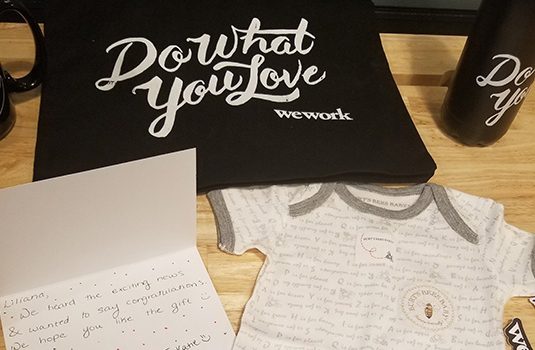
WeWork Does Customer Experience Right with a Wow Moment
Used at the right time and place along the customer’s journey, the Wow Moment is an excellent retention technique. When a brand creates personal, relevant experience at exactly the right time, it can build a lifelong, loyal customer relationship.

Why Bt2B Businesses Must Think Like B2C in the Next Decade
B2B vs B2B thinking makes a real difference when it comes to customer experience. According to Gartner at least 80% of B2B buyers now expect the same buying experience as…

Holiday Wishes for Great CX: Career Advice Edition
Every successful customer experience initiative starts with a skilled CX team. Brush up on your CX skills to strengthen the business case for CX; to develop relationships within your organization; and to deliver standout customer experiences in the new year.

What is Customer Experience Strategy?
In our last article we talked about the importance of strategic thinking. Today, we build on this topic and walk you through the nuts and bolts of customer experience strategy….

How Seamless Customer Journeys Drive Revenue
Many travel and transportation executives identify revenue sources narrowly. Think ticket sales, ancillary fees like baggage and amenities fees or premium upgrades. Many customer experience practitioners limit their scope to…
Why Millennial Investors are Abandoning You
It’s time to talk about the Millennial investor, a critical market for financial services firms in the next five years. For the past decade, the media talked about the impact…