

For Complex Infrastructure Projects, Teaming is All About Timing
According to a 2025 Design-Build Utilization Study, design-build is projected to represent over 47% of US construction spending by 2028, to total more than $1.1 trillion. With projects of this scale and complexity it is critical to identify the sequencing and skills that determine success and prevent cost risk. Over the years, design build projects have learned (sometimes the difficult, costly way), to plan for things like lighting integration before building walls. The lesson now is that owners must build for the customer experience the prime contractor promises to create long before breaking ground. This requires rethinking when to bring in specialist firms on complex infrastructure projects.
The promise of world-class experience underscores every recent airport and transportation infrastructure project. Keeping that promise depends on setting the right cross-functional teams from the start. It calls for ensuring collaboration among subcontractors and prime contractors around a shared customer experience strategy at every phase of the design build process.
Design-Bid-Build vs. Design-Build: Finding the Most Efficient Way to Deliver Value
The numbers are clear. Engaging with specialized partners early in the design-build process yields improved results for on-time, in-budget delivery. A Construction Industry Institute and the Pankow Foundation peer-reviewed study of 212 completed projects, aggregated in DBIA’s 2025 Design-Build Data Sourcebook, reveals design-build projects are completed 102% faster than traditional design-bid-build. Notably, design-build projects finish 3.8% closer to their originally contracted budget than design-bid-build projects.
In the traditional (dare we say, “old school”) scenario of design-bid-build, the owner hires a designer (either an engineering firm or architect) under one contract. Then, that contracted firm completes the design. Only once the design is substantially complete does the owner solicit construction bids. After receipt of those bids, the owner awards a separate contract. Design and construction, in this setup, are held by two different entities. They are run in sequence, separated by a procurement gap.
Functionally, this means any problems discovered during construction that trace back to design decisions require the owner to go back to the designer, across contract lines. This scenario frequently (and understandably) results in disputes around responsibility and cost.
In the design-build scenario, a single entity (typically a prime contractor leading an integrated team) holds responsibility for design and construction under one contract. This works because it accounts for the overlap between design and construction. The design-build structure facilitates the inclusion of specialized experts like customer experience throughout the project. The entire team is present during design decisions. Specialty subcontractors voice recommendations and guidance as part of the design development process.
This means the prime contractor gets to leverage specialists’ expertise to shape the project toward its shared goals. In this environment, when a problem surfaces, the team unties to resolve it without having to attempt to work across contract boundaries. The result is key players engaged at the right time, adding the most value.
How to Think Differently About Teaming to Meet New Needs
While innovative approaches to design-build projects are emerging, team structuring needs to improve. We continue to see projects in which prime contractors build delivery teams according to the old design-bid-build model. The dominant approach in those cases is to identify specialist subcontractors like our firm after contract award. We come in once the design is already underway.
This timing restricts specialist subcontractors to a narrow, often, reactive scope. In the new era that mandates world-class experiences, we need to integrate specialist disciplines earlier. And to invite those disciplines to voice recommendations in the design process itself. This is the surest way to achieve on-time, in-budget delivery and to build an authentically world-class experience.
Bringing Specialist Subcontractors and Prime Contractors into the Future
To build for the future, it is worth noting the internal organizational structure of prime contractors and the design of the RFP process itself. Prime contractors structure their internal organization around the disciplines that win and manage the contract. Typically, these disciplines have included engineering, architecture, program management, and the project controls infrastructure that supports them. That is where the headcount lives. It is where institutional knowledge compounds. And, ultimately, it is the source of the firm’s competitive identity.
Conversely, prime contractors typically are not structured around specialty disciplines like wayfinding strategy, passenger experience design, or customer journey architecture. Increasingly, these capabilities appear as scored evaluation criteria in public-sector RFPs, particularly for transit and aviation projects. That makes this an ideal time for prime contractors like engineering firms to create productive, collaborative relationships with specialist partners who fill in-house capability gaps.
The economics of filling the gap with an external provider are easy to see. Building genuine depth in a specialty like customer experience design from scratch inside a large engineering firm is slow and expensive. And the result rarely produces the same level of confidence on the part of the RFP evaluator that the inclusion of a firm that is purpose-built according to a specialty that adds value to a project does.
What we have seen, too often, across transit, aviation, and other mixed-use public infrastructure projects, is that the customer experience component gets designated as the deliverable that can be addressed later down the line, after the engineering is settled. This assumption is incorrect. It drives up costs, slows down timelines, and undermines the team’s ability to deliver on world-class promises.
The Real Cost of Getting in Late
Waiting to include specialist teams until late in the project is a demonstrable project risk. Design-related errors link to 1–9% of total project cost across multiple studies, according to a 2025 analysis of construction rework costs. Remember, we are talking about mega-projects with high budgets. Even at a 1% increase, on a $500 million transit project, that is $5 million in avoidable expenditure. At 9%, the number becomes seriously consequential to a firm’s project P&L.
Let’s look more at how those costs add up. Miscommunication drives 26% of all construction rework. Inaccurate data accounts for another 14–22%. Think information that should have been gathered when all the teams were in the room together, early in the project. These numbers show the majority of rework is the result of information failures. Successful projects need documented insights. Insights that are accessible to the entire project team as an output of authentic interdisciplinary conversations. And drive collaborative decision-making.
Customer experience experts need to be in the room with the designer early to make customer-centric, world-class design a reality.
What Getting in Early Looks Like in Practice for Infrastructure Projects
Across our work in public infrastructure, a pattern comes up consistently. Early specialized involvement changes project outcomes for the better. Teams work more nimbly and creatively driving everything from modernization at airports to seamlessness at transportation hubs.
The energy and creativity of working with a team from early infrastructure projects through breaking ground and beyond means the experience of customers, passengers, and partners is clearly defined. And universally protected across every phase of the design-build process. Collaboration from the first stages of the projects enable owners to reap the breadth of benefits of the experts they bring into a project. It empowers them to deliver on their promises.
In our experience, we have also seen the opposite pattern. Pursuits where the specialized partner had no defined scope, no access to key owner conversations, and no structured opportunity to contribute in meaningful ways. In those cases, the range of value went uncaptured.
How Primes Can Capture the Most Value from Specialist Firms
Bring in specialized disciplines in the RFQ stage. Before design decisions have been made, and the scope of the specialist’s contribution has been defined by the assumptions of someone who is not the expert that knows how to deliver on world-class claims. Before the owner’s evaluation priorities have been translated into fixed technical requirements without necessary input from the specialist. This timing determines whether the expert partner has the runway to shape decisions or is stuck responding to ideas that are fundamentally insufficient to meet project goals.
Once the owner invites the specialist partners to the table, give those firms real access. A specialized firm that is excluded from owner conversations and key project meetings cannot contribute what it knows. So the owner never reaps the benefits of the expertise they are paying for. Define scope early enough to leverage the specialist’s input to close information gaps before they become design errors.
Getting the Prime and the Subconsultant on the Same Page
A tension exists in every pre-award teaming conversation around the legitimate concern that looping a specialized firm into pursuit discussions before any contract exists risks extracting that firm’s expertise without compensating the firm. This concern is reasonable.
However, early-stage strategic conversations to put the specialist firm and the owner on the same page is not the same as full project delivery. And treating those two things as equivalent conflates them in a way that fails to serve either party. A well-structured pre-contract engagement, with defined scope and mutual clarity about what is being contributed and why, protects both sides. The alternative, keeping the specialist at arm’s length until after award, has well-documented costs. And those costs fall squarely on the Prime.
The Future of Collaborative Infrastructure Projects
The most competitive teams responding to the next generation of public infrastructure are coordinating large teams of specialists. We are seeing as many as six or more firms across disciplines. With each of those disciplines contributing specialized expertise the Prime does not carry in-house and cannot replicate with the same quality or cost. Increasingly, specialist areas like customer experience, wayfinding, and sustainability are what owners score. Because they are what customers need and respond to. In profound ways, the specialist disciplines are making the difference between a project that functions as it is promised (and funded) to function and one that does not.
Now, the question for primes contractors is when to bring in specialist sub-contractors. Recent data and our own experience show earlier is better. It is measurably cheaper, more productive, and more likely to produce a deliverable that brings better ROI for the owner over the next thirty years and beyond.


Think Strategically about Telehealth in 2021
Today, we examine telehealth strategy for an in-depth look at this 2021 customer experience trend. As we continue our conversation about why telehealth is here to stay in 2021, we…

Customer Experience Audit: Mobile Provider Eliminates Remote Workforce
How to balance the efficiency call center metric FCR (first call resolution) with wait and talk time? JetBlue promotes human interactions as a brand promise.

Are You Ready to Go Exclusive with Jane, Your Digital Concierge?
In 2015 JetBlue introduced bag fees. Seven years after the competition. The media exploded. Many publications were negative. They blamed the airline for “selling out.” One headline read “A New…

The ROI of Customer Experience Programs
What customer experience is, and how well brands think they are executing customer experience, and how well they are actually doing it are often at odds. According to Bain, 80%…
Customer Experience Tips and Best Practices In 2017?
This is Post 2 of Liliana Petrova’s series on customer experience. She shares customer experience tips, lessons learned, and best practices for the new year. And dives into organizational culture…

How Does Social Media Affect Customer Experience?
Social Media is the only real-time channel for successful brands to manage customer experience and brand management.

Lessons Learned at the Forrester Conference: “Data is the New Sexy”
Once a year I look for an event to attend where I can learn something new and get better at what I do. This year, I attended an event hosted…

Beyond Customer Satisfaction: 3 Unexpected Ways CX Drives Value
It is time to debunk the nice-to-have myth about customer experience. It is true the discipline operates in the space of perception, feelings, and emotion. What is equally true, but…

Brand and Customer Experience – Make the Customer Know Who You Are
Now that we have helped you become experts in the design of space and function and the design of feelings, it is time to turn our attention to aesthetics, and to connect customer experience…

How to Prepare for AI: Dispatches from CR Summit, Charleston
On the eve of the #CRSummit in Charleston, customer experience leaders from various industries held the first AI Committee meeting. AI is a challenging topic to cover because it has…

Liliana Petrova Talks Patient Experience in Healthcare Podcast
Recently, we recorded a podcast on patient experience in healthcare with Stacey Richter. Today, we are excited to share it with you. On the episode, we discuss travel and healthcare…

Why You Need Culture Not Call Center Training for Customer-Centric CX
If the organization does not understand what customer experience is, you will not get the funding or organizational support you need to build customer-centric experiences.

The Risk No Insurer Prices: Why Customer Experience is Costing Insurance Companies Renewals
Insurers are experts in pricing physical and actuarial risk. What too few have learned to price effectively is the slow, compounding erosion that comes from fragmented customer service. What is…

Eliminate Customer Stress with Good CX
Good customer experiences design either gives back customer time or alleviates customer anxiety. If a brand’s CX isn’t achieving one of those goals, the customer isn’t getting any real or…

Customer Experience Design – How Do You Want Customers To Feel?
Last week, we talked about CX Design in terms of space and function. Today, we continue our customer experience design journey to talk about the design of emotions and feelings. All…

Customer Experience Technology View of your Call Center
By 2022 the global cloud based contact center market is growing from USD 6.8Bn in 2017 to 20.93Bn in 2022. This makes for CAGR of 25.2%. If you do not…

When There is No Chat in Chat Support
Today we talk about chat support best practices, the customer experience VALUE that it creates, and the ROI of the business case to implement it. Although we are skeptical about…

Customer Experience Audit: Cadillac Scores Millennial Customers with Future-Forward Thinking
Editor’s Note: This post is part of a Customer Experience Audit series. See all the audit stories. The automotive industry is right next to the airline industry in terms of…

What is Revenge Travel and Why People Do It
LinkedIn is overflowing with articles and company news in response to COVID-19. We are starting to see renderings of future casino experiences that are anything but human-centric. People are beginning…

The in-person work office design that will bring your employees back
According to PwC 95% of company executives still believe employees need to be in the office to maintain strong company culture. Like we have said before, the return to office…

Return to Office – how to get it right in 2022?
Last week, the CEO of Better.com, Vishal Gard, made the news again. This time, it was for the executive’s massive blunder of firing 900 people via Zoom. A blunder that…

Leadership During the Pandemic: Guest Post by Rachel Dreyfus
This is a guest post by Rachel Dreyfus, President, Dreyfus Advisors, who researched leadership and organizational culture during the pandemic. How has Covid19 influenced leadership over the past three months?…

NPS Best Practices
Last week I spoke at the Corinium CCO Fall Conference. One of the discussions we had was on the very popular topic of Net Promoter Score best practices and its…

What is Customer Experience Strategy?
In our last article we talked about the importance of strategic thinking. Today, we build on this topic and walk you through the nuts and bolts of customer experience strategy….

What is Journey Mapping?
Although we have published more than 130 articles on customer experience, we still have not dedicated an article to journey mapping. Journey mapping is the most widely recognized customer experience…

A Lot of Data, Not Enough Insight
A month ago I saw a Forrester presentation on Customer Experience measurement that began with a great quote from the Global Bank: “We are drowning in data and starving for…

3 Cost Conscious Mistakes in Hospitality Implementation that Lose Money
Hospitality is a cornerstone of customer experience in travel, healthcare, and across industries. There is no question that hospitality is essential for creating world class, seamless experiences and driving customer…

Customer Experience Trends – 8 Actionable Tactics in 2021
As we begin Q4 of an eventful 2020, it’s time to look out for the 2021 customer experience trends and tactics for creating exceptional experiences in increasingly complex environments. We…

How a Personal Interaction builds Repeat Customers
A customer-centric methodology is key to the successful outcome of my interaction with Hello Spud. It is the reason this story appears here, and not among the CX Big Fails! The company did not send an automated response. It did not deliver a message stating “sorry we couldn’t help you, would you like something else.” Instead, the company co-founder reached out to me personally across multiple channels (a handwritten note, followed by personal emails).

How a Failed Bus Experience becomes a Rally Cry for Passengers
A single experience can shed light on major vulnerabilities in transportation experience. A bus trip we took from Atlantic City reveals the danger of breaking promises to customers, the importance…

How Customer Experience Promises Threaten Manufacturer Growth
Rarely, does a business lose major accounts due to dramatic or public failure. They lose major accounts due to mismanaged relationships, a loss that is all-too common in a manufacturing…

How AI and the Future of Humanity will co-exist?
I was born in 1980 and grew up with Terminator. Skynet, the AI with a consciousness that refused to shut itself for self-preservation, was my biggest fear. When I was…
How Facial Recognition Works for Your Customers?
One of the hurdles for Customer Experience Consultants like us is proving the business case for bringing us on board. Leaders often think that if they talk about being customer-centric…

Celebrate National CX Day
Did you know that tomorrow is National CX Day? Some of you may not even know what “CX” means or why there is a day to celebrate CX. CX stands…
Customer Experience Best Practices for 2018?
The JetBlue blog features Liliana Petrova in a new four-part series. The series is on Customer Experience and Customer Experience Innovation. 2017 Lessons Liliana gathers insight from 2017 customer experience…

Customer Loyalty Begins In-House
Ten years ago, creating customer loyalty meant assigning a membership number customers fed back to brands at the time of purchase. Customers went through the trouble of keeping track of loyalty numbers, hoping to collect enough points along the

Extend the Customer Journey with AI
Superior customer experience hinges on seamless customer journeys. We build strategies around this, design CX programs, and map the journeys of customer personas, all with the aim to meet customer…

How @T4 makes real customer experience impact
Today we share our impressions from visiting our welcoming host Chad at JFK Terminal 4 in NYC. We also celebrate Chad as an effective Customer Experience professional/practitioner. His work is…

Even the US Government is Jumping on the Customer Experience Train
As we get ready for 2021, we have been diving in to the top customer experience trends we see on the horizon. So far, we have looked at why customer…

The ROI of Investing in Organizational Culture
Investing in organizational culture is a strategic and operational imperative for employee retention, scalable growth, and successful mergers and acquisitions. Organizational culture is not what you do as a leader…

Coronavirus Travel: What Does Hospitality Mean Now?
I want to tell you about my recent passenger experience. Earlier this week, I traveled to New Orleans from JFK Terminal 5 in New York. I had planned an airport…

What is Customer Experience Day?
Although I opened my consulting practice this year, I have been working on customer experience for much longer. The first time I celebrated CXDay officially was only two years ago….

The Wholehearted Traveler and Other 2024 Travel Trends
Back in 2020, we predicted the rise of the Revenge Traveler and the impact it would have on travel and hospitality experience providers. As we approach 2024, we are spotting…

Journey Mapping to Avoid Travel Horror Stories
Welcome to the busiest week of US summer travel. AAA predicts travel this week across airports, train stations, and roads, will reach higher than pre-pandemic levels for the first time….

Can One Email Build Loyalty? #MYWESTELM
This is exemplary management of the post-purchase journey touch-point. For years, this level of management has been non-existent. At best, it tends to come in the form of an email confirmation that purchased items have been delivered.

New Frontiers in Passenger Experience: Where is the Passenger in the Urban Air Mobility Ecosystem?
Two years ago, I stood on stage at the Aviation Americas Festival in Miami and asked a provocative question: What if the future of aviation isn’t just about aircraft, but…

Customer Experience Audit: eBay’s Vibrant Marketplace of the Future
Editor’s Note: This post is part of a series of Customer Experience Audits. They highlight advances in artificial intelligence in retail and other technologies. See all audit stories. Two years…

How Well Do You Understand AI Applications?
In the last week I spoke about AI at the Argyle Forum webinar and at the ConnectID Conference in Washington, DC. Technology is emerging

5 Things You Can Do to Provide Excellent Passenger Experience in 2022
The Wall Street Journal predicts this Thanksgiving will be among the busiest travel days in decades, with 55 million travelers anticipated to be moving through US airports and other transportation…

Guest Experience: Fusion of Hospitality and Brand Connection through Design
For a customer experience consultant who designs guest experience, and a lover of the customer experience discipline, visiting a new-to-me hotel can go one of two ways. Sometimes, I am…

What is Human-Centered Design and how to Leverage it in 2021?
At its core, design is about value creation. In the world of Customer Experience, value-driven design requires CX professionals to use empathy to imagine a future customer experience that is…

Why Customer Retention is the True Measure of SaaS Success
Guest Post by Callie Reynolds for The Petrova Experience In SaaS (Software as a Service), like in most businesses, sales is king. Sales gets the glory, and while I’d like…

2026 Customer Experience Trends Every CEO Should Watch
Customer expectations are shifting faster than most organizations can adapt. Over the last year, we have been talking to a variety of audiences about the reality forward-thinking CEOs cannot afford…

Culture Starts at the Top
Without a leader who believes that today’s business success is about acquiring and retaining customers, you cannot even begin the process of building a culture. Leaders who are passionate about the customer are also passionate about creating culture and employee engagement.

Holiday Wishes for Great CX: Career Advice Edition
Every successful customer experience initiative starts with a skilled CX team. Brush up on your CX skills to strengthen the business case for CX; to develop relationships within your organization; and to deliver standout customer experiences in the new year.

How to Solve the 2025 Customer Retention Problem
It’s 2025, and businesses across sectors have a customer retention problem. U.S. companies alone lose an estimated $168 billion annually due to customer attrition, as revealed in a CallMiner whitepaper….

How to Build Your Customer Experience Roadmap?
This summer, The Petrova Experience conducted a Customer Experience Preparedness Survey. One of our questions assessed brand maturity in terms of customer experience strategy. Only 28% of the respondents had…

Healthcare Whitepaper: Impact of Patient ‘I Wants’ in Healthcare
Rachel Dreyfus joins The Petrova Experience with a guest blog about patient experience. Background A culture of positive patient experience is increasingly important in Healthcare, affecting patient outcomes and satisfaction….
Organizational Culture and Access to Information
By and large, people perceive culture as an HR discipline. The most common perception is that culture covers the soft side of performance. Culture is about how you do things, not so much about what you do. This approach to culture could not be more wrong. In fact, organizational culture is about so much more than a few words in a performance review sheet. It is about leaders expressing values, and the action guidance their cultural behaviors provide.

Am I A Good Candidate For A Customer Experience Role?
People often ask me what experience they need to be a good fit for customer experience roles.

It’s Time to Meet The Petrova Experience!
Today marks one of the big milestones in my life. This is the day I am officially choosing to live my dream. We are launching The Petrova Experience, a customer…
United CEO does not care about #customers happiness. Really?
Lately, I have been thinking about United Airlines and its organizational culture. Initially, I thought about United Airlines culture because someone asked whether it is possible to build a customer-centric…
Keep The Customer Focus in 2018
In her latest post for JetBlue’s Into the Blue blog series on customer experience design, Liliana Petrova talks customer experience innovation. She explores how to combine innovation and human behavior…

How to Overcome Hospitality Industry Challenges by Empowering Employees
If you are a hospitality industry leader, or a leader in another business sector who has been reading about the industry, you have encountered some grim statistics. It is true….

How to approach Return-to-Office Resistance
There is a general resistance to return to office. People do not want to go back to the pre-pandemic office routine, particularly to a 5-day-a-week, in-office schedule. Out of ten…

How to Be an Entrepreneur: 5 Things I Learned in 5 Months as an Entrepreneur
The life of an entrepreneur is different every day, but the one thing that remains the same is that we are always learning. These are my lessons in how to…

What is the best question for your CX Survey?
As customer experience professionals, we need to factor in this disconnect when we design surveys. And when we react to survey results. Customers have an image of who they want to be. However, their behaviors do not always reflect that image.

Travel Experience Stories: How Not to Leave Customers Stranded
Meet Diane. Diane is traveling with her 2 year old and 5 year old to her in-laws’ house for Thanksgiving. This is the one annual trip she takes. And she…

Customer Experience Survey: Why Customers Are Not Responding
When you solicit customer feedback sometimes matters more than how you ask the questions. In the case of a survey about new biometrics boarding initiatives my team and I created for JetBlue, we had a list of feedback that was most important for us.

The Great Re-onboading: How to Bring Back Your Employees
Re-onboarding is the next employee experience organizations need to tackle. Since March 2020, leaders have encountered pandemic shutdowns, remote workforce transitions, and the Great Resignation. As restrictions lift and we…

What is Telemedicine? Keeping Medicine at the Heart
Guest Post by Dr. Melynda Barnes for The Petrova Experience. In this post Dr. Barnes answers the question “what is telemedicine,” and reminds us to keep medicine at the heart…

Why Good CX Programs Fail
Digital technology powers employee experience on the inside to deliver seamless, intuitive experience to customers on the outside. So, when you are creating Customer Experience Programs, you must plan and…

Why Millennial Investors are Abandoning You
It’s time to talk about the Millennial investor, a critical market for financial services firms in the next five years. For the past decade, the media talked about the impact…

End to End Customer Experience – How to Get it Right
When we think of travel, we often think of the flight experience. But the end to end customer experience is complex, and includes all modes of transportation that get you…

Interoperability is a Business Risk for Medtech and a Healthcare Risk for Patients
Looking at patient experience and healthcare interoperability in the medtech environment, any observer (customer experience expert or not) recognizes something is broken. A thorough exploration of what is broken exposes…

How to Scale a High Trust Health Service Without Breaking Patient Confidence
When a healthcare technology company begins to scale, the pressure can feel punishing. The patient can get lost in the momentum of growth. And quickly, profit projections can stumble into…

CX Skills Builder: Own the Customer Experience
Often, Customer Experience professionals do not believe that they can improve customer experience by impacting the experience design for their customers. Why? What causes this disconnect? I once got a…

How To Define Your Purpose And Have Unique Culture
If you Google the word “purpose” you get the definition “the reason for which something exists.” This is a challenge if you think about it in the context of organizational…

Airport Experience – Are You Letting Down Your Precious 2021 Travelers?
A month and a half ago, as part of our ongoing conversation about airport experience, we introduced the concept of revenge travel. We pleaded with the public to trust us…

Hospitality Experience and Why We lack Seamless Travel Experiences
Hospitality is taken for granted across government agencies, airlines and hotels. In my line of work, I often hear “I want to have the JetBlue customer experience.” Although many claim…
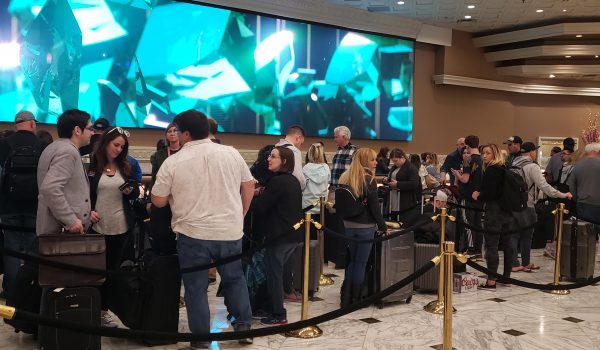
What Can Casino Consulting Firms Learn from Airlines?
Today we’re talking about casino experience. Casinos and airlines are similar in their operational complexity and sense of wonder. They also are similar in the way they can implement technology…
How AI and the Future of Humanity will co-exist?
I was born in 1980 and grew up with Terminator. Skynet, the AI with a consciousness that refused to shut itself for self-preservation, was my biggest fear. When I was…