

When to Involve Operations in Design-Build Projects: 10 Questions with Theresa Ward
We sat down with Theresa Ward, who brings decades of experience in public and private commercial real estate development, to talk about when and how to leverage operations as a strategic value in design-build projects. And the role of customer experience in cost savings and delivery on promises for large capital projects.
To help tell that story, Theresa shares her insights on lessons learned from a performing arts venue design-build project in a major city on the East Coast of the US. Below is our conversation with Theresa. Responses are edited for clarity and length.
You have said that in your work with performing arts facilities, you found that “if operations people aren’t in the room during design, they [suffer] in the end.” Can you walk us through a moment when you saw that play out?
I remember during the design process for one of the performing arts projects I worked on there was a disagreement with designers about how many wheelchair-accessible seats were needed.
Designers included approximately six seats. The technical director said he was sure they would need more. There was discussion about what days and times would likely have the highest number of seats needed. It was agreed that the Sunday matinee would require the most wheelchair-accessible seats. But the designers still felt their estimates were reasonable.
That Sunday, thirteen patrons who used wheelchairs needed to be accommodated. So, more than double where the design team was headed. Had operations been in the room earlier, they could have reached the correct answer much faster.
Design‑build teams often assume they understand operational needs. From your experience, what do they typically miss in terms of how a space actually functions once it opens?
Where I have seen the miss is usually back-of-house needs like undersized or missing storage areas. I’ve seen coat rooms excluded or value-engineered and then rolling garment racks installed after a facility opened.
I’ve also seen no storage provision for janitorial products or cleaning equipment. Or storage that is so far away that makeshift storage has to be created under desks, in kitchenettes, or in hallways. I have also seen proper recycling set ups that are missing entirely.
Lastly, factoring seasonal or weather changes like snow and slippery floors means that skipping the step of bringing operations leaders into design meetings results in hazardous, unattractive, cumbersome setups that severely undermine design investment. Customer experience at a performing arts facility shouldn’t be compromised just because there is a rainstorm, but keeping operations and experience leaders out of early-stage design-build conversations does exactly that.
When operations is excluded from early design, you have said teams end up “living with bad situations that cost labor and materials.” What is an example of a design decision that led to these consequences, and what are the simplest ways to avoid them?
In my experience, a perfect example of this is that, after significant time and investment, the venue ended up with little to no prop and wardrobe storage.
Because that type of storage is necessary for any functioning performing arts facility, it resulted in the organization having to lease off-site storage space. That also meant transporting materials and keeping inventory, all of which are avoidable costs.
Having an experienced operations team member as part of the design team for their next project helped them avoid that mistake when they renovated and expanded their facility.
Performing arts venues have complex flows (audience, staff, performers, equipment). What lessons from that environment translate to large infrastructure environments like transportation hubs and airports?
Loading areas are one of the biggest challenges in performing arts venues. Loading competes with precious front-of-house space. It can be hard to make that argument in a room full of designers and engineers under budget pressure.
But, like with airports and transit hubs, you only get to do these projects once in a lifetime, or once in a hundred years, and you have to think that way. While, what the customer sees is tantamount, the customer will feel it if the back-of-house is insufficient and staff are so worn out from inadequate space they cannot perform their job function.
Whether it is a performing arts facility, an airport, or a train station, securing space and operations-driven setup of back-of-house spaces is an investment in customer experience delivery.
If you could reimagine the typical design‑build kickoff, what would you change to ensure operations has a real seat at the table, rather than a symbolic one?
I would say, be intentional about who is at the table. Ensure that a strong voice at that table brings the voice of the customer into the conversation at every stage. For a design-build project to get the right return on investment and mitigate costs like retrofitting and additional labor, it requires knowing – not guessing at or ignoring – what customers actually need and want. And how operations teams interact with each other and with customers to deliver on what those customers need and want.
Design without consideration of who is using the space and how they are using it, whether those users are customers and patrons, or employees, is design without intention. Successful design-build projects are embarked on with intention.
Bringing that intention to life requires customer experience strategy that can bridge design goals and operational realities. Someone who can speak both languages and keep the customer central to the conversation, and the final build.
You’ve seen both worlds: capital‑project design and day‑to‑day operations. What do these two worlds need to learn most from each other?
There needs to be someone who provides the continuity for the project from conception to operations. Once design and engineering contracts end, they end and wave from the proverbial dock.
Project sponsors are well served to have someone represent their interests with continuity from conception to operation and beyond.
What role does customer experience play in bridging the gap between the architecture and engineering side of design-build and the operations side?
To my mind, customer experience plays two roles in bridging the gap between the architecture and engineering side and the operations side. First, when customer experience does its job well, it acts as translator between the two, bringing a clear sense of both design goals and operational needs to the design-build process at every phase.
Second, when it is most impactful, customer experience acts as an auditor of experience, constantly checking plans against the real needs and wants of customers and operators’ ability to meet those needs in real ways, empowered by the design of the space. Customer experience holds both designers and operators accountable for the promises they make to their customers.
In your experience, what does “front‑of‑house excellence” require from the back‑of‑house? What are the invisible operational and customer experience layers that audiences and other users of space feel but do not see?
Back-of-house needs to feel that they are a core pillar and catalyst for providing a delightful experience to audiences and users of space. Part of that delight on the part of the customers comes from the perception of ease that the employees they interact with make possible. Of course, we know that the layers underneath that ease are complex, strategically mapped, and carefully designed.
When they are working together and working well to support customers, operations and customer experience communicate clearly and consistently, and keep the needs of customers at the forefront of that communication.
All of this begins during the design process. Building delightful moments does not happen at the end of the design process. It fuels the design process from the start.
Looking at today’s infrastructure mega-projects, with their high budgets, large teams, and many complexities, what operational risks do you think are most likely to be overlooked during design? And what could be a solution?
There is a lot of budget and schedule pressure. Usually, it is not a single person or team who is responsible for ensuring a seamless customer/visitor/passenger experience.
I think one of the biggest areas overlooked is clear communication and wayfinding before, during and after construction. Mega-project sponsors must be intentional from the beginning of a project, during its design iterations and through to operations after the design-build team is gone.
If you were advising a design‑build team tomorrow, what one customer experience principle would you insist they adopt from day one to avoid the “bandaged‑over problems” you have witnessed? And how or why would it help?
Every step of the way, the user of the space should be considered by both the back-of-house and front-of-house. Many times, the front-of-house user only comes to the facility once. Navigating the space needs to make sense to them whether there is construction going on or not. A great mentor of mine once said, “good enough is neither good nor enough.”
To learn more about how customer experience can unite design-build teams around the needs of the customer for the success of capital projects, schedule a time to talk with us.


Journey Mapping to Avoid Travel Horror Stories
Welcome to the busiest week of US summer travel. AAA predicts travel this week across airports, train stations, and roads, will reach higher than pre-pandemic levels for the first time….

Would You Pitch In To Save Toys “R” Us For Your Children To Experience? #ToysRUsGoFundMe
Last week we laid out the big moves that the leadership of Toys ‘R’ Us failed to take to evolve with customer needs and thus joins other brands as examples of…

Think Strategically about Telehealth in 2021
Today, we examine telehealth strategy for an in-depth look at this 2021 customer experience trend. As we continue our conversation about why telehealth is here to stay in 2021, we…

Top 5 Customer Experience Design Principles in 2021
Customer experience design principles are difficult for organizations to understand and apply. Time and again, we see this in organizations, even though we encounter customer experience design principles in our…

NYC Subway CX Kills Chivalry in the City
Brands have the power to make customers feel ignored, and even angry. The CX Pyramid crumbles and customer-to-customer behavior, in addition to individual experiences, suffer. Case in point, the New York MTA System.

Customer Experience Best Practices for 2018?
The JetBlue blog features Liliana Petrova in a new four-part series. The series is on Customer Experience and Customer Experience Innovation. 2017 Lessons Liliana gathers insight from 2017 customer experience…

The Risk No Insurer Prices: Why Customer Experience is Costing Insurance Companies Renewals
Insurers are experts in pricing physical and actuarial risk. What too few have learned to price effectively is the slow, compounding erosion that comes from fragmented customer service. What is…

How to make work at home work?
Post-COVID employee experience is a top priority of every HR executive. Most executives I know are losing sleep over this piece of organizational culture. Their challenge is to design the…

Are You Thinking Strategically?
Today, we are elevating our conversation to thinking strategically. The Petrova Experience is in the strategy creation business. So, we frequently encounter the difficulty businesses have anticipating, let alone defining,…

Poor Integration is Bad for Customer Journey and Worse for Brands
Although we all have bad customer experiences, there is still a big debate about “the CX field” and whether it will survive the test of time. There is no doubt…

Leadership During the Pandemic: Guest Post by Rachel Dreyfus
This is a guest post by Rachel Dreyfus, President, Dreyfus Advisors, who researched leadership and organizational culture during the pandemic. How has Covid19 influenced leadership over the past three months?…

How to Scale a High Trust Health Service Without Breaking Patient Confidence
When a healthcare technology company begins to scale, the pressure can feel punishing. The patient can get lost in the momentum of growth. And quickly, profit projections can stumble into…

When to Involve Operations in Design-Build Projects: 10 Questions with Theresa Ward
We sat down with Theresa Ward, who brings decades of experience in public and private commercial real estate development, to talk about when and how to leverage operations as a…

What is Customer Experience? What are the Faces of CX?
Each area of CX represents a path for CX professionals to impact business health and build successful careers. One of my favorite CX analogies is that it is like the blood in our bodies. When CX is done well, it touches every aspect of an organization. That’s what makes customer experience so much fun! You will never be bored working in CX.

Web Experience is Having a Comeback
In the third quarter of 2020 US e-commerce sales went up 36.7% compared with the same period in 2019. Websites have come back to center stage. However, we are not seeing…

It’s Time to Meet The Petrova Experience!
Today marks one of the big milestones in my life. This is the day I am officially choosing to live my dream. We are launching The Petrova Experience, a customer…

The Biggest AI Mistake Most companies are Making
Much of AI news focuses on the importance of regulation, data risks, and intellectual property debates. And of course there is the rally cry “AI is coming for our jobs.”…

Customer Experience ROI. Is It Worth Doing?
The business case for Customer Service is complex. Gone are the days when we bought a piece of hardware that depreciates over 5 or 10 year on the balance sheet. CX does not even show up on our assets list. At least not with that name.

Even the US Government is Jumping on the Customer Experience Train
As we get ready for 2021, we have been diving in to the top customer experience trends we see on the horizon. So far, we have looked at why customer…

5 Ways Customer Experience Consultants Keep Customer Promises
Customer experience is the follow-through on brand promises across every interaction. Some organizations assume the importance of customer experience is limited to commercial brands. This is far from true. In…

Customer Facing Experience: Communication and Hospitality
Today, we are talking about communication as part of the customer facing experience. This is one of the most misused and misinterpreted notions both in our professional lives and our…

What is Customer Experience Strategy?
In our last article we talked about the importance of strategic thinking. Today, we build on this topic and walk you through the nuts and bolts of customer experience strategy….

Why Good CX Programs Fail
Digital technology powers employee experience on the inside to deliver seamless, intuitive experience to customers on the outside. So, when you are creating Customer Experience Programs, you must plan and…

When There is No Chat in Chat Support
Today we talk about chat support best practices, the customer experience VALUE that it creates, and the ROI of the business case to implement it. Although we are skeptical about…

How to Get Enough Funding for CX Initiatives
Delivering impactful customer experience programming starts with making the business case for customer experience to executive leadership. This is a straightforward objective. However, it requires strategy, clarity, education, and communication…

CX Skills Builder: Own the Customer Experience
Often, Customer Experience professionals do not believe that they can improve customer experience by impacting the experience design for their customers. Why? What causes this disconnect? I once got a…

Customer Journey Mapping Tools in 2021
Before we dive into customer journey mapping tools, we must keep in mind that, by itself, journey mapping is not a customer experience product or service. A journey map is…

Customer Experience Design – How Do You Want Customers To Feel?
Last week, we talked about CX Design in terms of space and function. Today, we continue our customer experience design journey to talk about the design of emotions and feelings. All…

Let’s Get You Certified as a Customer Experience Professional!
Like all mature professions, customer experience has a certification that is internationally recognized. Adding it to your resume will signal to the business community that you are serious about customer experience and your aspiration to be part of its leadership ranks…

How a Failed Bus Experience becomes a Rally Cry for Passengers
A single experience can shed light on major vulnerabilities in transportation experience. A bus trip we took from Atlantic City reveals the danger of breaking promises to customers, the importance…

What You Need To Do To Start 2018 Right
It is the end of December and we are all in reflective moods. Did I do enough for my customer experience career this year? Did I build the right team…

Interoperability is a Business Risk for Medtech and a Healthcare Risk for Patients
Looking at patient experience and healthcare interoperability in the medtech environment, any observer (customer experience expert or not) recognizes something is broken. A thorough exploration of what is broken exposes…

The Wholehearted Traveler and Other 2024 Travel Trends
Back in 2020, we predicted the rise of the Revenge Traveler and the impact it would have on travel and hospitality experience providers. As we approach 2024, we are spotting…

Beyond Customer Satisfaction: 3 Unexpected Ways CX Drives Value
It is time to debunk the nice-to-have myth about customer experience. It is true the discipline operates in the space of perception, feelings, and emotion. What is equally true, but…
A Lot of Data, Not Enough Insight
A month ago I saw a Forrester presentation on Customer Experience measurement that began with a great quote from the Global Bank: “We are drowning in data and starving for…

How to Build Customer-Centric Culture
Before we address how to build customer-centric culture, let’s examine the terminology: what culture is and what it is not. Culture is not executives talking about high level strategy. Equally,…
Customer Experience Tips and Best Practices In 2017?
This is Post 2 of Liliana Petrova’s series on customer experience. She shares customer experience tips, lessons learned, and best practices for the new year. And dives into organizational culture…

3 Call Center Mistakes You Are Making
No matter how often my peers and I say that technology is not the answer, call center managers still ask…

JetBlue Leading Customer Experience
Since I used to lead the JetBlue customer experience, people often ask what is behind the JetBlue experience magic. Or, as one of our clients refers to it, the “JetBlue…

Diversity is more than difference of color
Yesterday I had the privilege to join a panel on how to develop diversity and inclusion on your teams at Developer Week in Brooklyn. I was really excited to learn…

Brand and Customer Experience – Make the Customer Know Who You Are
Now that we have helped you become experts in the design of space and function and the design of feelings, it is time to turn our attention to aesthetics, and to connect customer experience…

Are You Ready to Go Exclusive with Jane, Your Digital Concierge?
In 2015 JetBlue introduced bag fees. Seven years after the competition. The media exploded. Many publications were negative. They blamed the airline for “selling out.” One headline read “A New…

What is Revenge Travel and Why People Do It
LinkedIn is overflowing with articles and company news in response to COVID-19. We are starting to see renderings of future casino experiences that are anything but human-centric. People are beginning…

Healthcare Experience Horror Story
We talk about good vs bad customer experiences. And we give examples of organizations that do things well or poorly. But we rarely are able to shine the light on…

The ROI of Customer Experience Programs
What customer experience is, and how well brands think they are executing customer experience, and how well they are actually doing it are often at odds. According to Bain, 80%…

How to Solve the 2025 Customer Retention Problem
It’s 2025, and businesses across sectors have a customer retention problem. U.S. companies alone lose an estimated $168 billion annually due to customer attrition, as revealed in a CallMiner whitepaper….

What is Missing in Customer Experience Today?
Customer Experience is failing. According to Forrester, US Consumer Perceptions of CX quality are at an historic low. Post-COVID the quality of customer experience eroded every year across the three…

3 Cost Conscious Mistakes in Hospitality Implementation that Lose Money
Hospitality is a cornerstone of customer experience in travel, healthcare, and across industries. There is no question that hospitality is essential for creating world class, seamless experiences and driving customer…

Why you need a defined culture for customer experience?
When designed and built correctly, customer experience expresses an organization’s brand. Your brand and marketing promises serve as a guiding light to your experience team. Similarly, organizational culture serves as a goalpost for the service side of customer experience.

Retail Experience Design of the Future
In preparation for this article about omni-channel retail experience of the future, I thought first about the definition of omni-channel customer experience. I wanted to share with you a simple,…

Travel Experience Stories: How Not to Leave Customers Stranded
Meet Diane. Diane is traveling with her 2 year old and 5 year old to her in-laws’ house for Thanksgiving. This is the one annual trip she takes. And she…

Am I A Good Candidate For A Customer Experience Role?
People often ask me what experience they need to be a good fit for customer experience roles.

How Southwest Can Own Customer Experience Again
The collapse of the Southwest passenger experience this holiday season is an unlikely jumping off point for a conversation on how to own customer experience transformation. Unfortunately, it is not…

The seamless travel experience we deserve
This week on the CES 2020 main stage Delta’s CEO Ed Bastian presented a vision about the future of seamless travel experience that “might happen in just a few years.”…

Customer Experience Audit: Uber Bets On Self-Driving Cars With Big Volvo Purchase
The question that remains unanswered is who will be part of the future of transportation. Uber is going for the vertical integration – the whole pie. The future industry of urban transportation will be made of players in three different categories: cars, self-driving software, and ride-sharing network. In contrast, Lyft approaches the future through partnerships.

Customer Experience Audit: New York Times Beats Google
Editor’s Note: This post is part of a series of Customer Experience Audits. In this series we walk you through customer experience examples across industries. We feature brands that made…

What is Customer Experience Transformation?
To meet the needs of the empowered 21st Century consumer, most companies, especially larger enterprises, need to embark on a customer experience transformation. Imagine a car manufacturer that does not…
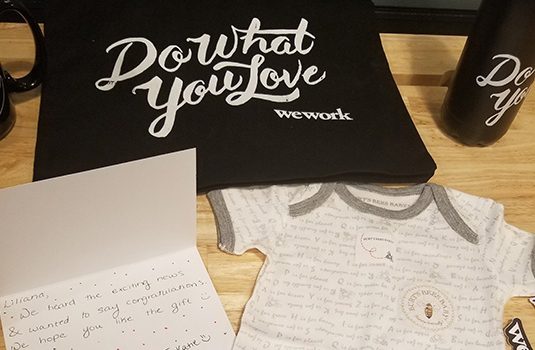
WeWork Does Customer Experience Right with a Wow Moment
Used at the right time and place along the customer’s journey, the Wow Moment is an excellent retention technique. When a brand creates personal, relevant experience at exactly the right time, it can build a lifelong, loyal customer relationship.

Customer Experience Audit: Domino’s Making the Right CX Choices
Editor’s Note: This post is part of a series of Customer Experience Audit – as series of articles featuring examples of good customer experience and bad customer experience in practice….

How to Overcome Hospitality Industry Challenges by Empowering Employees
If you are a hospitality industry leader, or a leader in another business sector who has been reading about the industry, you have encountered some grim statistics. It is true….

5 Ways to Leverage OpenAI for Customer Experience
Back in 2017 when we served on the AI Advisory Committee for Execs In the Know, we wrote an article about the role of artificial intelligence in the future of…

Customer Experience Audit: FedEx Omnichannel Disaster
In our Strategy, Org Design & Culture series, we cover customer-focused companies that are willing to adapt, take risks and discover new ways of staying relevant. Sometimes, we encounter brands…

Is AI Really The Answer?
Earlier this week we shared some of the pitfalls of implementing self-service and highlighted the importance of strategic and empathetic implementation. AI (artificial intelligence) is one of the self-service tools…

Why CX Design Needs to be in Your Transportation Project RFP
Ever heard this line while working on an RFP? “I know your value, but I don’t know where to put you.” We hear it all the time. Why? Because, historically,…

The Invisible Friction Points Weakening Manufacturer Customer Experience
For years, manufacturers have competed on product quality, operational efficiency, and price. Our current environment of supply chain volatility, talent shortages, and the elevated customer expectations in the “experience economy”…

2021 Customer Loyalty Strategy – Relationships over Transactions
According to the Salesforce Connected Customer Report, 90% of consumers expect companies to clearly demonstrate their values and 66% expect brands to demonstrate empathy. In other words, when thinking about…

Employee Centric Culture – Culture is King
In 2017 we introduced our ROI series recognizing the challenges all customer experience professionals have to obtain funding for CX initiatives and to prove their positive returns. Our second ROI…

How Smart Do Humans Want AI To Get?
Earlier, we covered the basics of AI and what it is in theory. Today, we talk more about existing practical applications of AI and more examples of artificial intelligence. And…

How to Build Your Customer Experience Roadmap?
This summer, The Petrova Experience conducted a Customer Experience Preparedness Survey. One of our questions assessed brand maturity in terms of customer experience strategy. Only 28% of the respondents had…

Guest Experience: Fusion of Hospitality and Brand Connection through Design
For a customer experience consultant who designs guest experience, and a lover of the customer experience discipline, visiting a new-to-me hotel can go one of two ways. Sometimes, I am…

Paperless Customer Journey – JetBlue Deviceless Boarding
JetBlue Biometrics – Innovation and Disruption This year, JetBlue entered the ranks of the innovators who disrupt industries by applying customer experience technology. They not only imagine the future. They…

End to End Customer Experience – How to Get it Right
When we think of travel, we often think of the flight experience. But the end to end customer experience is complex, and includes all modes of transportation that get you…

5 Things You Can Do to Provide Excellent Passenger Experience in 2022
The Wall Street Journal predicts this Thanksgiving will be among the busiest travel days in decades, with 55 million travelers anticipated to be moving through US airports and other transportation…

Trust Is the Treatment: How to Achieve ROI on Patient Experience through CX Strategy
Patient experience is not a soft metric. It is an engine for financial performance, improved clinical outcomes, and sustained patient loyalty. For hospital executives and family medical practitioners alike, investing…

Airport Experience – Are You Letting Down Your Precious 2021 Travelers?
A month and a half ago, as part of our ongoing conversation about airport experience, we introduced the concept of revenge travel. We pleaded with the public to trust us…

Customer Engagement ROI
We have discussed the power of employee engagement for your brand. And we have explained the true meaning and ROI of a working organizational culture (a culture that starts at…

Macy’s Retail Experience Risk: The Billion Dollar Lesson
With the holiday season fast approaching, it is a smart time to seek lessons from retail customer experience leaders and laggards. At the root of those lessons is the importance…

3 Customer Experience Strategy Lessons for 2023
Customer experience strategy guides exceptional experience and bolsters growth. When executed well, it impacts not only your market share, but the entire industry in which you operate. In fact, a…

How to Be an Entrepreneur: 5 Things I Learned in 5 Months as an Entrepreneur
The life of an entrepreneur is different every day, but the one thing that remains the same is that we are always learning. These are my lessons in how to…

Life, Liberty, and the Pursuit of [Customer] Happiness
Seven years ago, when we launched The Petrova Experience, the 250th Anniversary of the founding of the United States felt far away. However, its founding principles, particularly the pursuit of…

Why Millennial Investors are Abandoning You
It’s time to talk about the Millennial investor, a critical market for financial services firms in the next five years. For the past decade, the media talked about the impact…

Fan Experience: CX Lessons for Hosting Major Events
With the World Cup coming to New Jersey and the greater New York area in 2026, the time is now to create positive fan experience moments. The 2026 Soccer World…