

The Customer Relationship Blind Spot Scorecards Can’t Catch
Allow me to set a scene that is commonplace for customer experience consultants and the B2B clients who first sit across the table from us. The B2B company across the table has seen some attrition among their smaller, newer customers. Their response times may be a little slower than last year at this time. Occasionally, they may be seeing communication and productivity fragmentation across departments. But they are certain they know which of their accounts is healthy. What clients they can count on for renewals.
Afterall, by and large, the dashboard is green and their service levels are being met. Contracts are renewing. And they are diligently conducting well-attended quarterly business reviews with executive sponsors. Our client across the table is sure that, on paper, everything is working exactly as intended.
So why is their largest, most reliable account suddenly at risk?
The Danger of the Blind Spot
That moment of risk often accelerates the call to our consulting team. We get the call when a key stakeholder leaves. An unexpected RFP appears. Or the big client they thought they could count on tells them they are not renewing. Companies panic and seek immediate strategic support when a competitor gains traction. And when leadership realizes that the picture I just painted is hiding a threatening reality. It turns out, their customers’ dissatisfaction has been building for months – or years. And customer experience and executive leaders missed the warning signs.
This pattern repeats across healthcare services, manufacturing, and other complex B2B industries. While these organizations invest heavily in operational excellence, they lack the systems that reveal the health of the broader customer relationship. That creates a blind spot only becomes visible when a customer fails to renew and threatens their bottom line.
What Drives Continuing Client Relationships?
Strong client relationships drive renewals. But those relationships require careful, strategic nurturing. To assume that a strong client relationship is the inevitable biproduct of good performance is to set up for the blind spot I described above. Good performance is the minimum standard for continued client relationships. Poor performance is a non-starter, and a different conversation entirely.
Because good performance is the minimum standard, it is impossible to set and forget the client relationship once you have mastered the delivery process (whether that delivery takes the form of a manufactured product, a technology service, a healthcare service, or anything else). Client relationships that are strong enough to endure pricing changes, the passage of time, and the emergence of competitors, grow from intentional listening, executive engagement, and organizational discipline. Companies that consistently retain and grow strategic accounts understand and operationalize the customer experience approach to relationship management as a business capability.
With that in mind, as we come to the end of Q4, it is a worthwhile exercise to evaluate how your business nurtures and grows customer relationships. To look through the lens of customer-centricity as business capability. And to determine where opportunities exist to build stronger client relationships for renewals in the new year.
A Healthy Scorecard Does Not Tell the Real Client Relationship Story
Some truisms are worth repeating: you cannot improve what you do not measure. And all too frequently, organizations measure what is easiest to capture, then stop there. That equates to pulling data on low hanging fruit like response times, escalations, and resolution rates. Indicators of performance quality. You see where I am going here – low hanging fruit that measures minimum standard performance does not supply data that has any value to transformation or customer excellence.
Speaking of CX metrics, if an organization is stopping at Net Promoter Score, they have barely even started. NPS is not the gold standard. It does not provide meaningful insight into customer sentiment that drives key behaviors. Behaviors like renewing a contract or walking away.
In B2B environments, particularly those involving healthcare services, outsourced operations, manufacturing support, or complex professional services, executive buyers evaluate vendors based on priorities that do not appear on a service scorecard. So what criteria do they use to evaluate? They consider growth and how their vendors manage organizational change and respond to budget pressure. They also look at technology investments, restructuring efforts, and leadership transitions. But the average voice of the customer programs rarely, if ever, surface executive concerns at this altitude.
A common mistake our team sees when we advise organizations in this scenario is that they assume their survey data (that they likely invested a considerable time and money in) represents their customer’s complete perspective. However, they are frequently collecting the wrong feedback from the wrong people. Their surveys are gathering data from employees who manage day-to-day operations. Not the executives who make long-term decisions.
That creates a significant gap. While a procurement manager may be satisfied with service responsiveness and a department leader may appreciate operational performance, the executive who is responsible for renewal is questioning whether their vendor partner can support their future business needs. These are different conversations.
Smart relationship management gets to these conversations. Smart relationship managers engage in active listening with executive stakeholders, so they have the capability to go beyond cut-and-dry survey questions to capture authentic sentiment and real needs.
This is not to imply that formal feedback programs are not valuable. They are most certainly valuable. But they are most valuable when they are complemented by executive listening, structured stakeholder conversations, account assessments, and strategic relationship management.
Think about what a well-managed client relationship facilitates. Informal conversations reveal concerns before they show up in customer satisfaction scores. As one healthcare executive observed during a recent discussion, B2B organizations become vulnerable to attrition when they believe they are listening, but their customers feel they are actually hearing only part of the story. The strongest organizations create multiple listening mechanisms that work together to avoid gaps like this. That takes the form of quantitative feedback programs, executive outreach, and strategic account reviews. On top of those one-on-one informal conversations. All of this is built on a foundation of intentional customer listening. Then honed through client interviews and consistent check-ins, and business issues monitoring.
Holistically, these approaches provide a more complete, accurate picture of customer health that guards against missing a seemingly invisible strategic concern that grows to a contract-ending crisis.
Executive Attendance is Not the Same as Executive Engagement
Many organizations proudly boast that senior leaders attend quarterly business reviews. As they should. Executive participation is a sign of relationship strength. But as important as it is to show up, attendance is not the same as authentic participation. Recently, I observed something significant in conversations with healthcare customer success leaders. Namely, that executives who attend meetings but do not engage actively in those meetings might, in fact, signal risk, as opposed to commitment.
Quarterly review meetings can turn into highly polished operations presentations. Slides upon slides report out on service metrics, trends, project updates, and status reports. The vendor presents. The customer listens. Everyone nods. The meeting ends. And no meaningful business conversation takes place.
No one asks – or answers – the real questions that move the needle. So, four times a year, there is a missed opportunity to identify new priorities, address concerns for the future, or explore strategic opportunities. How, in this context, are any of the players adding value? What is the point of a relationship that leaves value out of the conversation?
And what is worse, the vendor leaves that quarterly meeting convinced the relationship is healthy because all the seats in the meeting room were filled. If they’re not talking, they don’t care. If you are not engaging them, it looks like you don’t care, either.
What does caring look like? It looks like strategic reviews that shape meaningful conversations around emerging business challenges and organizational changes that create needs for employee teams. It looks like executives answering the fundamental question: what risks keep you up at night?
If you are leading meaningful strategic conversations, and as the vendor with your client, it is incumbent upon you to do so, you are seeking answers to questions like what growth objectives should you be preparing to support. And what would make your existing partnership more valuable next year than it is today.
Even if you have the best quarterly meeting of your life (especially if you do), know that the client relationship does not stop there. True relationship cultivation happens outside the formal meeting structure where executives feel comfortable enough to share concerns in trusted, one-on-one conversations. As such, relationship development requires consistent, attentive conversations at a regular cadence between formal check-in points.
Operating Models Support Strong Relationships
As much as what I describe above speaks to the development of an authentic, human relationship, it is worth noting that client relationship development cannot be left to individual personality.
But often, that is what relationship management falls to. Many organizations depend on a handful of their naturally talented account leaders to build customer loyalty in a way that remains largely undefined. Then, when those individuals leave the company, change roles, or become overloaded, the client relationship weakens.
Similar to the charismatic founder challenge that many startups encounter, reliance on the dynamic personalities of a few talented account managers is not a sustainable strategy. It is not a strategy at all. The strategic approach to continuing client relationships requires structure. That includes defining and communicating expectations and creating a clear accountability structure. And then, of course, running it through an operating model that aligns with and supports both the customer experience strategy and the business strategy.
This is no easy task. Let’s take the healthcare services space as a model, again. Healthcare services executives are tasked with creating customer success operating models in high-stakes, complex environments where the focus cannot be limited to service delivery alone. Instead, for the operating model to be effective, its focus must include growth, retention, and relationship development. And just as importantly, it must include creating systems that continue to operate sustainably and effectively as individual leaders come and go.
What we are looking at here is an organization that actually has the capability to build and sustain mature customer relationships. This type of operating model must include clear owners of the customer relationship as well as executive sponsorship requirements. Leveling up, it also includes mapping stakeholder processes and developing listening and feedback methodologies and practices.
An operating model that is truly customer-centric builds in management of customer health indicators, and escalation and follow-through processes that support customer needs before they can turn into customer crises. Finally, with an objective of sustained customer excellence that should be at the heart of customer relationship management, it is important to provide employees with coaching and leadership support. Managing client relationships is hard work. It is also worthwhile work that deserves cultivation in the form of training and support. Not as a one-off during onboarding, but consistently over time as roles, needs, and relationships evolve.
One of the greatest risks in complex B2B environments is a single-threaded client relationship. Companies build relationships with one contact, one department, or one level of an organization. When that connection changes or disappears, so does organizational visibility. Healthcare customer success leaders increasingly recognize the need to build greater breadth and depth across client organizations to avoid this vulnerability. Our manufacturing clients and others should take note.
Turn Insight into Organizational Change
Speaking of shared needs and opportunities across complex environments like manufacturing and healthcare services, we are seeing all sectors trying to deepen strategic partnerships for account retention and long-term growth.
In these environments, where operational excellence is the minimum standard, it is especially important to reiterate that operational excellence is not the same thing as relationship health.
In fact, the organizations that consistently outperform against their competitors embrace the fact that customer relationships require the same level of discipline that companies routinely apply to finance, operations, and quality management.
Our Petrova Experience team sees this firsthand in our work with clients to transform their already strong operational environments into centers for customer excellence. Into engines of customer retention, and protection against customer attrition. We are proud of our work helping a manufacturer evolve from transactional service delivery to relationship-driven customer engagement.
Together, we created customer experience principles, behavioral standards, leadership training programs, and feedback mechanisms that measurably strengthened customer relationships. That effort helped reduce churn, improve customer engagement, and support significant growth opportunities at a time when they came to us with concerns about losing their anchor client relationship.
What that engagement reinforced for our team, as much as it did for our client, is that behaviors, systems, and leadership must make customer-centricity a core strategic component of every organization’s operating model
So, if you are feeling like your biggest client is your surest bet, think seriously about how you can quantify that and whether you can guarantee it. As we prepare to end Q4, let’s do so from a position of strength, with a strategic eye on managing – and sustaining – strong customer relationships.


New Frontiers in Passenger Experience: Where is the Passenger in the Urban Air Mobility Ecosystem?
Two years ago, I stood on stage at the Aviation Americas Festival in Miami and asked a provocative question: What if the future of aviation isn’t just about aircraft, but about experience? At the time, urban air mobility, including electric vertical takeoff and landing vehicles…

Interoperability is a Business Risk for Medtech and a Healthcare Risk for Patients
Looking at patient experience and healthcare interoperability in the medtech environment, any observer (customer experience expert or not) recognizes something is broken. A thorough exploration of what is broken exposes fundamental gaps the average observer (including patients) might miss. We know providers face high levels…

3 Customer Experience Strategy Lessons for 2023
Customer experience strategy guides exceptional experience and bolsters growth. When executed well, it impacts not only your market share, but the entire industry in which you operate. In fact, a well-crafted, consistently deployed CX strategy built to address customer personas, needs, and wants, and to…

It’s Time to Meet The Petrova Experience!
Today marks one of the big milestones in my life. This is the day I am officially choosing to live my dream. We are launching The Petrova Experience, a customer experience consulting, coaching and membership organization. I remember the day I fell in love with…

How Southwest Can Own Customer Experience Again
The collapse of the Southwest passenger experience this holiday season is an unlikely jumping off point for a conversation on how to own customer experience transformation. Unfortunately, it is not a surprising trigger for this conversation. Now, Wall Street analysts will be much more open…
The One CX Goal You Need to Set for 2019
For 2019, I urge you to make only one CX goal – bring about business success with your customer experience work. Don’t just do work in the general sense. Rather, set a CX goal that has a real impact on your customers and their experiences with your brand.

When There is No Chat in Chat Support
Today we talk about chat support best practices, the customer experience VALUE that it creates, and the ROI of the business case to implement it. Although we are skeptical about the value of chatbots, we are big believers in the value of online chat support…

Hiring Tips: Who Should I Hire First on My CX Team
The pressure to demonstrate business impact and ROI on your Customer Experience initiatives quickly makes your first hire even more important. As usual, there is no answer that fits all scenarios perfectly. We have some helpful strategies to consider based on the structure of your organization and your goals.

Customer Experience ROI. Is It Worth Doing?
The business case for Customer Service is complex. Gone are the days when we bought a piece of hardware that depreciates over 5 or 10 year on the balance sheet. CX does not even show up on our assets list. At least not with that name.

The seamless travel experience we deserve
This week on the CES 2020 main stage Delta’s CEO Ed Bastian presented a vision about the future of seamless travel experience that “might happen in just a few years.” Many of us have been working towards this vision for the last 5 years. In…

Am I A Good Candidate For A Customer Experience Role?
People often ask me what experience they need to be a good fit for customer experience roles.

Why Good CX Programs Fail
Digital technology powers employee experience on the inside to deliver seamless, intuitive experience to customers on the outside. So, when you are creating Customer Experience Programs, you must plan and budget for the time and resources technology teams have to commit. This work spans from…

Celebrate National CX Day
Did you know that tomorrow is National CX Day? Some of you may not even know what “CX” means or why there is a day to celebrate CX. CX stands for “Customer Experience,” and it is an essential part of company strategies to win in…

Liliana Petrova Talks Patient Experience in Healthcare Podcast
Recently, we recorded a podcast on patient experience in healthcare with Stacey Richter. Today, we are excited to share it with you. On the episode, we discuss travel and healthcare industry parallels. And I talk about applying customer experience design principles to improving patient experience….
A Lot of Data, Not Enough Insight
A month ago I saw a Forrester presentation on Customer Experience measurement that began with a great quote from the Global Bank: “We are drowning in data and starving for insight.” In other words, they do not have data management strategy. Aren’t we all? Most…

3 Challenges of Hybrid Working and How to Overcome Them
According to a Gallup study, 53% of Americans expect to work in a hybrid arrangement in 2022 and beyond. This number is significant enough for corporate America to get hybrid working right today. Unfortunately, early indicators show we are on the wrong path. Here are…

5 Ways to Leverage OpenAI for Customer Experience
Back in 2017 when we served on the AI Advisory Committee for Execs In the Know, we wrote an article about the role of artificial intelligence in the future of business. Our article called out, rather presciently, the need for governance, standards, and the human…

Contactless and Self-Service are Here to Stay
Our 5th 2021 customer experience trend highlights contactless and self-service experiences across industries. Before we dive into this topic, let’s take a moment to define what contactless and self-service mean to us. And what kind of an impact they are making on customers – and…

Customer Experience, Self Service, and the Gift of Time
Time is the most precious gift in life. If you think about it, time is the one thing we all want more of. As we get older and busier, time gets even more valuable to us.

What is Taxing Your Customer Experience?
In our customer experience consulting engagements with organizations from travel and transportation to corporate environments, we see the same six challenges to delivering seamless customer experiences. The struggle to deliver experiences that meet and exceed customer expectations across these six fronts threaten the CX-ROI connection…

Why Bt2B Businesses Must Think Like B2C in the Next Decade
B2B vs B2B thinking makes a real difference when it comes to customer experience. According to Gartner at least 80% of B2B buyers now expect the same buying experience as B2C customers in 2019. Gone are the days when B2B organizations did not need to…

The Risk No Insurer Prices: Why Customer Experience is Costing Insurance Companies Renewals
Insurers are experts in pricing physical and actuarial risk. What too few have learned to price effectively is the slow, compounding erosion that comes from fragmented customer service. What is the real cost of the customer who receives different answers from different channels? Or agents…

How Customer Experience Promises Threaten Manufacturer Growth
Rarely, does a business lose major accounts due to dramatic or public failure. They lose major accounts due to mismanaged relationships, a loss that is all-too common in a manufacturing setting due to the tension between the customer experience promise and the complexity of delivery….

How to Build Your Customer Experience Roadmap?
This summer, The Petrova Experience conducted a Customer Experience Preparedness Survey. One of our questions assessed brand maturity in terms of customer experience strategy. Only 28% of the respondents had a well defined customer experience strategy. What Happens When You Don’t Have a Clear Strategy?…

Return to Office – how to get it right in 2022?
Last week, the CEO of Better.com, Vishal Gard, made the news again. This time, it was for the executive’s massive blunder of firing 900 people via Zoom. A blunder that would never have happened if Better.com had a return to office plan that defined how…

Patient Experience Trends in 2021 – Telehealth is Here to Stay
Today, we continue our series about 2021 Customer Experience trends and tactics. We take a closer look at patient experience and what telehealth means for the future. Both for patients and providers. As we look at lessons learned last year, one thing is abundantly clear….

Is AI Really The Answer?
Earlier this week we shared some of the pitfalls of implementing self-service and highlighted the importance of strategic and empathetic implementation. AI (artificial intelligence) is one of the self-service tools in the customer service professional toolbox today. It is also one of the new buzzwords,…

Trust Is the Treatment: How to Achieve ROI on Patient Experience through CX Strategy
Patient experience is not a soft metric. It is an engine for financial performance, improved clinical outcomes, and sustained patient loyalty. For hospital executives and family medical practitioners alike, investing in experience is ethically responsible, certainly. It is also fiscally imperative. Patient Experience ROI is…

Autonomous Service Starts at the Top: A CEO To Do List
In a recent article, we explored the controversial news that the customer service agent role as we know it is dead. The AI service agent is taking its place. Granted, this solves multiple problems relating to cost, efficiency, and consistency of customer experience, as we…

Journey Mapping to Avoid Travel Horror Stories
Welcome to the busiest week of US summer travel. AAA predicts travel this week across airports, train stations, and roads, will reach higher than pre-pandemic levels for the first time. Nearly six million of those travelers are expected to go through US airports in the…

4 Career Tips to obtain a Customer Experience Role
In honor of the 4th of July, we are rounding up 4 career tips for CX professionals. Set aside some time during the break from work to take stock in your CX career and evaluate the steps you need to get to the next level.

No Pass During Construction: Why Airports Must Rethink Customer Experience in the Era of Capital Programs
Throughout the US, airports are entering one of the most consequential decades of infrastructure development in the history of modern aviation. According to Airports Council International–North America (ACI‑NA), US airports are facing more than $151 billion in necessary infrastructure projects between 2023 and 2027. That…

How Does Social Media Affect Customer Experience?
Social Media is the only real-time channel for successful brands to manage customer experience and brand management.

Coronavirus Travel: What Does Hospitality Mean Now?
I want to tell you about my recent passenger experience. Earlier this week, I traveled to New Orleans from JFK Terminal 5 in New York. I had planned an airport conference a few months ago. Although many colleagues chose not to travel, I decided to…

NPS Best Practices
Last week I spoke at the Corinium CCO Fall Conference. One of the discussions we had was on the very popular topic of Net Promoter Score best practices and its efficacy to gauge customer satisfaction. We had such great engagement that I want to share…

What Flight Delays Teach about Customer Recovery
One of the things we enjoy most about customer experience design for the aviation industry is tackling its unique complexities. And there are many complexities! With more than 4.17 million Americans planning to fly for the Fourth of July holiday, and weather events predicted throughout…

Top 5 Customer Experience Design Principles in 2021
Customer experience design principles are difficult for organizations to understand and apply. Time and again, we see this in organizations, even though we encounter customer experience design principles in our daily interactions with the environment. Take these pictures of one of the more crowded places…
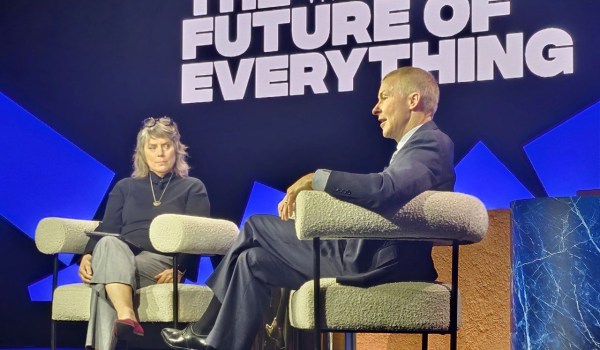
What the United JetBlue Partnership Signals for Passenger Experience and Airline Revenue Optimization
Last week I had the pleasure of seeing United Airlines CEO Scott Kirby at the WSJ Future of Everything Festival. And to hear from him about the just-announced United JetBlue partnership that will bring United back to JFK in 2027. First, and most importantly, don’t…

Brand and Customer Experience – Make the Customer Know Who You Are
Now that we have helped you become experts in the design of space and function and the design of feelings, it is time to turn our attention to aesthetics, and to connect customer experience design to brand identity. T5 is an expression of the JetBlue brand. When customers enter…

Holiday Wishes for Great CX: Career Advice Edition
Every successful customer experience initiative starts with a skilled CX team. Brush up on your CX skills to strengthen the business case for CX; to develop relationships within your organization; and to deliver standout customer experiences in the new year.

How to Scale a High Trust Health Service Without Breaking Patient Confidence
When a healthcare technology company begins to scale, the pressure can feel punishing. The patient can get lost in the momentum of growth. And quickly, profit projections can stumble into loss. From a leadership and operations point of view, your plate is full during the…

The Biggest AI Mistake Most companies are Making
Much of AI news focuses on the importance of regulation, data risks, and intellectual property debates. And of course there is the rally cry “AI is coming for our jobs.” In the midst of the-sky-is-falling narrative, there are grains of truth. Last year even we…

Why I Don’t Love Chatbots
Today, we tackle the value proposition that chatbots are more valuable to companies than customers. I reject this. The ROI simply is not there, especially since better customer experience is not there. I have experienced both fully automated bots and “augmented” service agents interactions using…

The Wholehearted Traveler and Other 2024 Travel Trends
Back in 2020, we predicted the rise of the Revenge Traveler and the impact it would have on travel and hospitality experience providers. As we approach 2024, we are spotting a new type of traveler on the horizon. And a set of trends that will…

What is Wayfinding?
I did not always know what wayfinding means. But ever since I left Bulgaria to come to America I have been looking to find my way. The first time I heard the term “wayfinding” was in JetBlue Airways when I worked on the fusion design…

Customer Experience Audit: Uber Bets On Self-Driving Cars With Big Volvo Purchase
The question that remains unanswered is who will be part of the future of transportation. Uber is going for the vertical integration – the whole pie. The future industry of urban transportation will be made of players in three different categories: cars, self-driving software, and ride-sharing network. In contrast, Lyft approaches the future through partnerships.

NYC Subway CX Kills Chivalry in the City
Brands have the power to make customers feel ignored, and even angry. The CX Pyramid crumbles and customer-to-customer behavior, in addition to individual experiences, suffer. Case in point, the New York MTA System.

Create Your Tribe: How Great CX Makes a Lifestyle Brand
Newcomers to the market realize that their business is only as strong as the growth of their customer base. With that in mind, senior leaders work hard to shorten the distance between them and the customer.

What is Human-Centered Design and how to Leverage it in 2021?
At its core, design is about value creation. In the world of Customer Experience, value-driven design requires CX professionals to use empathy to imagine a future customer experience that is easy, fast, and seamless. When we think of how to design human-centered experience applying customer…

Get Customer Experience Basics Right and You Don’t Need to Invest in Wow Moments
Wow Moments are a Customer Experience hot topic. Customer experience professionals ideate how to build, prioritize, finance, and measure these Wow Moments. Chip and Dan Heath wrote a whole book on the topic: The Power of Moments. No Wow Moment saves you from negative word of mouth if your brand fails to get the customer experience basics right or to deliver the expected brand experience consistently.

Customer Experience Plan is More Important than Ever
Last week we published eight Customer Experience Trends to look out for in 2021. Today we are diving deeper into the first one: Customer Experience is more important than ever to consumers. What does that mean to you? It is time to design your customer experience…
When Not To Invest In Self-Service Technology?
What is self-service? It is something every progressive brand aspires to have more of. Few implement it successfully. Self-service is a new tool to optimize a company’s workforce by removing transactions from the system. All industries are looking at it as a strategy of the…

Guest Experience: Fusion of Hospitality and Brand Connection through Design
For a customer experience consultant who designs guest experience, and a lover of the customer experience discipline, visiting a new-to-me hotel can go one of two ways. Sometimes, I am struck by CX Fails that disrupt my experience. Other times, I am amazed by the…
CX Skills Builders: You May Have a CX Job and Not Know It
Last week we talked about the identity crisis of CX professionals and we urged you to fix any small problem or seam on the customer journey in order to build internal brand equity and buy in.

Healthcare Whitepaper: Impact of Patient ‘I Wants’ in Healthcare
Rachel Dreyfus joins The Petrova Experience with a guest blog about patient experience. Background A culture of positive patient experience is increasingly important in Healthcare, affecting patient outcomes and satisfaction. Yet in America, this industry is challenged with time-consuming processes and requirements coupled with high…

5 Things You Can Do to Provide Excellent Passenger Experience in 2022
The Wall Street Journal predicts this Thanksgiving will be among the busiest travel days in decades, with 55 million travelers anticipated to be moving through US airports and other transportation hubs and highways. In fact, “2022 is expected to be the third-busiest year for Thanksgiving…

Why Customer Retention is the True Measure of SaaS Success
Guest Post by Callie Reynolds for The Petrova Experience In SaaS (Software as a Service), like in most businesses, sales is king. Sales gets the glory, and while I’d like to say this has never bothered me as a big champion of the sales world…

How AI and the Future of Humanity will co-exist?
I was born in 1980 and grew up with Terminator. Skynet, the AI with a consciousness that refused to shut itself for self-preservation, was my biggest fear. When I was growing up in Eastern Europe, I used to joke that the only reason I would…

Center of Excellence: The Antidote to Failed Customer Experience Programs
It’s no secret that even good CX programs fail. Back in 2018, Bob Thompson of CustomerThink shared the “inconvenient truth” that “93% of customer experience programs are failing.” Gartner echoed this two years ago. It found “most Customer Experience Programs are not delivering on the…

Customer Experience Trends – 8 Actionable Tactics in 2021
As we begin Q4 of an eventful 2020, it’s time to look out for the 2021 customer experience trends and tactics for creating exceptional experiences in increasingly complex environments. We rounded up Eight 2021 Customer Experience Trends and Tactics to be aware of as we…

Are You Thinking Strategically?
Today, we are elevating our conversation to thinking strategically. The Petrova Experience is in the strategy creation business. So, we frequently encounter the difficulty businesses have anticipating, let alone defining, the tangible outcomes of a strategy engagement. Before the start of the engagement stakeholders want…

How to Be an Entrepreneur: 5 Things I Learned in 5 Months as an Entrepreneur
The life of an entrepreneur is different every day, but the one thing that remains the same is that we are always learning. These are my lessons in how to be an entrepreneur that I have learned in the last five months of my entrepreneur…

What is Journey Mapping?
Although we have published more than 130 articles on customer experience, we still have not dedicated an article to journey mapping. Journey mapping is the most widely recognized customer experience design and management concept. It is also the most poorly executed customer experience tool. Myriad…

Service Design vs Customer Experience 2021
Customer experience design as a discipline is relatively new. Service design vs customer experience design adds another layer of confusion. For starters, CX design is not yet popular enough to be part of school curricula. Many industries do not even have the notion of customer…

Extend Your Travel Experience Value Proposition
Last December the Ladders published a piece that discusses business travelers who extend travel beyond the timeline of the business trip. The article says, “[a]ccording to a new study by La Quinta by Wyndham, nearly two-thirds (64%) of business travelers who have extended a trip have…

Lessons Learned at the Forrester Conference: “Data is the New Sexy”
Once a year I look for an event to attend where I can learn something new and get better at what I do. This year, I attended an event hosted by customer experience research organization Forrester – the Forrester Global Council Meeting and the CXNYC2018…

3 Cost Conscious Mistakes in Hospitality Implementation that Lose Money
Hospitality is a cornerstone of customer experience in travel, healthcare, and across industries. There is no question that hospitality is essential for creating world class, seamless experiences and driving customer loyalty. However, when it comes time to cut costs, it is often where businesses start….

How Smart Do Humans Want AI To Get?
Earlier, we covered the basics of AI and what it is in theory. Today, we talk more about existing practical applications of AI and more examples of artificial intelligence. And we reflect on what that means to the customer experience field. We also share some…

The ROI of Customer Experience Programs
What customer experience is, and how well brands think they are executing customer experience, and how well they are actually doing it are often at odds. According to Bain, 80% of CEOs believe they deliver superior customer experience while, 8% of their customers agree. PatientPop…

What is the Real Cost of Employee Experience?
There are two types of leaders (and organizational cultures) that stand to benefit most from improving employee experience. The first kind have 40% or higher turnover and think their frontline employees have a culture problem. The second have 40% or higher growth rate and think…

How To Define Your Purpose And Have Unique Culture
If you Google the word “purpose” you get the definition “the reason for which something exists.” This is a challenge if you think about it in the context of organizational culture. And it is for this reason that so few brands have organizational cultures based…
United CEO does not care about #customers happiness. Really?
Lately, I have been thinking about United Airlines and its organizational culture. Initially, I thought about United Airlines culture because someone asked whether it is possible to build a customer-centric culture in a company that is NOT founded with the customer at the center. In…

Employee Centric Culture – Culture is King
In 2017 we introduced our ROI series recognizing the challenges all customer experience professionals have to obtain funding for CX initiatives and to prove their positive returns. Our second ROI post covered how a well built customer experience can increase revenue and customer growth of…

Retail Experience Design of the Future
In preparation for this article about omni-channel retail experience of the future, I thought first about the definition of omni-channel customer experience. I wanted to share with you a simple, easy-to-understand definition. All definitions require you to know other business concepts in order to understand…

The ROI of Customer Experience
Knowing the ROI of customer experience helps to fund CX projects and make intelligent investments in customer experience. But a deeper examination into the question about CX return on investment gets to the heart of what customer experience means for your business, your customers, and…

Customer Experience Design – How Do You Want Customers To Feel?
Last week, we talked about CX Design in terms of space and function. Today, we continue our customer experience design journey to talk about the design of emotions and feelings. All of this adds up to how to deliver great customer experience. The new look of…
What Can Casino Consulting Firms Learn from Airlines?
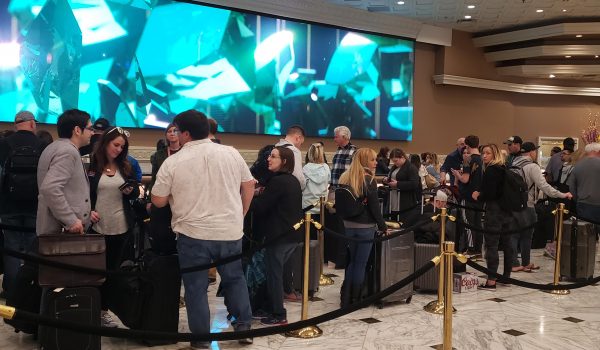
Today we’re talking about casino experience. Casinos and airlines are similar in their operational complexity and sense of wonder. They also are similar in the way they can implement technology to improve their guest experience design. For some reason though, Las Vegas still has not…

2021 Customer Loyalty Strategy – Relationships over Transactions
According to the Salesforce Connected Customer Report, 90% of consumers expect companies to clearly demonstrate their values and 66% expect brands to demonstrate empathy. In other words, when thinking about customer loyalty strategy, you need to understand that customers want you to CARE. Why do…

Top CX Design Challenges in 2021
Customer experience design challenges in 2021 remind us of the overall challenges that face organizations in a year marked by changing expectations and demands. Top customer experience design challenges include finding and coordinating the right people, navigating complexities like who you are designing for, and…

How to Solve the 2025 Customer Retention Problem
It’s 2025, and businesses across sectors have a customer retention problem. U.S. companies alone lose an estimated $168 billion annually due to customer attrition, as revealed in a CallMiner whitepaper. Well after the pandemic’s immediate impacts on consumer behavior, customer retention remains a critical challenge…

Why No One is Collecting Authentic Customer Feedback
Businesses need customer feedback collection to thrive in a competitive market. Everyone thinks they are collecting and acting on customer feedback, yet 80% of US companies failed to increase customer satisfaction since 2010. And customer retention rates are plunging. So, despite what many companies think,…

Bad Travel Experience
As we come to the end of the summer season, it is time to talk about travel – good and bad travel experience. And how the sharing economy has both democratized the act of travel and elevated customer expectations. Today, a host in Pereira, Colombia,…